Lake Fishing for Beginners: Where Fish Hold, Simple Rigs and a First-Trip Checklist
Most fish in a lake live along edges: weed lines, drop-offs, docks and points. Start there with a couple of simple rigs and your first trip has a real chance.
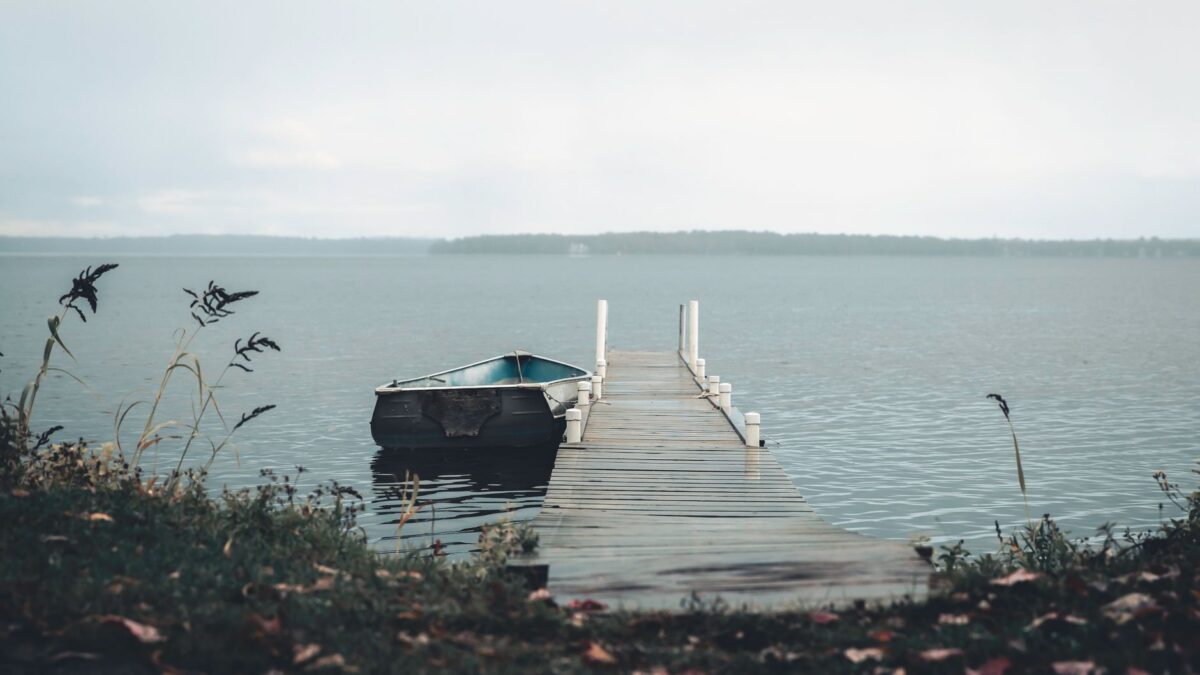
On your first lake trip, fish the edges: where weeds meet open water, where shallow water drops into deeper water, and around docks, fallen trees and points. Bring two simple setups, a bobber rig for panfish and a soft plastic worm for bass, and fish early or late in the day, when many fish move shallow to feed. Buy the license your state requires before you go.
Why fish hold where they do
Fish in a lake look for three things: food, cover and comfortable water (the right temperature and enough oxygen). The places that offer all three at once are usually transitions, where one kind of bottom, depth or cover changes into another. A long, featureless bank rarely holds as many fish as the corner where a creek comes in or a weedbed ends.
The spots to try first
- Weed edges. The outside line of a weedbed, where it meets deeper open water, is a highway for baitfish, bluegill and the bass that eat them.
- Points and drop-offs. A point is a piece of land that sticks out into the lake and keeps going underwater. Fish move up and down its slopes to feed, so it gives them shallow and deep water close together.
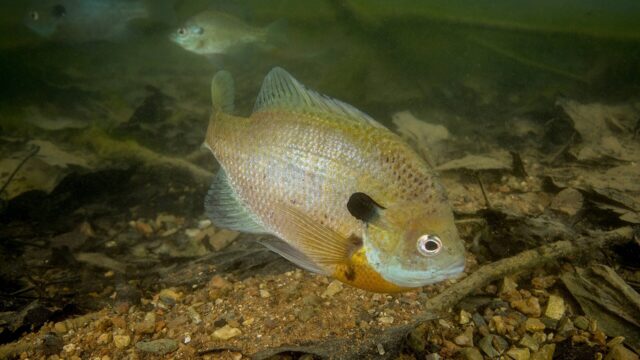
- Docks, fallen trees and brush. Anything that throws shade and breaks up open water gives fish a place to hide and ambush prey.
- Inflows. Creeks, culverts and spillways bring food and often slightly different water temperature. After rain they also carry stained water that fish use as cover.
- Rock. Riprap along dams, bridges and causeways holds crayfish and warms up in the sun.
A lake contour map, on paper or in a phone app, shows depth lines. Where the lines bunch together, the bottom drops quickly, and those steep spots near shallow flats are worth checking. For a deeper look at maps, points and breaks, see how to read a lake for bass.
Where fish go through the year
Water temperature drives most seasonal movement. The ranges below are typical for bass and panfish lakes in much of the US; timing shifts by several weeks between the South and the North, and from one lake to the next.
| Season | Typical water temperature | Where to look | Easy approach |
|---|---|---|---|
| Spring | Warming from the 50s into the 60s °F | Shallow, protected bays and banks that get the most sun; spawning flats | Bobber and worm for panfish; slow soft plastics for bass |
| Summer | 70s to 80s °F at the surface | Shallow weeds and shade at dawn and dusk; deeper weed edges, docks and drop-offs at midday | Topwater early; worm along edges; bobber for bluegill in shade |
| Fall | Cooling through the 60s and 50s °F | Creek arms and coves where baitfish gather; shallow flats on warm afternoons | Spinners and crankbaits to cover water |
| Winter (open water) | Upper 30s to 40s °F | Deeper water near steep drops; sunny banks on mild afternoons | Small jigs and slow presentations |
Summer layers and fall turnover
Many deeper lakes stratify in summer: a warm upper layer floats on top of cold bottom water, with a band of quickly changing temperature between them called the thermocline. The bottom layer can run low on oxygen, so in those lakes fish often hold at or above the thermocline rather than on the deepest bottom. In fall the surface cools, the layers mix again (called turnover), and fishing can be inconsistent until the lake settles. Shallow lakes and ponds that wind keeps mixed may not stratify at all.
Three simple rigs that catch fish
Use a medium-light or medium spinning rod with 6- to 10-pound monofilament. That one outfit can handle all three rigs. If you need help tying hooks on, start with our guide to the essential fishing knots.
1. Bobber rig for panfish
- Tie a small hook (about size 6 to 10) to the end of the line.
- Pinch one small split shot onto the line 6 to 12 inches above the hook.
- Clip a small bobber on the line 2 to 4 feet above the hook, so the bait hangs just above the weeds or bottom.
- Thread on a piece of nightcrawler or a live cricket and cast near docks, brush or a weed edge.
- When the bobber dips or slides away, reel up the slack and lift the rod smoothly.
2. Soft plastic worm for bass
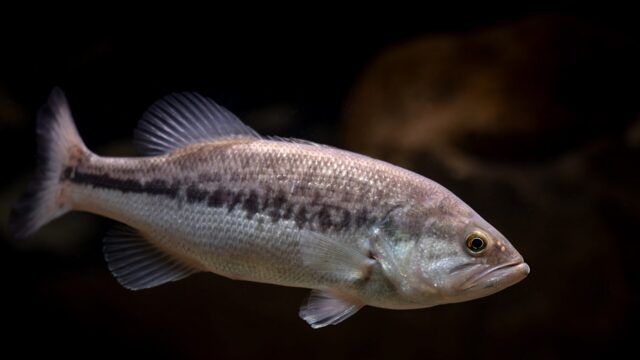
Thread a 5- to 7-inch plastic worm or stick bait onto an offset worm hook (2/0 or 3/0 is a common size), and bury the point back into the plastic so it slides through weeds. Fish it weightless near the surface or add a small bullet sinker to reach bottom. Cast past cover, let it sink, then lift and drop it slowly. When the line jumps or swims sideways, reel down and set the hook firmly.
3. Slip-sinker bottom rig
Slide an egg sinker onto the main line, add a bead, and tie on a swivel. Tie 12 to 18 inches of leader to the swivel and a hook to the end. The fish can pull line through the sinker without feeling much weight. Bait it with a nightcrawler for bass and panfish, or cut bait and prepared baits for catfish, and let it sit on the bottom near a drop-off or inflow.
Shore or boat?
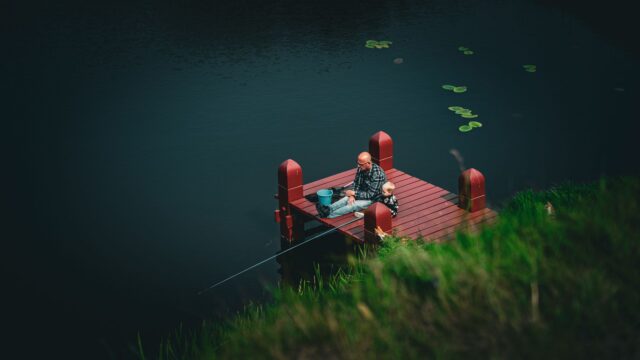
Shore fishing is the cheapest way to start, and many lakes have public piers, parks, dam areas and marked access sites. Walk and cast rather than sitting in one spot all day, and try casting parallel to the bank, where fish often cruise. Stay on public land or ask permission; posted private property is off-limits.
A boat, canoe or kayak lets you reach points, weed edges and docks that are hard to cast to from land. Rentals are a good way to test the idea before buying. On any boat, carry a properly fitting, Coast Guard-approved life jacket for everyone aboard, and wear it, especially in a small craft or cold water. Check the forecast, and stay closer to shore until you know how the lake behaves in wind.
Reading the weather
Overcast, stable days and the hours before an approaching front often produce good fishing, while the clear, bright day after a cold front is usually slower. Wind pushes baitfish toward windblown banks and points, which makes those spots worth trying. Water temperature matters more than air temperature. If you hear thunder, get off the water right away. Our guide to weather and fishing covers pressure, fronts, wind and the moon in more detail.
First-trip checklist
- A valid fishing license for your state (see how to get a fishing license)
- The current regulations for that lake: size limits, bag limits and any special rules
- Rod and reel spooled with fresh 6- to 10-pound line
- Hooks, split shot, a few bobbers, bullet and egg sinkers, swivels
- Bait (nightcrawlers or crickets) and a small pack of soft plastic worms
- Needle-nose pliers, line clippers and a small towel
- Polarized sunglasses, hat, sunscreen, water and snacks
- Life jacket if you’ll be on the water; a basic first-aid kit
- A bag for trash and old line, so nothing gets left behind
Bottom line
Lake fishing gets much easier once you stop casting at open water and start fishing edges: weed lines, drop-offs, points, docks and inflows. Match where you fish to the season, keep your rigs simple, fish the low-light hours, and follow your state’s license and harvest rules. A bobber rig and a soft plastic worm will teach you more on a first trip than a tackle box full of lures.
FAQ
What is the best time of day to fish a lake?
Early morning and the last couple of hours before dark are usually best, especially in summer, because many fish move shallow to feed in low light. In cold months, the warmest part of the afternoon can be better.
Do I need a boat to catch fish in a lake?
No. Plenty of fish live within casting distance of the bank, especially in spring and fall. Look for public piers, points you can reach on foot and any spot where deeper water comes close to shore. Bass fishing from shore covers how to find those spots.
What is the easiest bait for a beginner?
A nightcrawler under a small bobber catches bluegill, crappie, perch and the occasional bass. For bass specifically, a soft plastic worm on an offset hook is simple, cheap and works in every season.
Do I need a fishing license to fish a lake?
In most cases, yes, once you’re above your state’s age cutoff. Rules for private lakes, free fishing days and exemptions vary by state, so check your state wildlife agency before you go.