Fly Fishing for Bass: Rods, Poppers, Streamers and How to Set the Hook
Bass are aggressive, live in shallow cover and hit flies hard. Here's the gear, the flies and the techniques that put them on a fly rod.
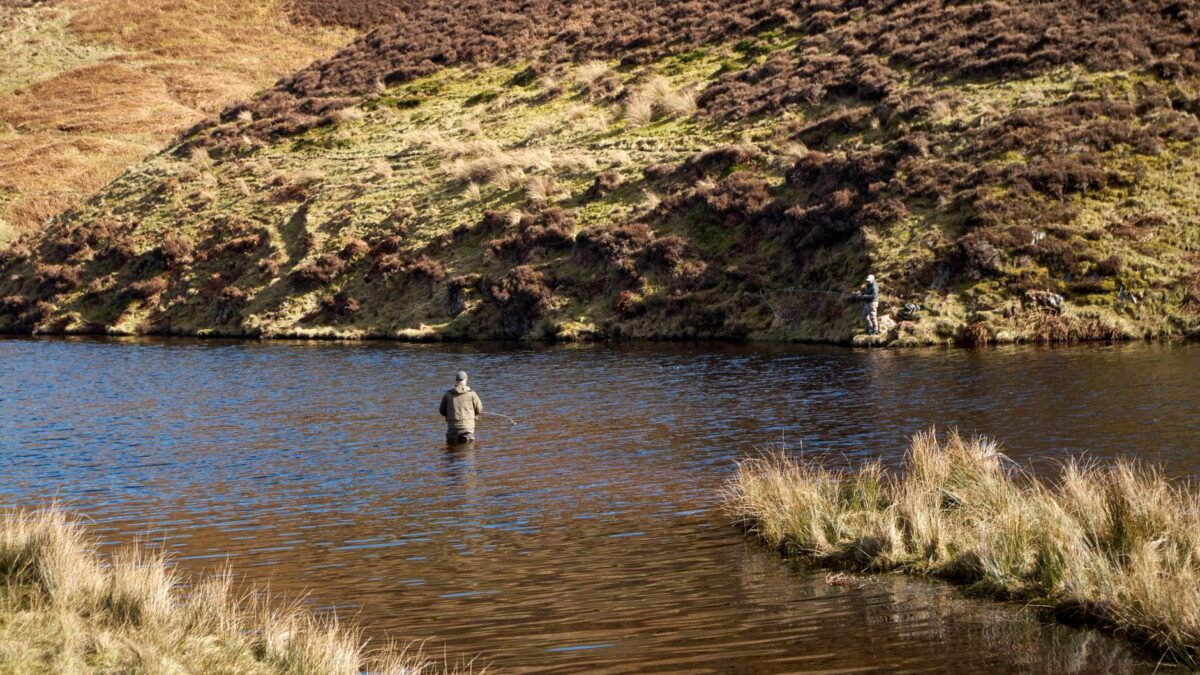
To fly fish for bass, use a 7- or 8-weight rod with a weight-forward floating line built for big flies and a short, stout leader of about 6 to 9 feet testing 10 to 15 pounds. Throw poppers and frog patterns at dawn, dusk and on calm days, and switch to streamers and crayfish flies when bass are deeper. Cast tight to cover, keep the rod tip low, and set the hook by pulling the line with your stripping hand, not by lifting the rod.
Gear that works for bass
Bass flies are big and air-resistant, and bass live in weeds, wood and around docks. Your gear needs to cast bulky flies and pull fish out of cover.
| Item | Largemouth | Smallmouth |
|---|---|---|
| Rod | 9 ft, 7- or 8-weight, fast action | 9 ft, 6- or 7-weight |
| Line | WF floating bass or big-fly taper | WF floating; sink-tip for rivers and deeper rock |
| Leader | 6 to 9 ft, roughly 0X to 1X or 12 to 15 lb | 7.5 to 9 ft, roughly 2X to 3X or 8 to 10 lb |
| Reel | Simple disc drag; mostly holds line | Same |
Short, heavy leaders do two jobs: they turn over wind-resistant bugs, and they let you steer a bass away from snags. Bass aren’t usually leader-shy around cover. Our fly rod weight chart explains why most bass anglers settle on a 7- or 8-weight.
Flies for bass
Bass eat whatever is available: baitfish, sunfish, crayfish, frogs, insects and worms. See what bass eat through the seasons; the flies below cover most of it.
| Fly type | Depth | When it shines | Retrieve |
|---|---|---|---|
| Poppers (cork or foam) | Surface | Low light, calm water, summer evenings, around pads and wood | Pop, pause several seconds, pop again |
| Sliders and divers (deer hair or foam) | Surface to a few inches down | When bass want a quieter, swimming target | Strip so it dives and wobbles, then let it float up |
| Frog patterns with weedguards | Surface over vegetation | Matted grass and lily pads in summer | Hop slowly across openings in the mat |
| Baitfish streamers | Mid-depth | Spring, fall, windy days, around points and grass edges | Steady or erratic strips |
| Woolly Bugger style flies | Mid-depth to bottom | Any season; a good all-round choice | Slow strips with pauses |
| Crayfish patterns | Bottom | Rocky banks, rivers and smallmouth water | Short hops along the bottom |
A weedguard (a loop of stiff monofilament in front of the hook point) makes a big difference around wood and weeds. Sizes 1/0 to 6 cover most largemouth flies; smallmouth often eat slightly smaller ones.
Where to cast
Bass relate to cover and edges. On a pond or lake, work these targets:
- Weed edges and openings in lily pads or submerged grass.
- Laydowns and stumps: cast past the wood and bring the fly alongside it.
- Docks and overhanging trees: shade holds bass on bright days. A low sidearm cast skips a fly underneath.
- Points and drop-offs where shallow water meets deeper water.
- In rivers, current seams, eddies behind boulders and rocky banks, especially for smallmouth.
Accuracy matters more than distance. A fly that lands 2 feet from a log usually beats one that lands 10 feet away. Most bass fly fishing happens at 30 to 50 feet.
Seasons in brief
- Spring: as shallow water warms, bass move toward spawning areas. Slow streamers and Woolly Buggers along the first drop-off work well. Some states restrict or close bass harvest during the spawn, so check your state’s rules.
- Summer: the topwater season. Fish poppers early and late, and go deeper with streamers or crayfish flies around midday.
- Fall: bass chase baitfish. Baitfish streamers stripped quickly can trigger strong bites.
- Winter: fly fishing for bass is slow in cold water. Small, slow, bottom-hugging flies on a sinking line are the best bet in milder climates.
How to set the hook on a bass
Trout anglers lift the rod to set the hook. With bass flies, that often pulls the fly away before the hook bites. Use a strip set instead:
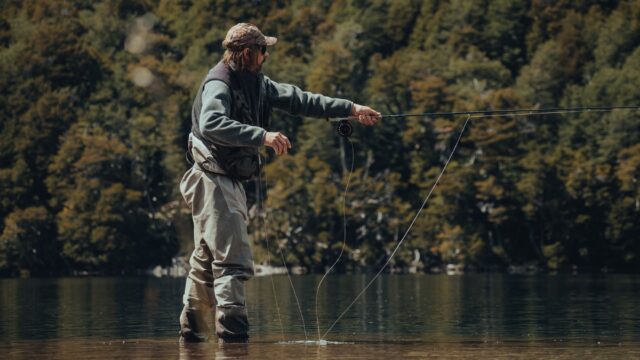
- Keep the rod tip low, pointing at the fly or slightly to the side.
- Keep the line pinched under a finger of your rod hand while you strip.
- Wait until you feel the fish or see the fly disappear. On topwater, try to resist reacting to the splash alone.
- Pull the line hard with your stripping hand, a long, firm sweep.
- Then raise the rod and keep pressure on, steering the fish away from cover.
The same principles apply to conventional tackle; our article on how to set the hook covers the differences between hook types.
Fighting and handling
Bass make short, powerful runs toward cover. Use side pressure and keep them coming. Most fish can be landed by stripping line rather than reeling. For a quick release, wet your hands, hold the bass by the lower lip and support larger fish horizontally under the belly. Remove the fly with pliers and let the fish go promptly.
Bottom line
Bass fly fishing is simple: a 7- or 8-weight rod, floating line, short heavy leader, a few poppers and a few streamers. Cast tight to weeds, wood and docks, pause the popper longer than feels natural, and strip set with the rod low. Always check your state’s bass season and size rules before you keep fish.
FAQ
Can I fly fish for bass with a 5-weight rod?
Yes, with small poppers and streamers on calm days, and it works well for pond bass. Larger bugs and wind are easier with a 7- or 8-weight.
What’s the best fly for bass?
There isn’t a single best fly. A popper for surface fishing and a weighted streamer or Woolly Bugger for deeper water cover most situations.
Do I need a sinking line for bass?
Not to start. A floating line handles poppers and weighted flies in shallow water. A sink-tip helps for deeper smallmouth and summer bass on drop-offs.
Why do I miss strikes on poppers?
Usually because the rod is lifted too early or there’s slack in the line. Keep the rod low, the line tight, and strip set only when you feel weight.