Basic Fly Casting: Overhead Cast, Roll Cast, False Casting and Common Mistakes
Two casts will catch most fish on a fly rod. Here's how to make them, why the stop and the pause matter, and how to fix the usual beginner problems.
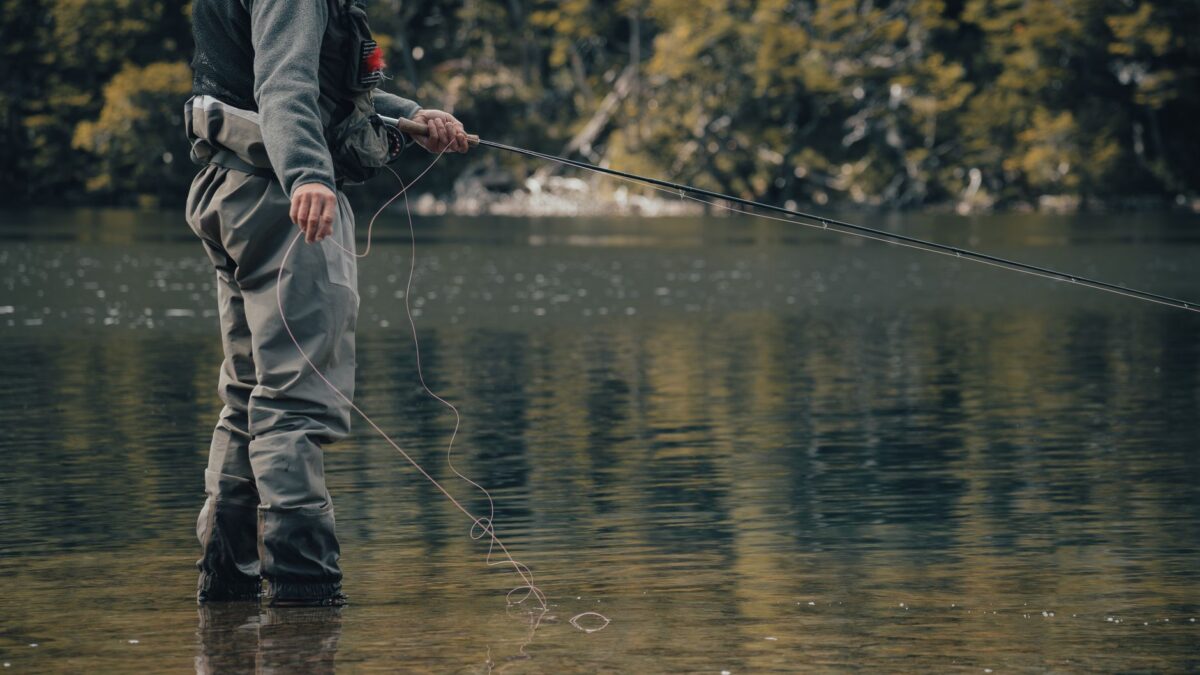
Good fly casting comes down to three things: accelerate smoothly, stop the rod crisply, and pause long enough for the line to straighten before you cast the other way. Learn the overhead cast first, then the roll cast for places with no room behind you. Practice on grass with a piece of yarn instead of a hook, keep casts short at first, and add distance only once your loops look tidy.
How a fly cast works
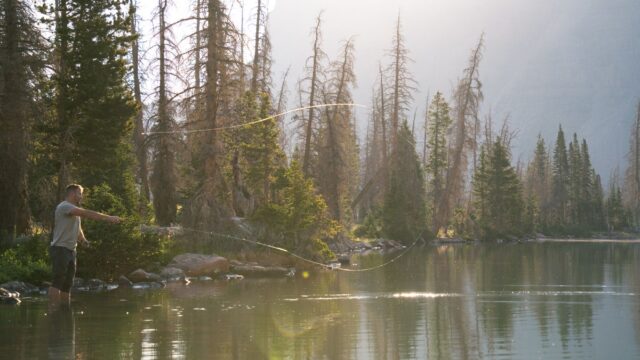
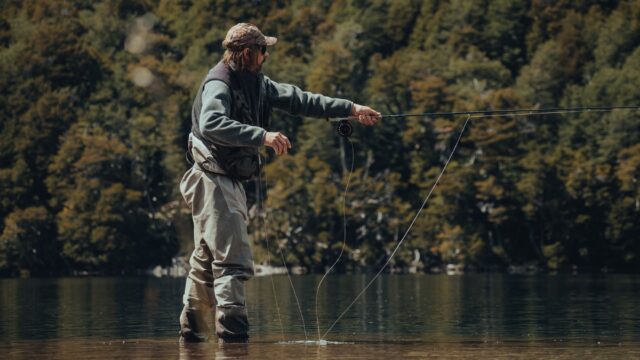
In fly casting, you cast the line, not the fly. Moving the rod tip forward and then stopping it sharply forms a loop in the line that unrolls toward the target. The rod bends as you accelerate and straightens as you stop, adding speed to the line. A smaller, tighter loop travels farther and cuts through wind better.
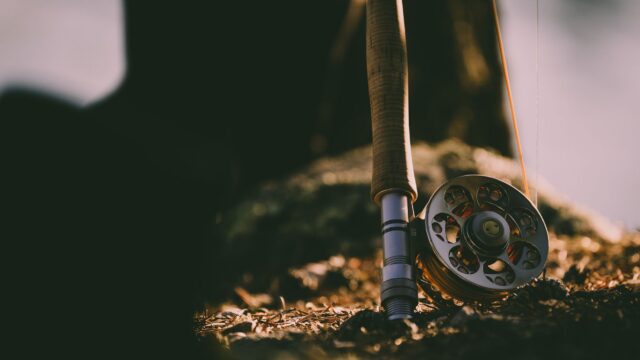
The fly line must match your rod’s weight for this to work properly. If you’re not sure, see the fly rod weight chart.
Grip and stance
- Grip: hold the cork with your thumb on top, pointing up the rod. The thumb pushes the forward cast and gives you a reference for the stop.
- Line hand: hold the line with your other hand near the reel to control slack. Keep it there during the cast.
- Stance: stand comfortably, with the foot on your rod-hand side slightly back so you can watch your backcast over your shoulder.
The overhead cast, step by step
- Start low. Strip out 20 to 25 feet of line and lay it straight in front of you. Point the rod tip down near the water or grass with no slack.
- Lift and accelerate. Raise the rod smoothly, speeding up as the line comes off the surface.
- Stop on the backcast. Stop the rod crisply when it’s a little past vertical. Many instructors describe this as stopping around the 1 o’clock position on a clock face, but the right angle depends on how much line is out.
- Pause. Let the line unroll behind you. Turn your head and watch it. Start forward just as the line straightens.
- Cast forward. Accelerate forward along a straight path and stop crisply at about eye level, roughly 10 o’clock.
- Follow through. After the loop forms and unrolls, lower the rod tip as the line falls to the water.
The stop is what makes the cast. A gradual, mushy stop produces a wide, weak loop. A crisp stop, like flicking water off a paintbrush, produces a tight one.
False casting and shooting line
A false cast is a forward and back cast that doesn’t touch the water. Use it to:
- lengthen line before the final cast,
- change direction toward a new target,
- dry a dry fly that’s starting to sink.
Keep false casts to a minimum. Every extra cast is another chance for a tangle, and the shadow of a line flashing back and forth can spook fish in clear water.
To shoot line, hold a few extra feet of slack in your line hand. As you stop on the final forward cast, release it. The moving line pulls the slack through the guides and adds distance. Weight-forward lines shoot best; our guide to fly line types explains why.
The roll cast
The roll cast needs no backcast, so it’s ideal when trees, a bank or a wall sit behind you. It’s also the easiest way to straighten line on the water before a pickup.
- Get line on the water in front of you, about 15 to 30 feet.
- Raise the rod slowly and bring it back until the tip is slightly behind your shoulder. The line should slide toward you and hang in a curve beside and behind the rod. This curve is called the D-loop.
- Pause briefly so the line comes to rest and the end stays anchored on the water.
- Cast forward with a firm, accelerating stroke and a crisp stop at eye level.
- Watch the loop roll out along the surface and lay the line straight.
Roll casts work best on water, because the water’s grip on the line helps the rod load. They’re hard to practice on grass for that reason.
Common beginner mistakes and fixes
| Problem | Likely cause | Fix |
|---|---|---|
| Line slaps the ground or water behind you | Backcast dropped too low or started forward too early | Stop higher on the backcast and watch the line straighten before casting forward |
| Cracking sound, flies snapping off | Starting the forward cast before the backcast unrolls | Lengthen the pause |
| Wide, open loops that die in the air | Rod tip moving in a big arc; wrist rolling over | Keep the wrist firmer and the rod tip moving in a straighter path |
| Wind knots (tailing loops) | Sudden, jerky power or a path that dips | Apply power smoothly and accelerate steadily to the stop |
| Line piles up in front of you | Not enough speed or a stop that’s too late and low | Stop crisply at eye level and aim slightly above the target |
| Fly hits you or the rod | Wind blowing the line into your casting side | Cast with the rod tilted across your body, or turn so the wind is on your other side |
Practice and safety
- Practice on grass with a tuft of bright yarn tied to the leader. Avoid pavement and gravel, which scratch the line.
- Use targets. A hula hoop or paper plate at 20, 30 and 40 feet makes practice measurable.
- Short sessions of 15 to 20 minutes beat long, tired ones.
- Wear eye protection and a hat whenever a real fly is on the line, and check behind you for people, branches and power lines.
A lesson with a qualified instructor can shortcut weeks of trial and error. Fly Fishers International lists certified casting instructors by location. For the rest of the setup, see fly fishing for beginners.
Bottom line
Learn the overhead cast with a short line, focusing on a crisp stop and a full pause, then learn the roll cast for tight spots. Keep false casts few, shoot line for distance, and fix problems one at a time using the table above. Most fishing happens within 40 feet, so accuracy and a clean loop matter far more than distance.
FAQ
How long does it take to learn fly casting?
Many people can make short, fishable casts after a few practice sessions. Consistent tight loops and longer casts take regular practice over weeks or months.
What is the 10 and 2 rule?
It’s a teaching image: stop the rod near 10 o’clock in front and 1 or 2 o’clock behind. It’s a helpful starting point, but the casting arc grows as you cast more line.
Why does my line pile up instead of straightening?
Usually there isn’t enough line speed or the forward stop is too low. Stop crisply at eye level and aim a little above the water.
When should I use a roll cast?
Use it when there’s no room for a backcast, to straighten line before picking it up, or to free a fly snagged on the far side of a rock or stick.