How to Choose a Fly Reel: Drag Types, Arbor Size, Sealed Drags and Matching Your Rod
For small trout, almost any reel works. For fish that run, the drag, arbor and backing capacity start to matter. Here's how to read the specs.
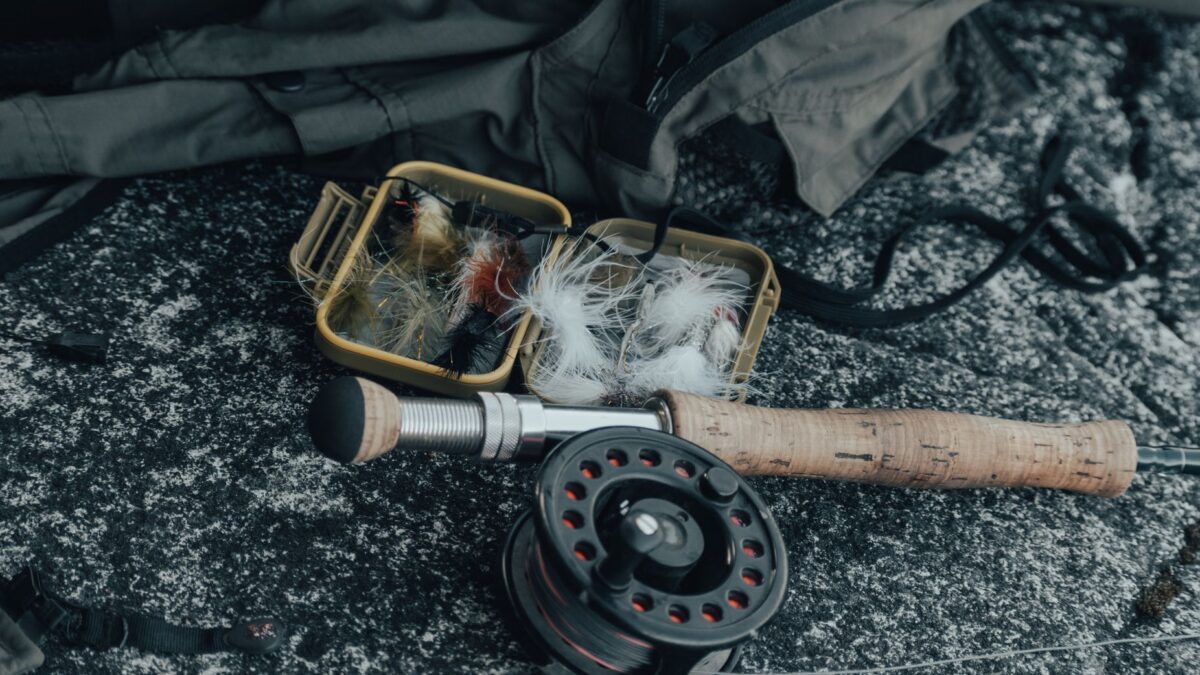
Choose a fly reel rated for the same line weight as your rod, with enough capacity for that line plus the backing you need. For trout and panfish on 3- to 6-weight rods, a simple click-and-pawl or light disc drag is plenty. For bass, pike, steelhead, stripers or saltwater, step up to a smooth disc drag, ideally sealed, on a large-arbor spool.
What a fly reel actually does
Most of the time, a fly reel just stores line. You strip line in by hand and only fight fish “on the reel” when they’re big enough to pull line out. That’s why reels matter little for small fish and a lot for fast, strong ones. A reel also balances the rod in your hand, which affects comfort over a long day.
Drag types
Click-and-pawl
A spring-loaded pawl clicks against a gear. It gives light, mostly fixed resistance, mainly to stop the spool from overrunning when line is pulled. Many models let you change direction and apply extra pressure by palming an exposed spool rim with your hand.
- Pros: simple, light, few parts, classic sound.
- Cons: limited stopping power; you need hand skill on bigger fish.
Disc drag
Friction discs press against the spool with adjustable pressure, set by a knob. Common disc materials include cork, carbon fiber and synthetic composites.
- Pros: adjustable, smooth resistance; protects light tippets on hard runs; handles bigger fish.
- Cons: heavier and more expensive; some drags need occasional maintenance.
Sealed vs unsealed drags
A sealed drag keeps water, sand and grit out of the drag system. That makes it the safer choice for saltwater, muddy rivers and anglers who don’t want to clean and grease a reel. Unsealed drags work fine in freshwater if you rinse and dry them. Maker specifications usually state whether the drag is sealed and whether the reel is saltwater-rated.
Arbor size
The arbor is the center of the spool. Its diameter changes how the reel behaves:
| Arbor | Line pickup per turn | Line memory | Backing capacity |
|---|---|---|---|
| Standard | Lower | Tighter coils | Most for a given reel size |
| Mid arbor | Medium | Medium | Medium |
| Large arbor | Higher; recovers line fast when a fish runs toward you | Larger, looser coils | Less, unless the reel is wider or larger |
Large arbors are the most common design today because they pick up line quickly and keep coils loose. If you need a lot of backing for long-running fish, check capacity, not just arbor size.
Materials and build
- Machined aluminum (cut from bar stock): stiff, strong and precise; usually the priciest.
- Cast aluminum: less expensive; fine for most freshwater fishing but less tolerant of drops.
- Composite or plastic: light and cheap; good for kids, backups and casual use.
Look at spool tolerances, the drag knob’s range, whether the reel is easily switched between left- and right-hand retrieve, and the availability of spare spools. Spare spools or cassette-style reels let you carry floating and sinking lines on one reel body. Our guide to fly line types explains when a second line helps.
Matching the reel to the rod
- Check the rod weight. A 9-foot 5-weight needs a reel that holds a 5-weight line. The fly rod weight chart shows typical uses for each weight.
- Read the capacity spec. Makers list capacity in a format such as “WF5F plus 100 yards of 20-lb backing”. Many reels cover a range, such as 4 to 6 weight.
- Decide on backing. Small-stream trout need little; steelhead, stripers and saltwater fish need much more.
- Balance the outfit. With the reel mounted and line on, the rod should balance near the front of the grip. A reel that’s far too light makes the tip feel heavy.
- Set up retrieve direction before spooling. Most right-handed casters reel with the left hand so they don’t switch hands after hooking a fish.
Quick picks by use
| Use | Drag | Arbor | Notes |
|---|---|---|---|
| Panfish and small-stream trout (1 to 4 wt) | Click-and-pawl or light disc | Any | Light weight matters more than drag |
| General trout (5 to 6 wt) | Disc | Large | Smooth start-up helps with light tippet |
| Bass (6 to 8 wt) | Disc | Large | Drag less critical; durability and balance matter |
| Steelhead, salmon, pike (7 to 10 wt) | Strong disc, sealed preferred | Large | Plenty of backing capacity |
| Saltwater (8 wt and up) | Sealed disc | Large | Saltwater-rated, corrosion-resistant finish |
Care and maintenance
Rinse reels in fresh water after any saltwater or muddy trip, back off the drag before storage so discs aren’t compressed, and dry everything before putting it away. Follow the manufacturer’s instructions for lubrication, since some sealed drags shouldn’t be opened.
If you’re building your first outfit, our fly fishing for beginners guide covers how the reel fits with the rest of the gear.
Bottom line
For small trout and panfish, buy a light, simple reel that matches your rod weight and spend the savings on a good line. For bigger fish that run, a smooth disc drag, sealed if you fish saltwater or gritty rivers, a large-arbor spool and enough backing capacity are worth paying for. Always confirm the reel’s line-weight rating and capacity on the spec sheet.
FAQ
Does a fly reel need a disc drag?
Not for most trout and panfish. A disc drag matters when fish are big or fast enough to take line, or when you fish light tippet for large trout.
Is a large arbor reel better?
For most anglers, yes: it retrieves line faster and keeps coils looser. The trade-off is less backing capacity in a reel of the same size.
Can I use a 7/8 reel on a 6-weight rod?
It will work, but the outfit may feel heavy and unbalanced. A reel rated for your line weight usually feels better.
What is the difference between sealed and unsealed drags?
Sealed drags keep water and grit out and need less maintenance, which matters in saltwater. Unsealed drags are fine in freshwater if rinsed and dried.