Fly Fishing for Beginners: The Basic Outfit, First Flies and Where to Start
A plain-English starter guide: what makes fly fishing different, the one outfit that covers most beginner fishing, and where to make your first casts.
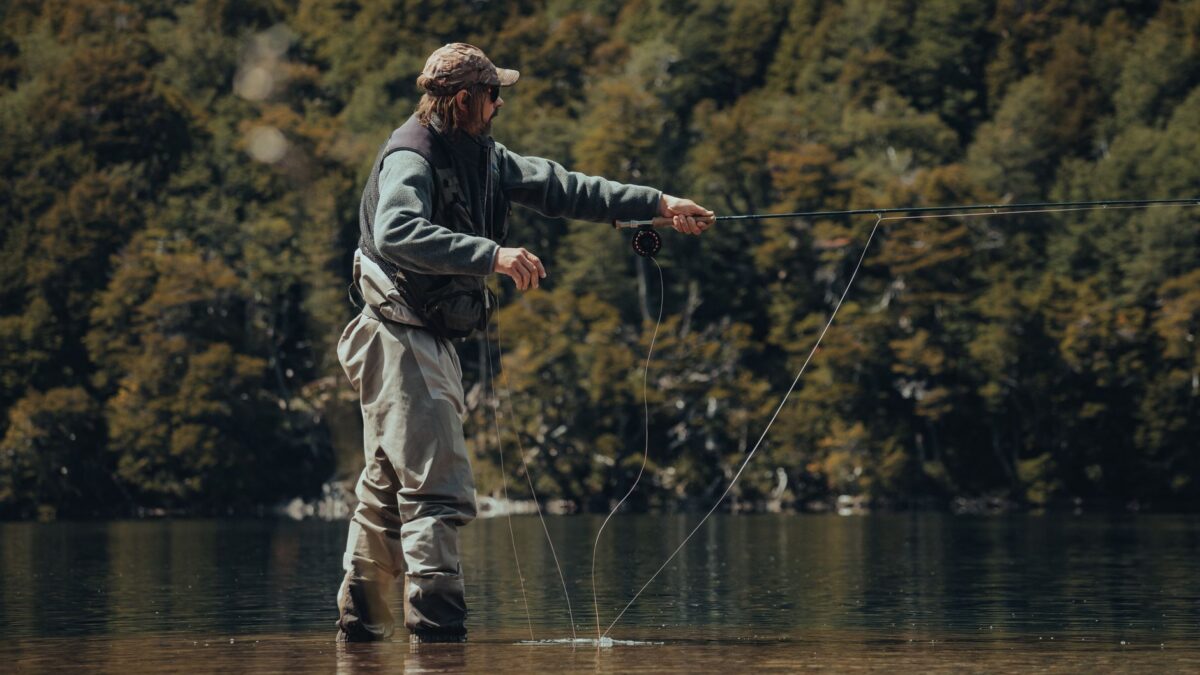
The simplest way to start fly fishing is with a 9-foot, 5-weight rod, a matching reel loaded with weight-forward floating line, a 9-foot tapered leader and a few spools of tippet. Learn the basic cast on grass or open water, then head to a pond full of bluegill or a stocked trout lake where you have room behind you. Bring a handful of proven flies and a valid fishing license, and keep the first trips short and simple.
How fly fishing differs from spinning
With a spinning or baitcasting rod, the weight of the lure pulls line off the reel when you cast. A fly weighs almost nothing, so that can’t work. In fly fishing, the line itself is the weight: you cast a thick, heavy fly line, and the line carries a nearly weightless fly to the target at the end of a thin leader.
That changes a few things:
- You cast with timing, not muscle. The rod bends and unbends to send a loop of line through the air. Rhythm matters more than strength.
- The reel mostly stores line. You usually retrieve by stripping line in with your free hand, and only use the reel when a bigger fish runs.
- Flies imitate food. Insects, small baitfish, crayfish, leeches and even frogs and mice can be imitated with feathers, fur and foam.
- Short range is normal. Many trout and panfish are caught 20 to 40 feet away. Long casts are nice, but not required.
The basic outfit
A fly outfit has six parts that have to match each other. Rods, reels and lines are labeled with a weight number, and the rule is simple: use the same number for all three. Our fly rod weight chart shows which weights suit which fish.
| Part | What it does | Good beginner choice |
|---|---|---|
| Rod | Casts the line and fights the fish | 8.5 to 9 ft, 5-weight, medium-fast action, 4-piece |
| Reel | Stores line, adds drag on bigger fish | A reel rated for 5-weight line with a simple disc or click drag |
| Backing | Fills the spool and gives extra length if a fish runs | 50 to 100 yards of 20-lb Dacron |
| Fly line | Provides the casting weight | Weight-forward floating, matched to the rod (labeled WF5F) |
| Leader | Tapers from thick to thin so the fly lands softly | 7.5 to 9 ft tapered monofilament leader |
| Tippet | The thin last section the fly is tied to | Spools of 3X, 4X and 5X |
Many makers sell matched outfits with rod, reel, backing, line and leader already put together. For a first setup, that removes most of the guesswork. The full story on floating, sinking and taper types is in our guide to fly line types.
Leader and tippet in one minute
Tippet sizes use an X system: the bigger the X number, the thinner the material. A handy shortcut is the “rule of 11”: subtract the X number from 11 to get the diameter in thousandths of an inch, so 5X is about 0.006 inch and 3X about 0.008 inch. Breaking strength depends on the brand and on whether it’s nylon or fluorocarbon, so check the spool.
A common rule of thumb for matching tippet to fly: divide the hook size by three. A size 12 fly pairs well with 4X; a size 6 streamer with 2X. Heavier tippet turns over bigger flies and lets you pull fish away from weeds.
First flies to carry
Flies fall into a few families. Dry flies float, nymphs drift under the surface, streamers imitate small fish or leeches, and poppers make noise on top. A small, versatile starter box might look like this:
- Woolly Bugger (sizes 6 to 10, black or olive): a streamer that catches trout, bass and panfish when stripped or swung.
- Elk Hair Caddis (sizes 12 to 16): a buoyant dry fly that’s easy to see.
- Parachute Adams (sizes 12 to 18): a general mayfly imitation with a visible post.
- Pheasant Tail and Hare’s Ear nymphs (sizes 12 to 18): the classic subsurface flies for streams.
- Small foam or cork popper (sizes 8 to 12): the most fun way to catch bluegill on a summer evening.
- Beadhead nymph under a strike indicator: the indicator works like a bobber and shows you subtle strikes.
Where to start
Your first water should be forgiving. Look for three things: open space behind you for the backcast, willing fish, and easy, legal access.
- Ponds and small lakes with sunfish. Bluegill eat small flies readily, especially near weed edges in late spring and summer. Our bluegill fishing guide covers where they hold.
- Stocked trout waters. Many state agencies publish stocking schedules. Freshly stocked trout are less wary than wild fish and often hit a Woolly Bugger or small nymph.
- Open riffles on a larger stream. Wide gravel bars give you room to cast and wade in shallow water.
Leave tight, brushy creeks for later. They demand short, accurate casts and eat flies in overhanging branches.
Your first outing, step by step
- Assemble the rod by lining up the guides, starting at the tip section.
- Thread the line through the guides with the line doubled over. If you let go, the loop catches on a guide instead of sliding all the way back.
- Add tippet to the leader with a double surgeon’s knot or a blood knot, then tie on the fly with an improved clinch knot.
- Strip off 20 to 30 feet of line and lay it on the water in front of you.
- Cast a short distance and let the fly settle. The basic overhead and roll casts are explained in our fly casting guide.
- Fish the fly the right way: let dry flies and nymphs drift naturally with the current; strip streamers and poppers back in short pulls.
- Set the hook by lifting the rod for trout on small flies, or by pulling line with your stripping hand (a strip set) for streamers and poppers.
Rules worth knowing
You need a valid fishing license in every state unless you qualify for an exemption, such as an age exemption or a free fishing day. Fly anglers also run into special regulations: some trout waters are fly-fishing only, artificial lures only, catch-and-release, or require barbless hooks. These rules vary by state and by individual stream, so check your state wildlife agency’s current regulations before each trip.
Safety basics apply too. Wear sunglasses and a hat, since a fly moving at speed can hit you. If you wade, move slowly, avoid fast water above your knees and consider a wading belt.
Bottom line
Fly fishing is easier to start than it looks. A matched 9-foot 5-weight outfit with floating line, a few spools of tippet and half a dozen flies will catch trout, panfish and even small bass. Practice the cast for an hour, pick open water with eager fish, and keep the gear simple until you know what kind of fly fishing you enjoy most.
FAQ
Is fly fishing harder than spin fishing?
The cast takes more practice, but the basics come quickly. Many beginners can make a short, usable cast after a session or two of focused practice, and a 20 to 30 foot cast is enough to catch fish in ponds and small streams.
What fly rod weight should a beginner buy?
A 9-foot 5-weight is the most versatile choice for trout and panfish. If you mainly fish for bass, a 6- or 7-weight handles bigger flies and wind better.
Do I need waders to start?
No. Many beginners start from the shore of a pond or lake. Waders help on streams, but only once you know you’ll stick with it, and always wade carefully.
Can I use my spinning line with a fly rod?
No. A fly rod needs a real fly line of the matching weight. Monofilament is far too light to load the rod, so it won’t cast.