Spring Bass Fishing: How to Find and Catch Bass From Pre-Spawn to Post-Spawn
Spring bass fishing gets easier when you stop watching the calendar and start reading water temperature. Here is where bass go at each stage and what to throw.
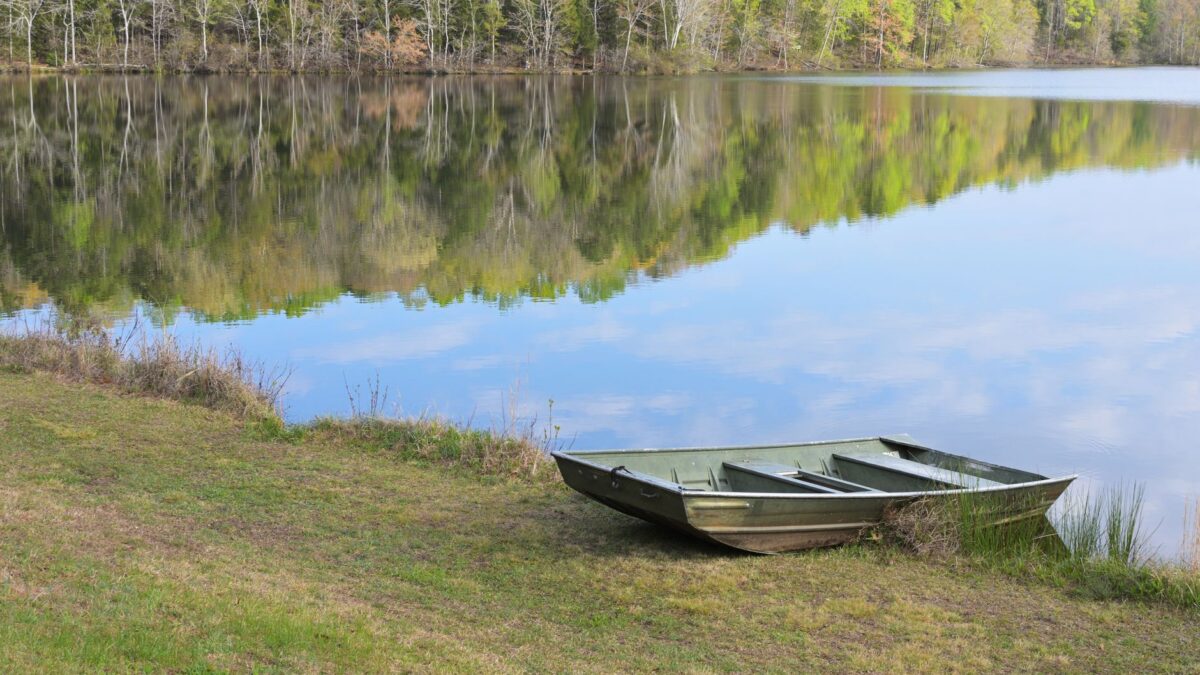
In spring, follow the water temperature, not the calendar. As the water climbs from the upper 40s into the 50s°F, bass leave their winter areas and stage on points and drop-offs near spawning flats; once it reaches roughly the low 60s, males build nests in protected shallows; after spawning, tired fish slide back to the first cover and breaks outside those flats. Fish slower, suspending baits early, finesse plastics around beds, and topwater and swimbaits after the spawn.
Below is how each stage works, where to look, what to throw and how to treat spawning bass so the fishery stays healthy.
Why water temperature runs the spring
Bass are cold-blooded, so their activity rises and falls with the water around them. State fisheries agencies generally put largemouth spawning somewhere between about 60 and 75°F. The Wisconsin DNR, for example, notes that males start choosing nest sites around 60°F and that eggs are laid at about 62–65°F. Smallmouth tend to start a little cooler.
A cheap thermometer, or the temperature reading on a fish finder, is the most useful spring tool you can carry. Temperatures also vary across a single lake: shallow, dark-bottomed, wind-protected pockets warm first, and so do banks on the north side of a lake that face the southern sun. Small, shallow, stained lakes usually warm faster than big, deep, clear ones.
The three stages at a glance
| Stage | Typical water temperature | Where bass are | Lures that fit |
|---|---|---|---|
| Early pre-spawn | Upper 40s to mid-50s°F | Main-lake points, channel swings and the first breaks near spawning bays | Suspending jerkbaits, jigs, lipless crankbaits, blade baits |
| Late pre-spawn | Mid-50s to about 60°F | Secondary points, ditches and the outside edges of spawning flats | Shallow crankbaits, spinnerbaits, bladed jigs, Texas-rigged craws |
| Spawn | Roughly 60 to 70°F (can run warmer in the South) | Protected pockets, flats and the backs of coves with firm bottom | Lizards, creature baits, tubes, wacky-rigged stick baits |
| Post-spawn | Upper 60s into the 70s | First cover and drop-offs outside the flats, docks, grass edges | Topwater walkers and poppers, swimbaits, wacky rigs, soft-plastic worms |
These are typical ranges, not hard switches. Stages overlap, different fish in the same lake can be in different stages, and timing varies by region and species.
Pre-spawn: the big-fish window
Pre-spawn bass are feeding to build energy for spawning, and many anglers target this period for the heaviest females of the year. Fish move in steps: from deep wintering areas to main-lake points and channel bends, then to secondary points and ditches leading into spawning pockets, and finally up to the edges of the flats.
Where to look
- Points and channel swings at the mouths of creeks and coves that have spawning flats inside.
- The first drop-off outside a flat, especially where it has rock, wood or leftover grass.
- Sunny, wind-protected banks after several warm, stable days.
What to throw
While the water is still in the 40s and low 50s, a suspending jerkbait worked with long pauses is a classic choice, along with a jig crawled slowly over rock. As the water warms toward 60°F, speed up: shallow crankbaits bumped off cover, spinnerbaits and bladed jigs along flat edges, and lipless crankbaits over emerging grass.
A stretch of stable, warm days usually pushes fish shallower. A cold front often pulls them back to the nearest deeper water for a day or two; when that happens, drop back to the first break and slow down.
The spawn: finding and fishing beds
When water holds around the low 60s, males move up and fan out nests: cleared, roughly round spots on sand, gravel or another firm bottom, often next to a stump, dock post, rock or plant stem. Females come in to lay eggs and then leave, while the male stays to guard the eggs and later the fry. For the full temperature ranges and regional timing, see our guide to bass spawn water temperature.
The spawn doesn’t happen all at once. Fish spawn in waves over several weeks, and the timing shifts a lot from south to north.
How to spot beds
- Wear polarized sunglasses and keep the sun behind you so you can see into the water.
- Move slowly along protected shallow banks and look for pale, cleared circles on the bottom.
- Watch for a fish that returns to the same spot after it is spooked; that is usually a guarding fish.
Presentations
Bedding bass often strike to remove an intruder rather than to eat. Anglers who fish beds typically use a soft-plastic lizard, creature bait or tube on a Texas rig or light jighead, set it in the nest and shake it in place. A white or brightly colored bait makes it easier to see when a fish picks it up.
Bed-fishing ethics and regulations
Bed fishing is legal in many places but not everywhere, and it is a debated practice. Some northern states protect bass during the spawn with closed seasons or catch-and-release-only periods. New York, for example, has a catch-and-release, artificial-lures-only period on most waters through mid-June. Other states allow harvest year-round. Rules differ by state and often by individual lake, so check your state wildlife agency’s current regulations before you go.
If you do fish for spawning bass:
- Release fish quickly, right where you caught them, so the guarding male can get back before sunfish and other predators raid the nest.
- Keep fights short and the fish in the water as much as possible. Our catch-and-release tips cover handling in detail.
- Think twice about bothering a male guarding a cloud of fry, since the young depend on him.
- Consider releasing spawning fish even where keeping them is legal.
Post-spawn: recovery and the shad spawn
After spawning, females are worn out and often suspend near the first cover or drop-off outside the flats before they feed heavily again. Males stay on to guard fry for a while. Many anglers find this the most frustrating part of spring, because the fish seem scattered and moody.
Good options include topwater walking baits and poppers early and late in the day, wacky-rigged stick baits skipped under docks and around cover, and swimbaits along the first break. In many southern reservoirs, shad spawn in the shallows around this time, mostly at first light around grass, riprap and seawalls; a spinnerbait or swim jig at dawn can be very effective while that lasts.
Regional timing
Because temperature drives the spawn, dates move with latitude and with the type of water. An older study of South Florida largemouth found them starting to spawn in winter, once the water cooled into the low 60s, with peak activity in February. In Missouri, the state conservation department lists mid-April through late May or June. In Wisconsin, the DNR gives late April to early July. Natural lakes, reservoirs and rivers warm at different rates, so treat any calendar as a rough guide and keep checking the water.
Bottom line
Spring bass fishing is a temperature game. In the 40s and 50s°F, fish slow, suspending and bottom baits on points and breaks near spawning areas. Around 60°F and up, look for beds in protected shallows and treat spawning fish with care. After the spawn, work the first cover outside the flats with topwater, swimbaits and soft plastics. Always check your state’s current season and bed-fishing rules first.
FAQ
What water temperature do bass start spawning?
Largemouth usually start building nests around 60°F and lay eggs in the low to mid 60s, though spawning can continue into the 70s. Smallmouth often start a few degrees cooler. Local conditions and fronts can shift this.
Is it legal to fish for bass on beds?
It depends on your state and the specific water. Some states close bass season or require catch-and-release during the spawn, while others allow fishing and harvest year-round. Check your state wildlife agency’s current regulations.
What is the best lure for pre-spawn bass?
There is no single best lure. Suspending jerkbaits and jigs are reliable in cold early pre-spawn water, while shallow crankbaits, spinnerbaits and bladed jigs work well as the water approaches 60°F.
Why do bass seem to stop biting after the spawn?
Females are recovering and often suspend near the first cover or drop-off outside the spawning flats, while males are busy guarding fry. Topwater lures early and late and slow-falling soft plastics are good ways to catch fish during this phase.