How to Rig a Texas Rig: Hooks, Weights, Pegging and Where It Shines
The Texas rig is the most useful weedless setup in bass fishing. Here's how to build one step by step and match the hook and weight to the water you're fishing.
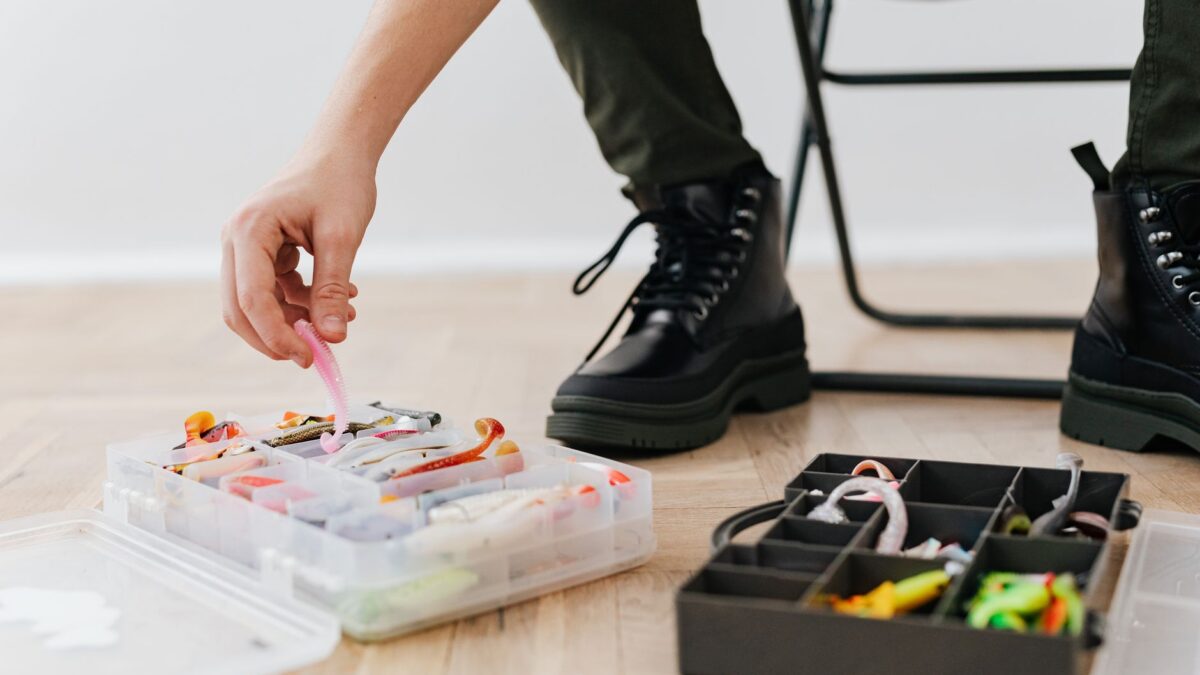
A Texas rig is a soft plastic bait threaded onto an offset or wide-gap hook with the point buried in (or just under the skin of) the plastic, with a bullet-shaped sinker sliding on the line above it. That makes it nearly weedless, so you can throw it into brush, grass and timber where exposed hooks would snag. A good all-around starting point is a 6–7 in worm on a 3/0 or 4/0 offset hook with a 3/16 or 1/4 oz weight.
From there you adjust the weight for depth and cover, choose the hook to fit the bait’s thickness and decide whether to peg the sinker. Here is how to do each.
What you need
- Bullet weight (also called a worm weight): lead or tungsten, usually 1/8 to 1/2 oz for most fishing and heavier for punching through mats.
- Hook: an offset worm hook, an extra-wide-gap (EWG) hook or a straight-shank flipping hook, sized to the bait.
- Soft plastic: a straight-tail or ribbon-tail worm, creature bait, craw or stick bait.
- Optional peg: a rubber bobber stopper, a plastic or rubber weight peg, or a screw-in weight.
- Line: 12–20 lb fluorocarbon for most situations, or 40–65 lb braid for heavy cover and grass.
Hook and weight by situation
| Situation | Weight | Hook | Bait |
|---|---|---|---|
| Shallow, sparse cover, spawning areas | None to 1/8 oz | 2/0–3/0 offset or EWG | Stick bait, finesse worm |
| General fishing, about 5–15 ft | 3/16–1/4 oz | 3/0–4/0 offset | 6–7 in worm |
| Deeper water, ledges, wind | 3/8–1/2 oz | 4/0 offset or EWG | Worm, creature bait |
| Flipping wood, docks, brush | 3/8–3/4 oz, pegged | 4/0–5/0 straight-shank flipping hook | Creature, craw |
| Punching matted grass | 1 oz and up, pegged | Heavy-wire punch hook | Compact craw or creature |
The rule of thumb is to use the lightest weight that still gets the bait where you want it. A lighter sinker falls slower and looks more natural, while a heavier one gets down faster, punches through vegetation and holds bottom in wind.
How to rig a Texas rig step by step
- Slide the bullet weight onto the line with the pointed end facing the rod tip.
- If you want to peg it, add a bobber stopper or peg now, above or below the weight depending on the type.
- Tie on the hook with a strong knot such as a Palomar or improved clinch.
- Push the hook point straight into the center of the bait’s head about 1/4 to 1/2 in, then turn it and bring it out the side.
- Pull the hook through until the eye and the offset bend (if it has one) sit inside the head of the bait.
- Rotate the hook so the point faces back toward the bait. Lay the hook alongside the bait to see where the point naturally meets the plastic.
- Push the point into the bait at that spot. Either bury it fully (most weedless) or bring it through and rest the tip just under the skin on the back side, often called skin-hooking or “Tex-posing.”
- Check that the bait hangs perfectly straight. A bunched or kinked bait spins in the water and twists your line.
Choosing the right hook
Match the hook gap to the bait’s thickness. The gap needs enough room for the plastic to collapse and the point to reach the fish’s jaw on the hookset.
- Offset worm hooks hold slim worms straight and are the classic choice for finesse and standard worms.
- EWG hooks have a wider gap for bulkier baits like creature baits, craws and thick stick baits.
- Straight-shank flipping hooks, often with a bait keeper, are heavier wire for big fish in thick cover and pair well with a pegged weight.
Our hook size guide covers how sizes like 2/0 and 4/0 compare.
Lead vs tungsten weights
Tungsten is roughly 1.7 times as dense as lead, so a tungsten weight is noticeably smaller for the same weight. A smaller sinker slips through brush and grass more easily, and because tungsten is hard rather than soft, many anglers find it transmits bottom contact more clearly. The trade-off is price: tungsten costs considerably more, which matters in snaggy water where you lose rigs.
Also check your local rules. Several states, mostly in New England, restrict the sale or use of small lead sinkers and jigs, partly to protect loons, and some states limit lead on specific waters. Tungsten, steel, tin and bismuth weights are alternatives. Regulations vary by state and change, so confirm with your state wildlife agency.
To peg or not to peg
A pegged weight is fixed against the bait. It keeps the bait and sinker together as they fall through branches or grass, so they don’t separate and wrap around a limb. Pegging is standard for flipping, pitching and punching.
An unpegged weight slides freely. In open water and sparse cover this lets the bait fall a little slower and more naturally behind the weight, and a fish can pick it up with less resistance. Common pegging methods are a rubber bobber stopper, a dedicated weight peg or a wooden toothpick wedged into the sinker and snipped flush.
Where the Texas rig shines
The Texas rig is at its best anywhere the cover would snag other lures: laydowns and brush piles, stumps, docks, grass edges and lily pads, and rocky bottoms on points and ledges. In heavy cover it is often delivered with short, quiet casts, the technique covered in our guide to flipping and pitching.
To fish it, let the bait fall to the bottom on a semi-slack line, then work it in one of three ways:
- Lift and drop: raise the rod tip a foot or two, let the bait fall back, then reel up slack.
- Drag: sweep the rod slowly to the side so the weight crawls over bottom, ideal on ledges and flats.
- Shake: jiggle the rod tip on slack line so the bait quivers in place near cover.
Watch your line as the bait falls. A twitch, a sideways swim or line going slack before the bait should reach bottom often means a fish has it. Reel down until the line is tight and set the hook firmly; our article on how to set the hook explains why a buried point needs a solid hookset.
Bottom line
A Texas rig is a weight, a hook and a soft plastic arranged so the hook point hides in the bait. Start with a 3/16–1/4 oz weight and a 3/0–4/0 offset hook, go heavier and peg the weight for thick cover, and lighter for shallow or clear water. Rig the bait straight, fish it slowly near cover and set the hook hard.
FAQ
What size hook should I use for a Texas rig?
For a typical 6–7 in worm, a 3/0 or 4/0 offset hook works well. Go down to 1/0–2/0 for small finesse worms and up to 4/0–5/0 EWG or flipping hooks for bulky creature baits.
Should I peg the weight on a Texas rig?
Peg it when fishing thick cover, flipping or punching. Leave it free-sliding in open water or sparse cover for a more natural fall.
What’s the difference between a Texas rig and a Carolina rig?
On a Texas rig the weight sits right against the bait. A Carolina rig puts the weight ahead of a leader, so the bait trails behind and floats more freely. The Texas rig is better in cover; the Carolina rig is better for dragging open flats and points.
Can you fish a Texas rig without a weight?
Yes. A weightless Texas-rigged stick bait or worm sinks slowly and is excellent in shallow water, around spawning areas and over submerged grass.