Catch and Release Best Practices: How to Give Every Fish Its Best Chance
A released fish isn't automatically a surviving fish. Short fights, wet hands, quick hook removal and a gentle release make the real difference.
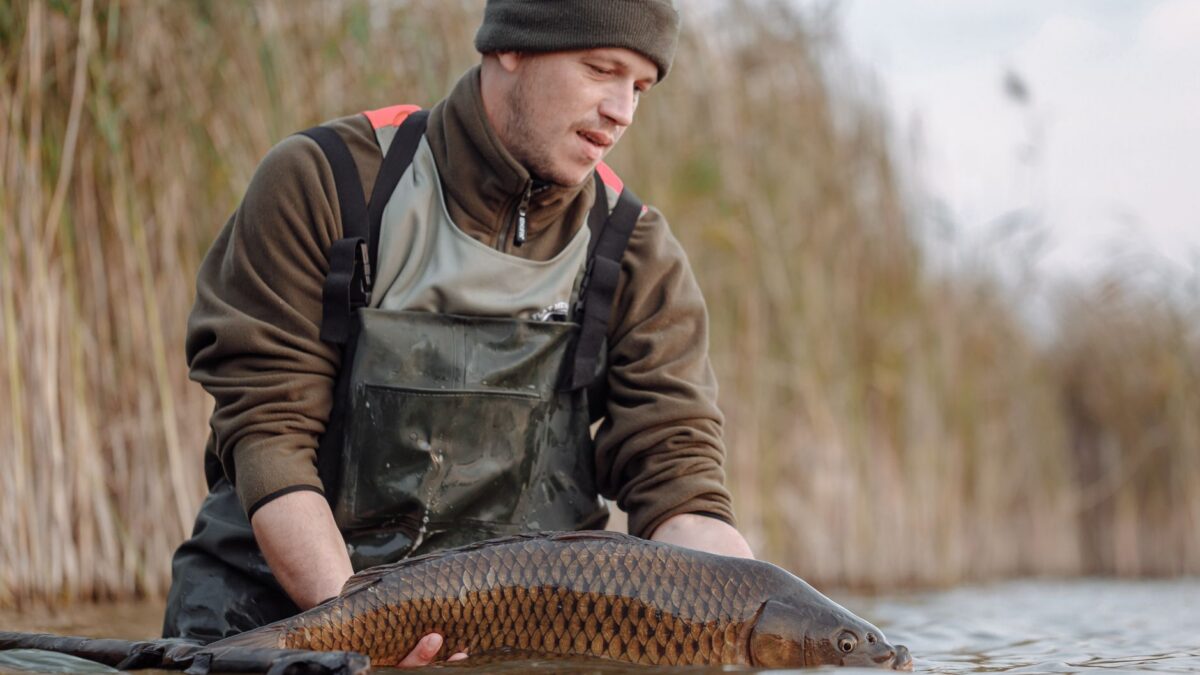
To release a fish so it survives, land it quickly, keep it in the water as much as possible, handle it with wet hands without touching the gills, remove the hook fast with pliers (or cut the line if the hook is deep), and let it swim away on its own. Take extra care in hot weather and with fish caught from deep water, which are the two situations where released fish most often die later.
Why technique matters
Most fish released carefully swim away and recover. But some fish that look fine at release die hours or days later out of sight, often from exhaustion, injuries from deep hooks, damage to the gills or slime coat, or stress in warm water. Maryland’s Department of Natural Resources makes this point in its catch-and-release guidance: many released fish that don’t recover die later, unseen. Each step below reduces one of those risks.
Before you cast
- Use tackle that matches the fish. Gear that’s too light means long fights and exhausted fish. Gear that lets you land fish promptly is kinder.
- Consider barbless hooks. Pinching the barb flat with pliers makes hooks much faster to remove. Check your state’s rules too, since some waters require barbless or artificial-only tackle.
- Favor single hooks where practical. Treble hooks are harder to remove and more likely to hook a fish in more than one place.
- Use circle hooks with bait. They tend to hook fish in the corner of the mouth rather than the throat. For how they differ from J-hooks, see our guide to hook sizes and types.
- Keep tools within reach: needle-nose pliers, line cutters and, ideally, a net with soft rubber or knotless mesh.
During the fight
Bring the fish in steadily rather than playing it until it rolls on its side. Set the hook promptly when you’re fishing bait so the fish has less time to swallow it; our article on how to set the hook explains timing for different baits.
Landing and handling
- Keep it wet. Unhook the fish in the water when you can. If you lift it out, wet your hands first and work quickly.
- Protect the slime coat. Don’t lay fish on dry carpet, hot boat decks, sand or rocks, and avoid dry towels or gloves.
- Stay away from the gills and eyes. Gill filaments are delicate and bleed easily.
- Support big fish. Hold large fish horizontally with one hand under the belly rather than hanging them by the jaw. Our guide on how to hold a bass covers grips in detail.
- Limit air time. Have the pliers and camera ready before the fish is out. A rough rule of thumb many anglers use: if the fish has stopped dripping, it has been out too long.
Removing the hook
For a hook in the lip or jaw, grip the hook shank with pliers and back it out the way it went in. A quick twist often frees it cleanly. With trebles, free one point at a time and keep your fingers clear in case the fish thrashes.
If the fish is hooked deep in the throat or gills, cut the line as close to the hook as you can and release the fish with the hook in place. Studies on bass suggest that cutting the line usually does less harm than forcing out a deeply set hook, and it also shortens air exposure. Some hooks are later shed or corrode, though survival isn’t guaranteed either way, which is why preventing deep hooking matters most.
Fish from deep water: barotrauma
When a fish is pulled up quickly from deep water, gas in its swim bladder expands. This barotrauma can leave the fish bloated and unable to swim back down. Signs include a swollen belly, bulging eyes, the stomach pushed into the mouth, and a fish floating on its side. In bass, problems are most often reported from depths beyond roughly 20 to 30 feet.
- Release it fast. Many fish with mild symptoms can swim back down if they’re released immediately.
- Descending devices clip to the fish’s lip and use a weight to lower it back to depth, where the gas recompresses. They’re standard gear in many saltwater fisheries and can be used on freshwater fish as well.
- Fizzing (venting gas with a hollow needle) is controversial. Some agencies and tournament groups have recommended it, while other research suggests it can harm survival if done wrong. Don’t try it unless you’ve been trained, and follow your state agency’s current advice.
Hot weather and warm water
Warm water holds less oxygen, and fish fighting in it build up more stress. Released fish are more vulnerable in midsummer, especially once surface temperatures reach the 80s °F. In hot conditions:
- Fish early and late in the day, when water and air are cooler.
- Keep fights short and unhook fish in the water.
- Skip the long photo session.
- If you use a livewell, keep it aerated with fresh lake water, avoid crowding, and release fish as soon as possible.
Our summer bass fishing guide covers how heat and oxygen shape where bass hold.
The release
Hold the fish upright in the water with a hand under its belly, and let it swim off when it’s ready. In current, point its head upstream so water flows over the gills. Don’t throw fish back from height or push them back and forth rapidly; gentle support is enough.
Quick reference
| Situation | What to do |
|---|---|
| Lip-hooked bass | Unhook in the water if possible, back the hook out, release |
| Deeply hooked fish | Cut the line close to the hook, release quickly |
| Fish from deep water, bloated | Release immediately; use a descending device if you carry one |
| Hot summer afternoon | Short fights, minimal air time, consider fishing cooler hours |
| Trophy photo | Camera ready first, support the belly, a few seconds out of the water |
Know the rules
Catch and release is sometimes required, not optional: slot limits, minimum sizes, closed seasons and catch-and-release-only waters all vary by state and by water. Some states also regulate hook types, culling or livewell use in tournaments. Check your state wildlife agency’s current regulations for the water you fish.
Bottom line
Good catch and release comes down to a few habits: land fish promptly, keep them wet, handle them gently and away from the gills, remove hooks quickly or cut the line on deep hooks, and give extra care in hot weather and to fish from deep water. Those habits take seconds and keep more fish alive for the next angler.
FAQ
Do fish survive being caught and released?
Most do when they’re handled well, but survival drops with deep hooking, long air exposure, warm water and barotrauma. Careful handling makes a real difference.
Should I remove a swallowed hook?
Generally no. Cut the line as close to the hook as you can and release the fish. Pulling a deep hook out of the throat or gills often causes more damage.
Is it OK to take a photo of a fish I’m releasing?
Yes, if you’re quick. Have the camera ready, keep the fish wet until the shot, support its body, and get it back in the water within moments.
Are barbless hooks better for catch and release?
They come out faster and with less tissue damage, which shortens handling time. You can make most hooks barbless by pinching the barb flat with pliers.