Fishing Boat Basics for Beginners: Boat Types, Safety Gear, Registration and Launching
A small aluminum boat is the easiest way onto the water. Here's what to buy, what safety gear the law requires, and how to launch without drama.
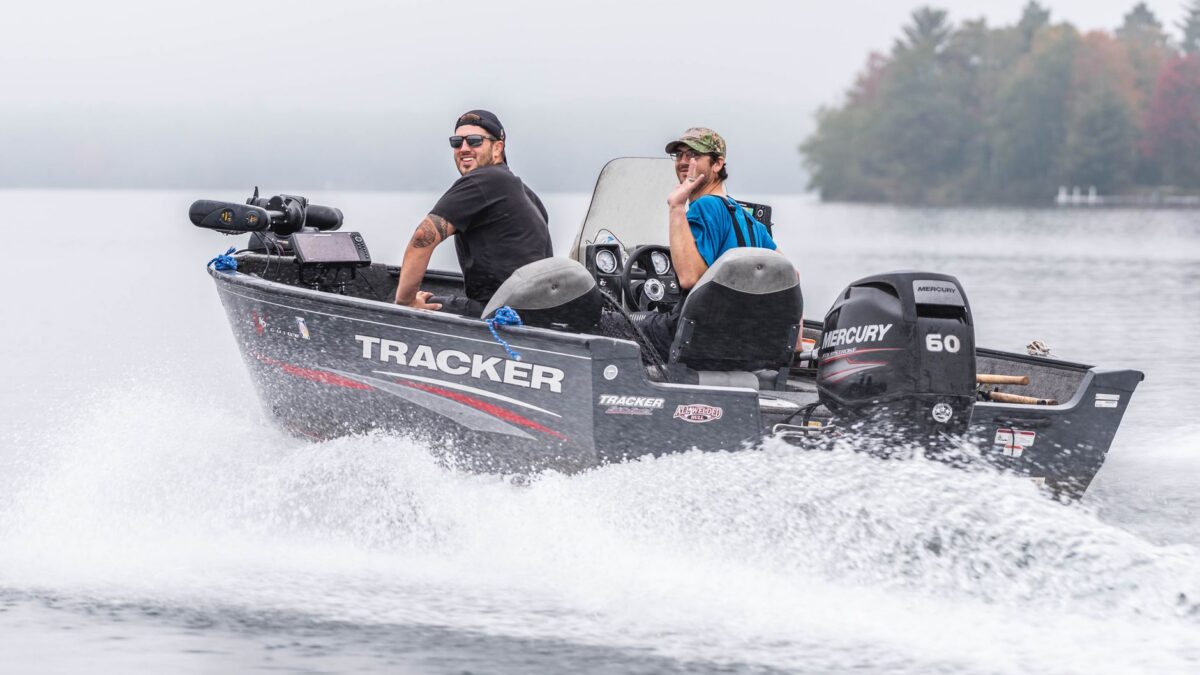
For most beginners, a jon boat or small aluminum fishing boat is the easiest and least expensive way onto the water; a bass boat is faster and better on big lakes but costs much more. Whatever you run, register it if it has a motor, carry the required safety gear (a properly sized, Coast Guard-approved life jacket for everyone aboard is the start), use the engine cut-off switch, and check your state’s boater education rules before your first launch.
Choosing a first fishing boat
| Boat type | Best for | Pros | Cons |
|---|---|---|---|
| Jon boat (flat-bottom aluminum) | Ponds, small lakes, calm rivers | Affordable, light, stable in calm water, shallow draft | Pounds and gets wet in chop; limited range on big water |
| Aluminum V-hull or modified-V | Medium lakes and rivers | Handles waves better than a jon boat; many layouts | Deeper draft; less stable at rest than a flat bottom |
| Bass boat (fiberglass or aluminum) | Big lakes and reservoirs, covering water fast | Fast, casting decks, livewells, electronics-ready | Expensive to buy, fuel and insure; needs a capable tow vehicle |
| Pontoon | Family fishing, calm lakes | Roomy, stable, comfortable | Slow; harder to fish wind and tight cover |
| Kayak or canoe | Small water, low budget | Cheap, portable, quiet | Limited range and storage; weather-sensitive |
If a paddle craft fits your waters, our guide on how to choose a fishing kayak covers sit-on-top vs sit-in and pedal drives. For powered boats, look at the capacity plate near the helm or transom on most small boats; it lists the maximum people, weight and horsepower. Never exceed it.
Jon boat vs bass boat
A jon boat with a small outboard and a bow-mounted or transom trolling motor can fish most small lakes well. It’s simple to tow, store and maintain. A bass boat adds speed, raised casting decks, rod lockers, aerated livewells and space for electronics, which matters on large reservoirs and in tournaments. Many anglers start small, learn boat handling and their home waters, and then decide whether the extra cost is worth it. When you’re ready to add electronics and positioning, see our guides to trolling motors and fish finders.
Registration and titling
Under federal law, a boat with propulsion machinery of any kind (an outboard, inboard or electric trolling motor) must be numbered by the state where it is principally operated, unless it’s federally documented. In practice that means registering with your state boating agency, displaying the registration numbers on the bow and carrying the certificate aboard. Some states also require registration or permits for non-motorized boats such as kayaks and canoes, and many states title boats and register trailers separately. Rules and fees vary, so check your state’s boating agency.
Boater education requirements
Boater education rules are set by each state. Some require a course for all motorboat operators; many require it for operators born on or after a certain date; others require it only for young operators or personal watercraft. Requirements also change: Minnesota, for example, is phasing in its requirement by birth year from 2025 through 2028. NASBLA keeps a state-by-state summary but advises checking with each state boating authority for current rules. Even where it isn’t required, a NASBLA-approved course, many of which are available online, is worth taking.
Required safety equipment
The Coast Guard sets federal minimums for recreational boats, and states can add to them. For a typical small fishing boat, the core items are:
- Life jackets. One Coast Guard-approved, wearable life jacket of the right size for each person aboard, in good condition and readily accessible, not sealed in bags. Boats 16 feet and longer (except canoes and kayaks) must also carry one throwable device such as a cushion or ring.
- Kids. A federal rule requires children under 13 to wear a life jacket on a boat that’s underway unless they’re below deck or in an enclosed cabin, where the state hasn’t set its own requirement.
- Fire extinguisher. Required on many motorboats, especially those with enclosed compartments, inboard engines or permanently installed fuel tanks. Some small, open outboard boats with portable tanks are exempt, but carrying one is cheap insurance.
- Sound-producing device. Boats under 39.4 feet (12 meters) need an efficient sound device such as a whistle or horn.
- Navigation lights if you operate between sunset and sunrise or in restricted visibility.
- Visual distress signals on coastal waters and the Great Lakes, with rules that depend on boat type and time of day.
- Engine cut-off switch. Since April 1, 2021, operators of most boats under 26 feet that have a cut-off switch installed must wear the lanyard or wireless link when on plane or above displacement speed.
The Coast Guard’s Boating Safety Division publishes the full federal requirements. Life jackets matter most: in the Coast Guard’s 2024 statistics, about three-quarters of boating deaths with a known cause were drownings, and 87% of drowning victims whose life jacket use was reported weren’t wearing one. Wearing one, not just carrying one, is what helps.
Other smart gear
Add an anchor with enough rope, a paddle, a bailer or working bilge pump, dock lines, a first-aid kit, a phone in a waterproof case, and a VHF radio on big water.
How to launch a boat
- Prep in the staging area, not on the ramp. Remove tie-down straps (leave the bow winch strap on), load gear, and put in the drain plug.
- Attach a bow line and a stern line so someone can hold the boat once it floats.
- Back down slowly until the boat is close to floating. Many people unplug trailer lights first.
- Release the winch strap and float or ease the boat off; a helper walks it to the dock.
- Park the vehicle and trailer promptly so the ramp is clear.
- Start the engine after it has been lowered, with the cut-off switch attached.
Retrieval is the reverse: bring the boat onto the trailer, secure the winch strap, pull out to the staging area and then do the cleanup.
Clean, drain, dry
Before leaving the ramp, remove plants and mud from the boat and trailer, drain the bilge, livewells and other water, and let everything dry. This helps stop the spread of invasive species such as zebra mussels, and many states have laws requiring it; Michigan, Arizona and Nevada, for example, require drain plugs to be removed during transport.
Before every trip
- Check the forecast for wind and storms, and leave the water if thunder is in the area.
- Tell someone where you’re going and when you’ll be back.
- Check fuel and battery charge; a common guideline is one-third of fuel out, one-third back and one-third in reserve.
- Run through your safety gear before you launch.
Bottom line
Start with a boat that fits your waters and budget; a jon boat or small aluminum boat is the usual entry point. Register it if it has a motor, carry and wear Coast Guard-approved life jackets, keep the required safety gear aboard, use the engine cut-off switch, and follow your state’s boater education rules. Prep at the staging area, launch smoothly, and clean, drain and dry the boat before you leave.
FAQ
Do I need a license to drive a fishing boat?
Most states don’t issue a “boat license” like a driver’s license, but many require a boater education card for some or all operators. Check your state’s rules, which often depend on your birth date and the boat.
Does a boat with only a trolling motor need to be registered?
Generally yes. Federal law covers boats with propulsion machinery of any kind, which includes electric trolling motors, and states handle the registration.
Is a jon boat good for beginners?
Yes, on ponds, small lakes and calm rivers. Jon boats are affordable, stable in calm water and easy to tow. They’re less comfortable and less safe in big waves, so stay off large open water in wind.
What safety gear do I need on a small fishing boat?
At minimum, a wearable life jacket for each person, a throwable device if the boat is 16 feet or longer, a whistle or horn, and lights if you’re out after dark. Some boats also need a fire extinguisher, and your state may add requirements.