Summer Bass Fishing: Where Bass Go in the Heat and How to Catch Them
Summer bass are predictable once you understand heat, light and oxygen. Here is a simple plan for early morning, midday and evening on hot water.
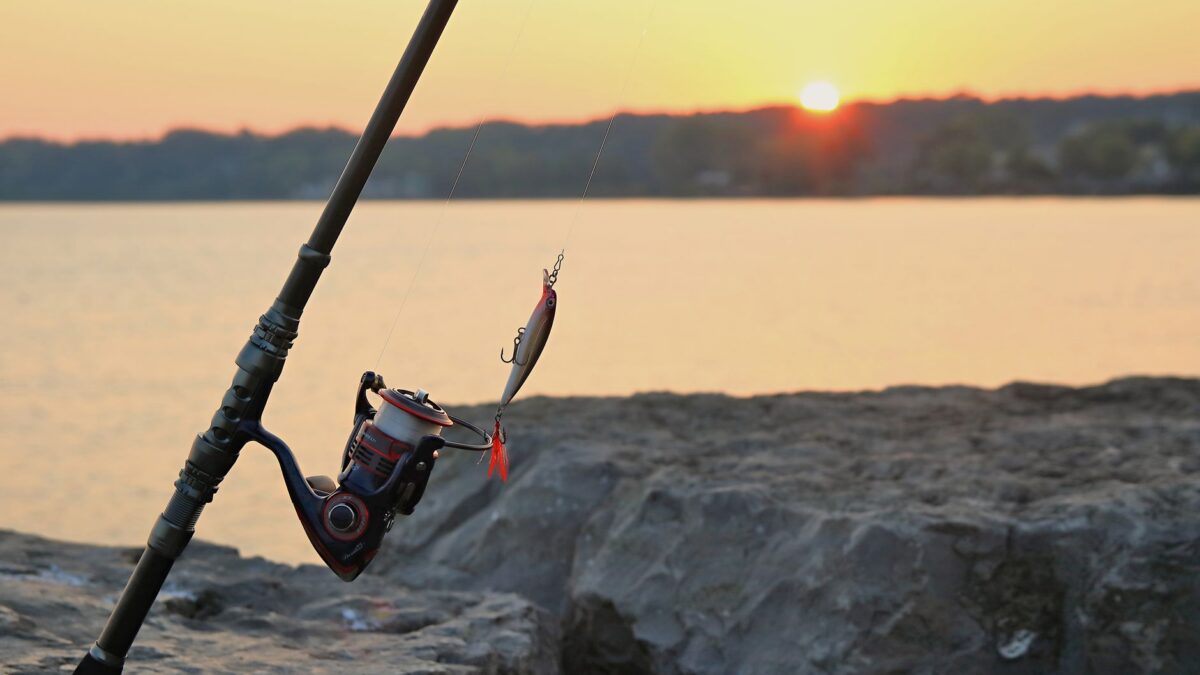
In summer, fish topwater in the first and last hours of light, then follow bass to deeper structure, heavy shade and healthy grass as the sun gets high. Midday, look for ledges, humps and points near deep water in reservoirs, and for shade under docks, mats and overhanging trees in shallower lakes. Warm water holds less oxygen, so bass favor spots that combine comfortable temperature, enough oxygen, cover and food.
How heat and oxygen shape summer bass fishing
Largemouth bass are warm-water fish, but very hot surface water has a cost. As the USGS explains, cold water can hold more dissolved oxygen than warm water, so oxygen levels are often lower in summer. Many lakes and reservoirs also stratify in summer: a warm upper layer sits on top of a colder, denser bottom layer, separated by a zone of rapid temperature change called the thermocline.
The deep water below the thermocline is cut off from the surface and can run very low on oxygen by midsummer, so bass usually avoid it. In practice, that means summer fish tend to be either shallow in cover and shade, or offshore at or above the thermocline depth. A fish finder often shows the thermocline as a faint horizontal band of clutter; our guide on how to read a fish finder explains what to look for.
Early morning and evening: topwater time
Low light and slightly cooler water bring bass shallow to feed at the start and end of the day. This is the most reliable window for surface lures:
- Walking baits and poppers over points, flats and the edges of grass.
- Buzzbaits along banks, riprap and shallow cover when you want to cover water.
- Hollow-body frogs over lily pads and matted vegetation.
Our guide to topwater lures for bass covers how to work each type and when to set the hook. Once the sun is fully up and the surface goes calm and bright, the topwater bite usually fades and it is time to move.
Midday: deep structure and ledges
In reservoirs, many summer bass move offshore to ledges, humps, points and channel edges close to deep water. They often school, so one fish can lead to several. Look for:
- The edges of old river and creek channels where the bottom drops sharply.
- Humps and long points that top out within reach of the thermocline.
- Spots with something extra, such as a rock pile, shell bed, brush or a small depression.
Good lures for offshore fish include deep-diving crankbaits ground along the bottom (see how to fish a crankbait), football jigs, big Texas-rigged worms, Carolina rigs and drop shots. In reservoirs where water is released through a dam, current along the old channel often makes ledge fish more active, so many anglers check generation schedules and plan around them.
Shade, docks and grass
Not every summer bass goes deep. In natural lakes, ponds and shallow reservoirs, plenty of fish stay shallow all summer if they have shade and cover.
Shade
Docks, boathouses, overhanging trees, bridge pilings and the shady side of any cover give bass a cooler, darker place to ambush prey. Work the shade line and skip baits as far underneath cover as you can.
Grass
Healthy grass beds offer shade, food and cover. Fish the outside edge where grass meets deeper water, holes and points in the grass, and thick matted areas. In heavy mats, anglers punch through with a heavy weight and a compact soft plastic or fish a frog over the top.
Moving water
Current from inflowing creeks, river sections, dam releases and even wind-driven water can make summer fish easier to catch. In rivers, smallmouth often hold in current seams below riffles and around boulders.
A simple summer day plan
| Time | Where to look | What to throw |
|---|---|---|
| First light to a couple of hours after sunrise | Points, flats, grass edges, riprap | Walking baits, poppers, buzzbaits, frogs |
| Late morning to mid-afternoon | Ledges, humps, channel edges, deep grass lines; shade under docks and mats | Deep crankbaits, football jigs, big worms, Carolina and drop-shot rigs; flipping and punching baits in cover |
| Evening | Back to shallow points, flats and grass | Topwater, spinnerbaits, swim jigs |
| After dark (optional) | Shallow structure near deep water | Dark spinnerbaits, buzzbaits, big dark worms |
On very hot, crowded lakes, fishing after sunset can be the best option; see our guide to fishing for bass at night.
Take care of fish (and yourself) in the heat
Warm water is hard on fish. If you plan to release bass:
- Keep fights short and land fish quickly.
- Keep the fish in the water while you unhook it when you can, and limit time in the air for photos.
- If you use a livewell, keep it running with fresh water and avoid holding fish longer than needed.
- Release fish where you caught them when possible, especially deep-water fish.
For yourself, drink plenty of water, wear sun protection and take breaks in the shade. Summer thunderstorms can build fast; the National Weather Service warns that if you can hear thunder, you are likely within striking distance, so get off the water before a storm arrives. Always wear a life jacket while the boat is running.
Regional differences
In the Deep South, summer patterns can start earlier and last longer, and the offshore ledge bite on big reservoirs is a mainstay. In northern natural lakes, the surface may never get as hot, and many bass stay in and around weed lines all summer. Smallmouth in clear northern lakes often hold on rock humps and points, sometimes deeper than largemouth in the same lake.
Bottom line
Summer bass follow comfortable temperature, oxygen, shade and food. Throw topwater early and late, then move to deeper ledges and humps or to heavy shade and grass during the bright middle of the day. Keep an eye on the thermocline, handle fish gently in warm water, and watch the sky for storms.
FAQ
Where do bass go in the summer?
Some move offshore to ledges, humps and channel edges near the thermocline, while others stay shallow in heavy shade, docks and thick grass. Many lakes have both groups at the same time.
What depth do bass hold at in summer?
It depends on the lake. Offshore fish often relate to depths at or above the thermocline, which varies from lake to lake, while shallow fish may sit in just a few feet of water under cover. A fish finder helps you find the thermocline depth on your water.
What is the best summer bass lure?
There isn’t one. Topwater lures are strong choices early and late, while deep-diving crankbaits, football jigs and big soft-plastic worms are common midday choices for offshore fish.
Is it better to fish for bass early or late in summer?
Both low-light periods are usually productive. Many anglers prefer early morning, when the water is at its coolest, but evening can be just as good, especially after a hot, calm day.