Bluegill and Sunfish Fishing: Easy Fish for Beginners and Kids
Bluegill live almost everywhere, bite readily and fight hard for their size. A bobber, a small hook and a piece of worm is all you need to start.
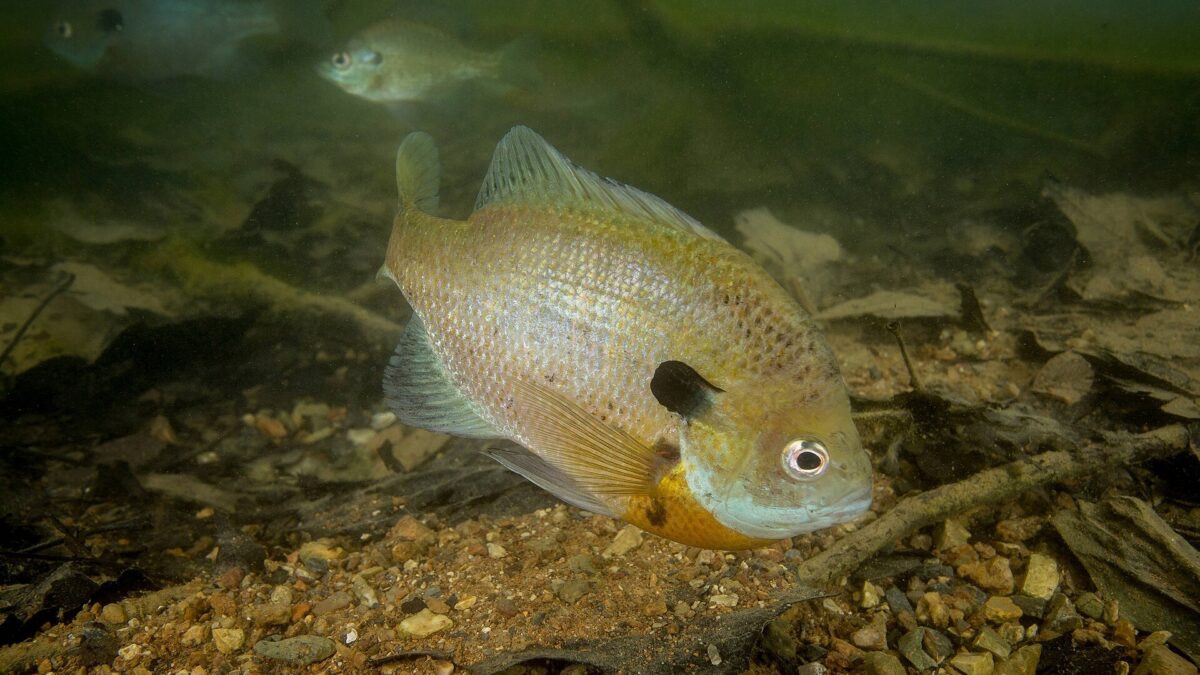
To catch bluegill, put a small hook (size 6 to 10) with a piece of worm under a small bobber, 1 to 4 feet deep, near weeds, docks or fallen trees in a pond or lake. Keep the bait small, since bluegill have small mouths. In late spring and summer, look for shallow spawning beds, which often hold many fish at once. Small jigs and crickets work too, and the whole setup is simple enough for kids.
Know your sunfish
“Sunfish” covers several closely related species that often live together and are caught the same way. Rules and limits sometimes lump them together as panfish, sometimes not, so it helps to know which is which.
| Species | How to recognize it | Notes |
|---|---|---|
| Bluegill | Dark spot at the rear base of the dorsal fin, dark ear flap, small mouth, often vertical bars | The most common sunfish; ponds, lakes, slow rivers |
| Pumpkinseed | Orange-red spot at the edge of the ear flap, wavy blue lines on the cheek | Common in northern waters with vegetation |
| Redear sunfish (shellcracker) | Red or orange edge on the ear flap, plainer cheeks | Eats snails; often deeper and near the bottom |
| Green sunfish | Larger mouth, thicker body, often yellow-edged fins | Tolerates muddy water; common in small ponds and creeks |
The Texas Parks and Wildlife bluegill profile has more on identification and life history.
Simple gear
- Rod and reel: a 4.5 to 6 ft ultralight spinning or spincast combo. Spincast (push-button) reels are the easiest for young kids. A simple cane or telescoping pole with fixed line works around docks.
- Line: 4 to 6 lb monofilament.
- Hooks: size 6 to 10, long-shank hooks make unhooking easier. See our guide to hook sizes if the numbers are confusing.
- Bobbers: small, 1/2 to 1 inch round or pencil floats. A big bobber is hard for a small fish to pull under.
- Split shot: one or two small shot to sink the bait.
Baits and lures that work
- Worms: a 1/2 to 1 inch piece of nightcrawler or a small red worm. Thread it on so little hangs off the hook.
- Crickets and mealworms or waxworms: excellent, especially in summer.
- Tiny jigs: 1/64 to 1/32 oz jigs with small soft plastics or hair, fished under a bobber or slowly retrieved.
- Small spinners: inline or safety-pin spinners in the smallest sizes catch larger sunfish.
- Flies: small poppers, rubber-leg spiders and nymphs on a light fly rod. Bluegill are a great first fish for fly anglers.
Bluegill feed mainly by sight on insects, larvae, small crustaceans and other small animals, so natural baits that move a little work best.
How to rig a bobber and worm
- Tie a hook onto the end of the line with an improved clinch or Palomar knot.
- Pinch on a split shot about 6 to 12 inches above the hook.
- Clip on a bobber 1 to 4 feet above the hook. Start shallow near cover and go deeper if nothing bites.
- Bait the hook with a small piece of worm or a cricket.
- Cast near cover: the edge of weeds, a dock post, a fallen tree.
- Watch the bobber. When it dips or moves away, reel up slack and lift the rod smoothly. A hard jerk often pulls the hook out of a small mouth.
Where bluegill live through the year
Bluegill are found in farm ponds, lakes, reservoirs and slow streams across most of the US. They prefer clear to lightly stained water with plants or other cover.
- Spring: as water warms, bluegill move into shallow, protected areas.
- Late spring and summer: spawning beds in shallow water, plus weed edges, docks and shade.
- Midsummer midday: larger fish often slide deeper along weed edges and drop-offs; fish slightly deeper or in shade.
- Fall: they feed actively along weed edges as water cools.
- Winter: they school deeper; in the North they’re a popular ice-fishing target. See ice fishing for perch and bluegill.
Spawning beds
Texas Parks and Wildlife notes that bluegill begin spawning when water reaches about 70 °F and that spawning can continue through summer until water cools in fall. Males fan out shallow, round nests, usually 1 to 2 feet deep and often over gravel or firm bottom, and guard them until the fry leave. Nests are often clustered in colonies that can number dozens, making light-colored “craters” visible in clear shallow water.
- Approach quietly and cast to the edge of the colony rather than into the middle.
- Small baits under a bobber, or a tiny jig, work best.
- Keep only what you’ll eat and release the rest quickly, especially the big males guarding nests.
Tips for fishing with kids
Bluegill are ideal for kids because they’re everywhere, they bite often, and they’re easy to handle. Keep trips short, choose a spot with steady action and a safe bank or pier, and bring snacks. Life jackets are a must on docks, piers and boats for young children. Teach kids to hold a sunfish by smoothing the dorsal spines down from front to back so they don’t get poked. More ideas are in our guide to fishing with kids.
Keeping and eating
Bluegill have firm, flaky white meat and are among the best-eating freshwater fish. In small ponds, keeping some bluegill and releasing bass can help balance a pond, since bluegill can overpopulate and stay small when too few predators remain. Daily limits for sunfish vary widely by state and water, and some places protect bigger fish. Check your state’s regulations and local fish consumption advisories, and make sure anyone who needs a license has one.
Bottom line
Bluegill fishing is the simplest fishing there is: a light rod, 4 to 6 lb line, a small hook, a split shot, a small bobber and a piece of worm near cover. Fish shallow in spring and on summer spawning beds, deeper on hot afternoons, and keep baits small. It’s the perfect way to introduce kids to fishing.
FAQ
What is the best bait for bluegill?
Small pieces of nightcrawler or red worm, crickets and waxworms are top choices. Tiny jigs work well once fish are located.
What size hook for bluegill?
Size 6 to 10 is typical. Long-shank hooks are easier to remove, and smaller hooks catch more fish when they’re nibbling.
When do bluegill spawn?
Usually from late spring into summer, when water reaches around 70 °F. In the South that can start earlier, and spawning may continue for weeks.
Why do I keep losing my bait without a bite?
Small bluegill nibble bait off the hook. Use a smaller piece of bait, a smaller hook and a smaller bobber so you see bites sooner.