Forward-Facing Sonar Explained: LiveScope, ActiveTarget and MEGA Live, Costs and the Tournament Debate
Live sonar lets anglers watch fish react to a lure in real time. Here is how it works, what the three main systems offer, what a setup really costs and why it divides the bass world.
Forward-facing sonar, usually called live sonar, uses a multi-element transducer to show a real-time, moving picture of the water ahead of or below the boat: fish, bait, cover and your lure. The three main systems are Garmin LiveScope, Lowrance ActiveTarget and Humminbird MEGA Live. It is a powerful tool with a real learning curve, a full setup costs thousands of dollars, and the major bass tournament circuits now restrict when it can be used.
How live sonar works
Traditional sonar sends a pulse, waits for the echoes and adds one new column to a scrolling screen with each ping, so what you see is a history. Live sonar transducers contain an array of elements that transmit and receive together, and the unit processes those returns into a fan-shaped image that refreshes continuously. The result looks like video: you can watch a bass swim up to a jig, a school of crappie hover over brush, or your lure fall and swing back toward the boat.
The beam is a thin fan rather than a cone. Retailer spec sheets list Garmin’s LiveScope XR transducer at 20 by 135 degrees and Humminbird’s MEGA Live 2 at 20 by 120 degrees. Aim the fan forward and you see a slice of water ahead of the boat; aim it down and you see below you. Some systems add a wide, top-down view for shallow water, which Garmin calls Perspective mode and Lowrance calls Scout.
What a working setup needs
- The live-sonar transducer, plus a separate sonar module (“black box”) on some systems.
- A compatible display from the same brand, usually a mid-range or premium model. Anglers often dedicate a large screen to live sonar alone.
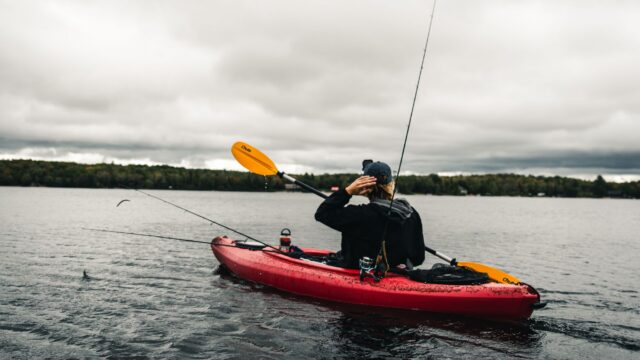
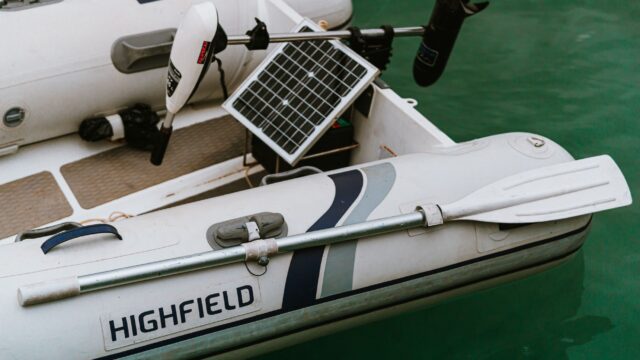
- A mount: on the trolling motor shaft so the view turns with the motor, on a separate pole or steerable mount, or on a portable pole for kayaks and ice fishing.
- Reliable power and wiring as specified in the installation manual.
The three main systems
| Brand | Current live-sonar products | Notes |
|---|---|---|
| Garmin | LiveScope 2 and LiveScope 2 HD (2026), LiveScope Plus, LiveScope XR | LiveScope 2 connects directly to compatible chartplotters without a separate sonar box. XR is built for range, which Garmin lists at up to 500 feet in freshwater. Plus and XR systems use the GLS 10 sonar module. |
| Lowrance | ActiveTarget 2, ActiveTarget 2 XL (introduced January 2026) | Forward, Down and Scout views. The XL covers a 180-degree field from one transducer, and pairing two systems creates a 360-degree Scout view. Works with Lowrance HDS PRO, HDS LIVE and Elite FS displays; confirm current compatibility. |
| Humminbird | MEGA Live 2 | Operates in the 1 MHz range; retailers list up to about 150 feet of range. Listed as compatible with Humminbird APEX, SOLIX and XPLORE displays. Humminbird has also sold a TargetLock mount that aims the transducer independently of the trolling motor. |
Range figures are maximums under good conditions; most live-sonar fishing happens much closer, where targets are clearest. Garmin’s LiveScope model guide explains the differences within its own lineup.
What it costs
At the time of writing, retailers list the Lowrance ActiveTarget 2 at about $1,400, the ActiveTarget 2 XL at about $1,800, and Garmin’s LiveScope 2 transducers at about $2,000 to $2,200. That is for the sonar alone. Add a compatible display, mounts, cables and installation, and a complete setup often runs to several thousand dollars. Prices change often, so treat these numbers as a rough guide and compare current bundles.
How anglers use it
- Targeting suspended fish: bass chasing shad in open water, crappie holding over brush piles, schooling fish on offshore structure.
- Making accurate casts: you see where the lure lands relative to the fish and can correct the next cast.
- Reading reactions: whether fish follow, ignore or flee a lure tells you when to change speed, depth or bait.
- Checking cover: scanning a laydown, dock or brush pile for fish before you fish it.
- Ice fishing: watching fish approach a jig under the ice, using portable ice kits.
The skills take time. You have to interpret a moving image, keep the transducer pointed at the fish while controlling the boat, and cast accurately to targets you cannot see above the water. A trolling motor with GPS anchoring helps hold the boat still while you watch the screen.
The tournament debate
Live sonar has changed competitive bass fishing, and not everyone thinks for the better. Supporters see it as the next step in electronics that still takes skill to use well. Critics argue that it rewards screen-watching over reading water and seasonal patterns, makes it hard to compete without spending thousands, and may add pressure on schooling fish, a question that is still being debated by anglers and fisheries professionals.
Tournament organizers have responded with limits. For the 2026 season:
- B.A.S.S. allows forward-facing sonar in no more than five of the nine regular-season Bassmaster Elite Series events, chosen at random, and bans it entirely, including practice, at the others. Its 2025 limits of one live-sonar transducer and 55 total inches of screen stay in place.
- Major League Fishing restricts forward-facing and 360-degree sonar on its circuits. Bass Pro Tour anglers may use it during one declared period each competition day, while Tackle Warehouse Pro Circuit, Toyota Series and Phoenix Bass Fishing League anglers get one continuous three-hour window per day.
Rules change from season to season and differ for local clubs, college and high school events, so read the current rulebook before any tournament.
Is it worth it for you?
For recreational anglers, live sonar is a luxury, not a requirement; good 2D sonar, imaging and maps still find and catch plenty of fish. It makes the most sense if you often fish open water and suspended fish, target crappie around brush, or compete in events where it is allowed. Before buying, make sure your display, mounting options and boat wiring can support it. Our guides to choosing a fish finder and Garmin vs Humminbird vs Lowrance cover the display side.
Bottom line
Forward-facing sonar shows fish and lures moving in real time, which makes it one of the most effective tools for suspended fish. It is also expensive, ties you to one brand’s displays, takes practice, and is now limited at many tournaments. Master the basics of sonar and maps first, then add live sonar if your fishing and budget call for it.
FAQ
Can I add live sonar to any fish finder?
No. Each live-sonar system works only with compatible displays from its own brand, usually mid-range or premium models. Check the manufacturer’s compatibility list for your exact display before buying.
Is forward-facing sonar allowed?
Tournament rules are where most restrictions apply, and they vary by organization and season. General fishing regulations vary by state and water, so check your state wildlife agency’s current rules and carry a valid fishing license.
Can you use live sonar from a kayak or on the ice?
Yes, with portable pole mounts and ice kits sold for that purpose, plus a battery large enough for the display and transducer. Check the system’s power requirements before choosing a battery.
How far can live sonar see?
Published maximums range from about 150 feet to 500 feet depending on the model, but the clearest, most useful images are usually much closer to the boat.