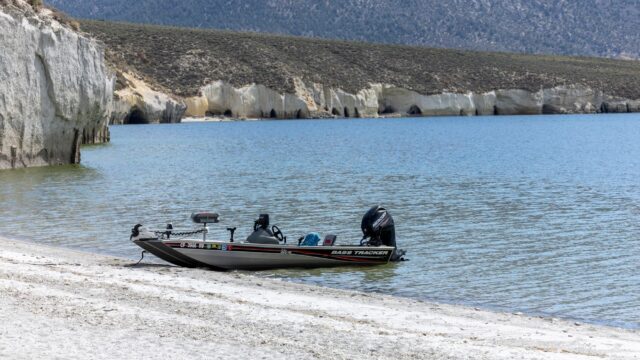
Portable and Castable Fish Finders for Kayak and Shore: What They Can and Cannot Do
You do not need a bass boat to use sonar. Here is how portable kits, kayak setups and castable sonar compare, what each one shows and where each one falls short.
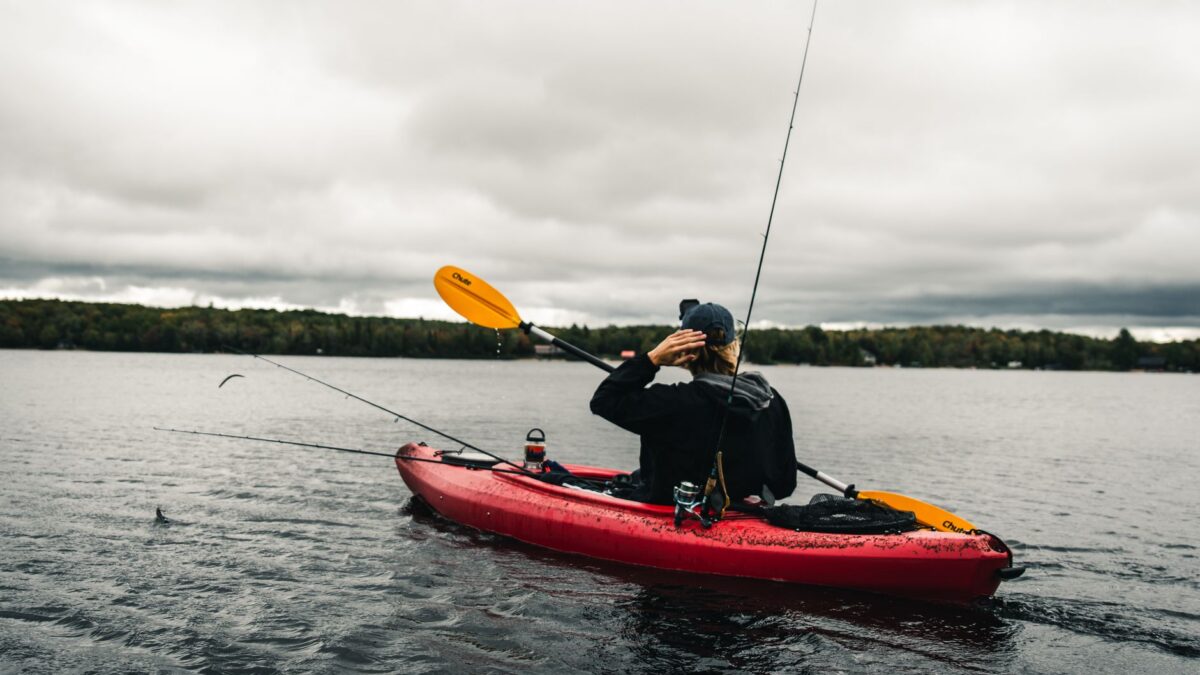
There are three ways to use sonar without a permanently installed boat system: a portable kit (a regular fish finder with a battery, a case and a suction-cup or clamp transducer mount), a kayak setup (a compact display wired to a small battery with a scupper or arm-mounted transducer), and castable sonar (a floating sonar unit you cast out that streams readings to a phone app). Portable kits and kayak setups give the best picture; castable units are the only practical way to scan water from the bank, but they show less and depend on your phone and its wireless connection.
The three types at a glance
| Type | How it works | Good for | Limits |
|---|---|---|---|
| Portable kit | Standard fish finder, battery and case, with a suction-cup or clamp transducer | Rental boats, small boats, kayaks, and the ice with an ice transducer | Needs a hull or rail to mount on; slow speeds only |
| Kayak installation | Compact display on a mount, small battery, transducer in a scupper, pocket or arm | Kayak anglers who fish often | Rigging time; screen size and battery weight are limited |
| Castable sonar | Floating sonar on your line, connected to a phone by Wi-Fi or Bluetooth | Shore, docks, piers and small boats | Reads only where it floats; depends on wireless range and phone battery |
Portable kits
The major fish finder brands sell portable kits for their smaller displays. Garmin’s, for example, is listed by retailers with a carrying case and base, a suction-cup transducer mount, a foam float, a power cable, a 12-volt 7 Ah sealed lead-acid battery and a charger. The appeal is flexibility: one fish finder can go from a rental boat in summer to an ice hole in winter, with the right ice transducer.
Suction cups need a smooth, clean hull below the waterline, and both suction and clamp mounts can slip when the boat runs fast, so pull the transducer before moving between spots. The battery decides how long you can fish; our guide to batteries for a kayak fish finder shows how to work out runtime and when lithium is worth it.
Fish finders on a kayak
Kayak anglers usually run a 4–7-inch display, because it fits the limited space and draws little power. As an example, Garmin’s STRIKER Vivid 4cv is listed at about 0.4 amps typical draw at 12 volts. A typical setup includes:
- A display on a track or rail mount within easy reach, angled to cut glare.
- A transducer in a built-in pocket, through a scupper hole, or on a side arm that swings up for launching and landing.
- A small sealed battery in a waterproof box, with the fuse from the fish finder’s power cable fitted near the battery.
- Cables tied down so they cannot snag paddles, pedals or fishing line.
Check the display’s waterproof rating, and keep the battery and connections dry. Our kayak fishing gear checklist covers the rest of the rigging, starting with a life jacket.
Castable sonar
Castable fish finders are small floating sonar units that you clip to your line, cast out and reel back. They read the water under the float and send the data to an app on your phone, usually over the unit’s own Wi-Fi or a Bluetooth connection. A few published specs show what to expect:
- Deeper lists its CHIRP+ 2 with a casting range of up to 120 meters (about 394 feet), scanning from 15 centimeters to 100 meters deep (about 6 inches to 330 feet), and a weight of about 92 grams.
- Retailers list Garmin’s STRIKER Cast at about 150 feet of depth, about 200 feet of wireless range and more than 10 hours per charge.
Advertised ranges are best-case figures. Some castable models have built-in GPS so they can draw depth maps as you reel them in; others rely on the phone or offer no mapping at all.
What castable sonar can do
- Show depth, drop-offs, weed edges and bottom changes within casting range of the bank.
- Show fish and bait under the float as it moves.
- Build a basic contour map of a pond or a stretch of shoreline, on models with GPS.
- Work from docks, piers, float tubes and small boats with no installation.
What it cannot do
- Match the detail of a boat-mounted unit with full down and side imaging.
- Read anywhere except under the float; you only see what you cast to.
- Hold a steady picture in waves or chop, which bounce the float around.
- Keep a strong connection at long range or low angles; readings can drop out well before the advertised maximum.
- Run without a charged phone, which also needs a dry, visible place to sit.
Use a rod and line strong enough to cast and retrieve the unit’s weight, and check your knot often: a lost sonar ball is an expensive snag. For where to cast it, see our guide to bass fishing from shore.
Which one should you choose?
- Shore and dock anglers: castable sonar is the only option that reaches the water you want to read.
- Kayak anglers who fish often: a permanent kayak installation gives the best picture and the least fuss on the water.
- Rental-boat, occasional-boat and ice anglers: a portable kit lets one fish finder do all three jobs.
Bottom line
Portable kits and kayak installations give you a real fish finder without a bass boat, as long as you pick a sensible battery and a secure transducer mount. Castable sonar is a genuinely useful tool for bank anglers, but it shows a smaller, less detailed picture and depends on wireless range and a charged phone.
FAQ
Do castable fish finders need cell service?
Most connect directly to your phone, so the sonar itself does not depend on cell coverage. Downloading maps, app updates or syncing data may need a connection.
Can I use a portable fish finder while the boat is moving?
At slow speeds, yes. Suction-cup and clamp mounts can slip or lose readings at higher speeds, so pull the transducer before running across the lake.
Do castable fish finders work in shallow water?
Many do. Deeper, for example, lists a minimum scanning depth of about 15 centimeters (6 inches) for its CHIRP+ 2. Check the minimum depth in the spec sheet of the model you are considering.
Do I need a license to use a fish finder?
The fish finder itself needs no license, but you still need a valid fishing license where one is required. Rules vary by state, so check your state wildlife agency.