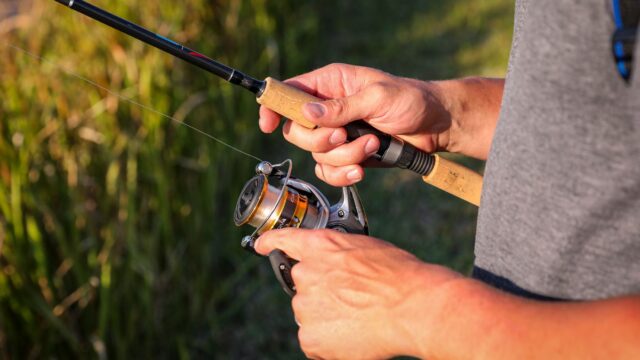
How to Spool a Spinning Reel and a Baitcasting Reel Without Line Twist
Most tangles start at the spool. Here's how to load line onto spinning and baitcasting reels the right way, including backing under braid and how full to fill.
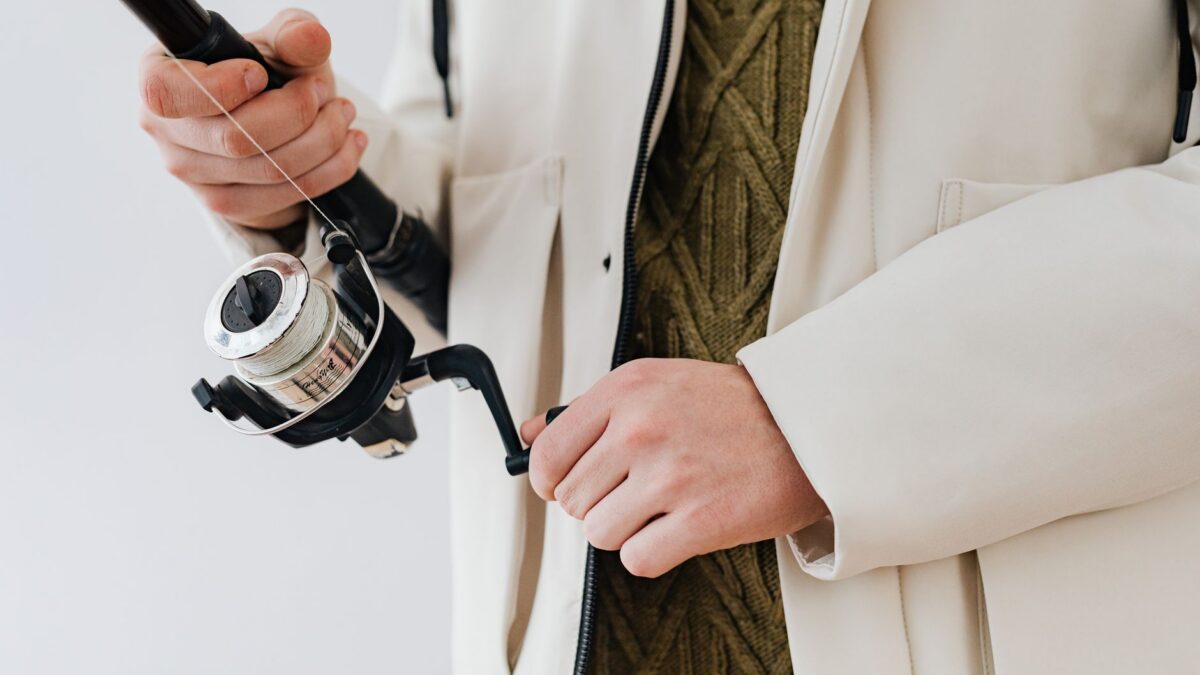
To spool a reel, tie the line to the empty spool with an arbor knot, wind it on under firm, steady tension, and stop about 1/8 inch below the spool lip. On a spinning reel, the line must come off the filler spool in a way that doesn’t add twist, so test after 15–20 turns and flip the filler spool if the line starts to curl. On a baitcaster, let the filler spool turn on a pencil or rod so line feeds straight onto the reel. Under braid, add a short layer of mono backing so the braid doesn’t slip.
What you need
- The reel, ideally mounted on its rod
- A filler spool of line
- Scissors or line clippers (braid scissors if you’re spooling braid)
- A pencil, dowel or a helper to hold the filler spool (for baitcasters)
- A damp cloth, optional, to keep light tension on the line
- For braid: a little mono for backing, or electrical tape
How to spool a spinning reel
- Thread the line. With the reel on the rod, run the line through the first (largest) rod guide toward the reel.
- Open the bail and tie the line to the spool with an arbor knot: wrap the line around the spool, tie an overhand knot around the main line, tie a second overhand knot in the tag end, then pull the main line so the knot slides down and cinches. Trim the tag.
- Close the bail by hand rather than by turning the handle, which can pop the knot loose.
- Set the filler spool flat on the floor so line comes off its face. Start with the label facing up.
- Apply tension. Pinch the line between your fingers (or through a damp cloth) a foot or two in front of the reel, and turn the handle 15–20 times.
- Check for twist. Lower the rod tip toward the filler spool to create a bit of slack. If the line hangs straight or loosely, keep going. If it twists into tight curls, flip the filler spool over and continue.
- Fill to about 1/8 inch below the lip. Overfilling causes loops to jump off on the cast; underfilling shortens casts.
- Cut and secure. Tie on a lure or clip the line to a guide or the reel’s line clip.
Written rules about which way line should come off the filler spool disagree, because the direction depends on how the line was wound at the factory. The slack test in step 6 is the reliable check.
How to spool a baitcasting reel
- Thread the levelwind. Run the line through the rod guides, then through the reel’s levelwind guide (the moving eyelet in front of the spool). Forgetting this step is the most common mistake.
- Tie on with an arbor knot and trim the tag closely so it won’t rub.
- Mount the filler spool on an axle, such as a pencil, so it turns freely. Position it so line comes off the top of the filler spool and goes onto the top of the reel spool.
- Keep firm tension. Pinch the line in front of the reel as you crank. Loose line buries under itself during the cast and causes backlashes.
- Wind evenly and watch that the levelwind lays line across the full width of the spool.
- Stop about 1/8 inch below the spool edge. Some anglers fill a little less with stiff fluorocarbon or heavy line.
- Set up the reel. Before the first cast, adjust spool tension and brakes; our guide to stopping baitcaster backlash walks through it.
Spooling braid: use backing
Braid is slick and can spin on a bare spool, especially on spinning reels, so the whole spool slips when you set the hook. Two common fixes:
- Mono backing. Tie mono to the spool with an arbor knot and wind on enough to cover the bare spool once or twice. Join the braid to the mono with a double uni knot, then fill with braid. You can also use more mono backing to save on expensive braid if you don’t need full braid capacity.
- Tape. A wrap of electrical tape on the spool gives braid something to grip. It’s quick but can loosen over time, especially if it gets wet often.
Some reels have “braid-ready” spools with a rubber band or grip, which reduce or remove the need for backing. Wind braid on with firmer tension than mono so loose wraps don’t dig in later.
Line-specific tips
| Line | Spooling tip |
|---|---|
| Monofilament | Easiest to spool. Keep firm tension; it relaxes and lies flat after a few casts. |
| Fluorocarbon | Stiffer and springier. Use lighter tests on spinning reels, don’t overfill, and let new line settle with a few long casts before fishing. |
| Braid | Use backing or tape, wind tightly, and cut it with sharp scissors or braid clippers. |
| Braid plus leader | Spool braid as above; tie the leader on with a double uni or FG knot. |
Not sure which line to use? Our fishing line guide compares mono, fluorocarbon and braid.
How to fix line twist on a spinning reel
Even a well-spooled spinning reel builds twist over time, especially with spinning lures or if you crank while the drag is slipping. Remove twist by cutting off the lure and letting line trail behind a slowly moving boat, or letting it drift downstream in current, then reeling it back under light tension. Using a swivel with inline spinners and spoons prevents much of the problem.
How often to replace line
Replace mono roughly once or twice a year depending on use, and fluorocarbon when it becomes coiled, nicked or chalky. Braid lasts longer; many anglers reverse it on the spool to use the unworn section. Recycle old mono and fluorocarbon where bins are available, and never leave line at the water. Take Me Fishing has a guide to recycling fishing line.
Bottom line
Spool every reel with firm tension, fill to about 1/8 inch below the lip, and use mono backing or tape under braid. On a spinning reel, test for twist after a few turns and flip the filler spool if needed. On a baitcaster, thread the levelwind first and let the filler spool turn on an axle. A properly spooled reel casts farther and tangles far less. Once your reel is loaded, our fishing knots guide shows which knots to tie for each line.
FAQ
How full should I fill my reel?
About 1/8 inch below the spool lip for both spinning reels and baitcasters. Overfilling causes tangles; underfilling reduces casting distance.
Which way should line come off the filler spool for a spinning reel?
It depends on how the line was wound. Reel 15–20 turns, give the line slack, and flip the filler spool if the line twists.
Do I need backing under braid?
On most spools, yes. A short layer of mono or a wrap of tape stops braid from slipping. Braid-ready spools may not need it.
How much line does my reel hold?
Check the capacity printed on the spool or in the manual, usually given as yards of a certain pound test or diameter.