Spinning vs Baitcasting Reels: How They Work, Pros and Cons, and Which to Buy First
The two main bass reels work in completely different ways. Here's how each one casts, what line and lures it handles best, and which makes sense as your first reel.
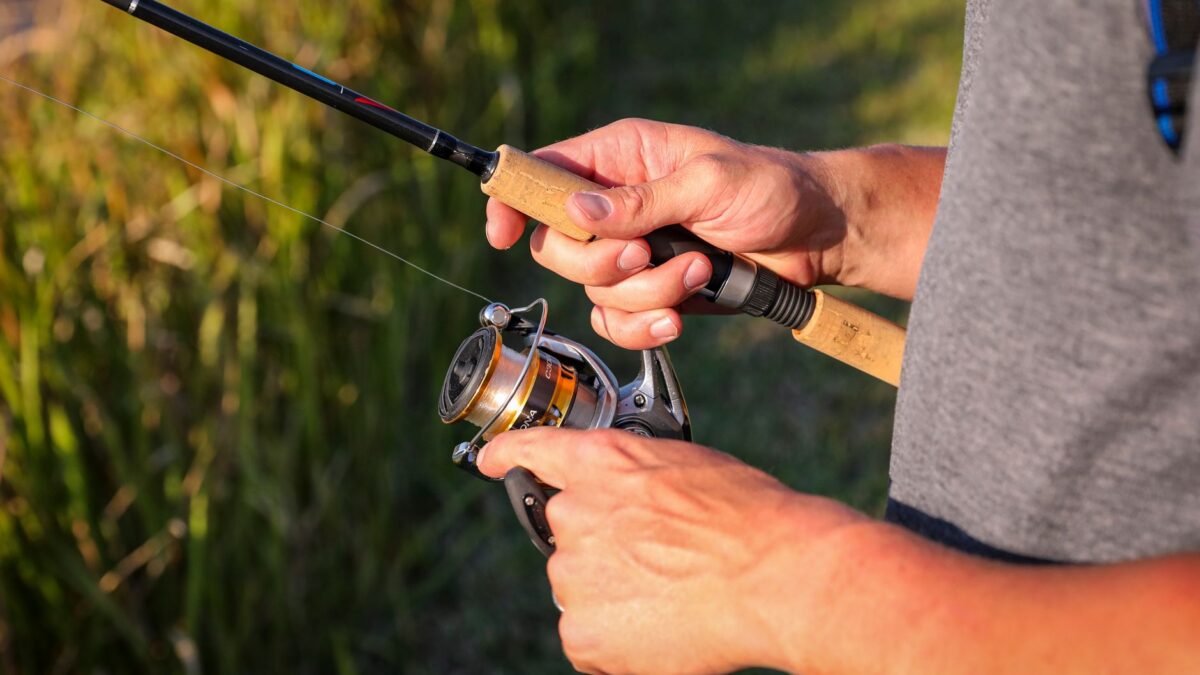
Buy a spinning reel first if you are new to fishing or mostly throw light lures and line: it is easy to cast, rarely tangles badly and handles small baits well. Add a baitcasting reel when you want to throw heavier lures, fish heavy line around cover or cast more accurately; it takes practice because you control the spinning spool with your thumb. Most bass anglers eventually own both.
How a spinning reel works
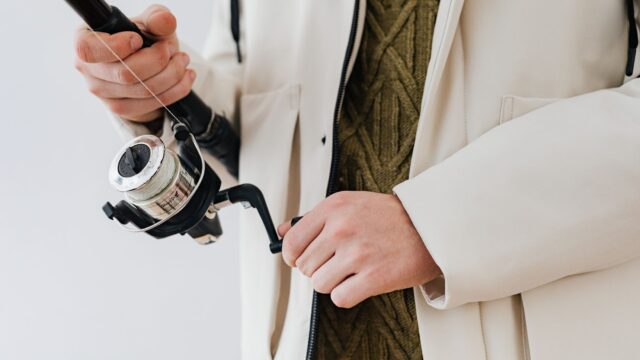
A spinning reel hangs under the rod. The spool is fixed and faces forward; to cast, you open the bail (the wire arm), hold the line with your finger and let it go during the forward cast. Line spirals off the front of the stationary spool, so there is nothing to slow down or overrun. When you turn the handle, the bail closes and a rotor wraps line back onto the spool.
Because the spool doesn’t spin during the cast, very light lures cast well, and true backlashes don’t happen. The trade-off is that every turn of the rotor puts a little twist in the line, which shows up as loops and tangles over time, especially with light line or lures that spin.
How a baitcasting reel works
A baitcaster sits on top of the rod, and its spool turns as line leaves it. You press a thumb bar to free the spool, cast, and your thumb rests lightly on the spool to slow it down and stop it when the lure lands. A spool tension knob and a brake system (centrifugal, magnetic, or on some models a digital electronic brake) help prevent the spool from spinning faster than line can leave it.
If the spool overruns, the extra line loops back on itself and makes a backlash, or bird’s nest. That’s the learning curve. Our guide on how to stop baitcaster backlash covers the settings and thumb control that fix it.
A third type, the spincast (push-button) reel, hides the spool under a cover. It’s the simplest of all and common on kids’ combos, but line capacity, drag and casting distance are limited.
Pros and cons side by side
| Spinning reel | Baitcasting reel | |
|---|---|---|
| Learning curve | Easy; casting in minutes | Steeper; needs setup and thumb control |
| Best lure weights | Light to medium (tiny jigs up to roughly 1/2 oz) | Medium to heavy (roughly 1/4 oz and up; heavier is easier) |
| Typical line | 4–12 lb mono or fluoro; 8–20 lb braid | 10–25 lb mono or fluoro; 30–65 lb braid |
| Line twist | Yes, builds up over time | Very little |
| Backlash | No true backlash; loose loops possible | Possible on every cast until you learn |
| Accuracy | Good | Excellent once you feather the spool |
| Power around cover | Limited by lighter line | Better leverage and heavier line |
| Hand position | Reel below the rod; switch hands or use either side | Reel on top; left- or right-hand retrieve chosen at purchase |
Line sizes: what each reel handles well
Spinning reels perform best with lighter, more flexible line. Heavy, stiff mono or fluorocarbon tends to jump off a spinning spool in loose coils. That’s why finesse anglers often use thin braid on spinning gear with a fluorocarbon leader.
Baitcasters shine with 12 lb line and up. Very light line can dig into the spool and is harder to manage on a revolving spool, though “bait finesse” baitcasters are built specifically for lighter lures and line. For specific pound tests by technique, see our fishing line weight chart.
Size and gear ratio basics
Spinning reels are sized by number. Many brands use 1000 to 5000 or similar; a 2500 or 3000 size (or a brand’s “25” or “30” size) suits most bass and walleye fishing, while 1000 to 2000 sizes suit panfish and trout. Sizing varies a little between brands, so compare the published line capacity.
Baitcaster sizing is less consistent; many brands use labels like 100, 150 or 200, with the smaller sizes typical for bass. Both types list a gear ratio such as 6.2:1 or 7.1:1, which tells you how many times the spool or rotor turns per handle turn. Our gear ratio guide explains how that translates into inches of line per turn and which speed fits which lure.
Drag: both need it set correctly
Every modern spinning and baitcasting reel has an adjustable drag that lets a strong fish take line instead of breaking it. On spinning reels the drag knob is usually on the front of the spool; on baitcasters it’s the star-shaped wheel next to the handle. A common starting point is to set drag so the line slips well below its rated strength, then adjust by feel.
Which should you buy first?
- Brand-new angler, or fishing for mixed species: spinning reel, 2500–3000 size, on a 6 ft 6 in to 7 ft medium rod.
- Finesse bass fishing (drop shot, Ned rig, wacky rig, small swimbaits): spinning, even for experienced anglers.
- Heavy cover, jigs, Texas rigs, frogs, spinnerbaits, crankbaits: baitcaster on a medium-heavy or heavy casting rod.
- Kids: spincast or a small spinning reel.
A sensible path is to start with a spinning combo, learn to read water and fight fish, and then add a baitcaster for heavier techniques. Practice the baitcaster in a yard or open field before taking it on the water.
Bottom line
Spinning reels are the easy, versatile choice and handle light lures better. Baitcasters take practice but give you more control, accuracy and power with heavier lures and line. Start with spinning, add a baitcaster when your techniques call for it, and match each reel to a rod built for it. Take Me Fishing’s reel overview covers the other reel types, including spincast and fly reels.
FAQ
Is a baitcaster better than a spinning reel?
Neither is better overall. A baitcaster is better for heavy lures, heavy line and accurate casts around cover; a spinning reel is better for light lures and light line.
Can a beginner learn to use a baitcaster?
Yes. Set the spool tension and brakes on the conservative side, start with a lure of about 1/2 oz, cast smoothly rather than hard, and keep your thumb near the spool.
Can I put a baitcasting reel on a spinning rod?
No. Spinning rods have guides underneath and casting rods have guides on top. Use each reel with the matching rod type.
Why does my spinning reel line keep twisting?
Twist builds from the rotor and from lures that spin. Spool line correctly, avoid reeling while the drag is slipping, and use a swivel with spinning baits.