Ice Fishing for Pike: Tip-Ups, Jigging, Quick-Strike Rigs and Bait
Ice fishing for northern pike works best with tip-ups and big bait on quick-strike rigs, plus jigging nearby. Covers depth, bait and safe pike handling.
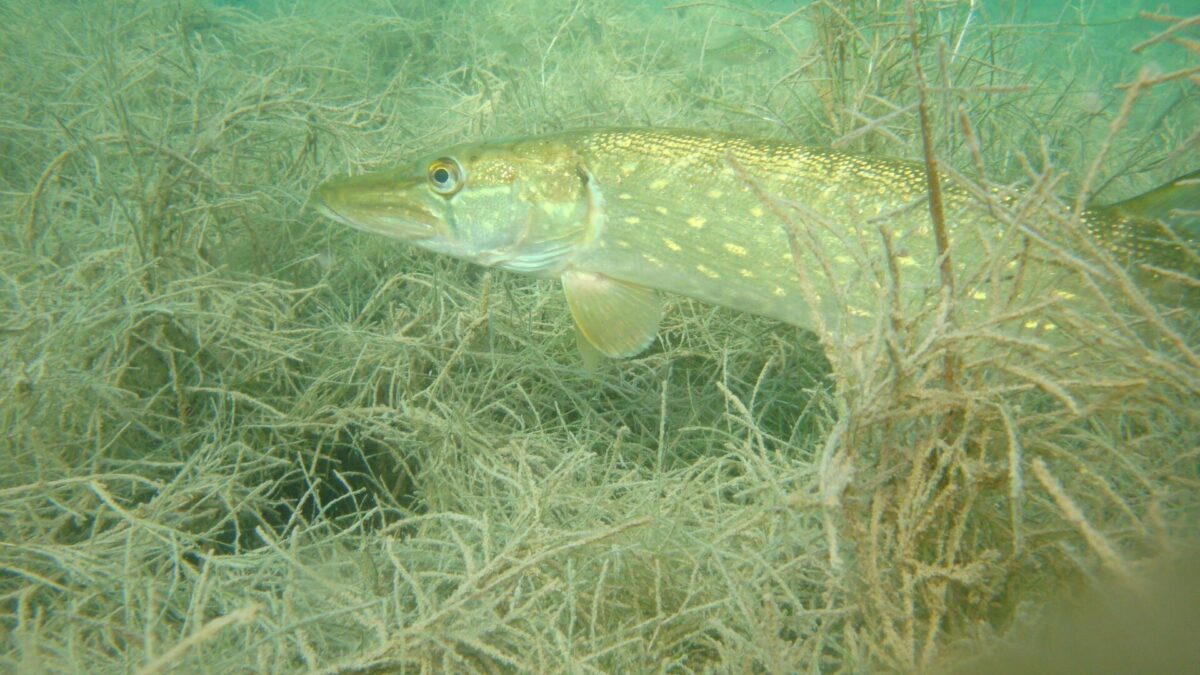
Ice fishing for northern pike works best with tip-ups set along shallow weed edges, baited with a large dead or live baitfish on a quick-strike rig, plus a jigging rod in a nearby hole. Set the hook soon after a flag trips, use a wire or heavy fluorocarbon leader, drill holes at least 8 inches (20 cm) wide, and get big pike back in the water fast.
Where do pike hold under the ice?
Northern pike in winter usually hold near green weeds in roughly 4 to 15 feet (1.2 to 4.6 m) of water, especially along weed edges, points and inside turns close to deeper water. Early ice is often the most productive period, because pike are still patrolling the shallow bays where baitfish gathered in fall.
By midwinter, many fish slide out to the deeper edges of weed flats and to breaks near drop-offs. At late ice they move back toward shallow bays and creek mouths ahead of the spring spawn. A bay where the weeds have died back and turned brown tends to hold fewer fish than one with living weeds.
Pike hunt mostly by sight, so they feed during daylight. Many anglers see the most flags from mid-morning through the afternoon, with another flurry near dusk.
Check the ice before every step onto a new spot. The Minnesota Department of Natural Resources recommends at least 4 inches (10 cm) of new clear ice for walking, and much more for vehicles. Our article on fishing early ice safely covers spud bars, ice picks and how to test as you go.
Tip-ups or jigging: which catches more pike?
Tip-ups usually catch more pike, because a large bait held still in one spot suits a fish that cruises and ambushes, and a spread of tip-ups covers more water than one angler can jig. Jigging pairs well with them: a flashing spoon or swimbait draws pike in from a distance, and it gives you something to do between flags.
A common setup is to spread tip-ups across several depths along a weed edge and jig a hole in the middle of the spread. Line limits vary by state, as do rules on how far you can be from your lines, so check before you set out. Our guide to using tip-ups for pike and walleye explains setup, depth and reading flags in more detail.
How do you rig a tip-up for pike?
A pike tip-up needs tip-up line on the spool, a leader that teeth cannot cut, and a quick-strike rig on the end.
- Main line of 20 to 40 pound (9 to 18 kg) braided or Dacron tip-up line, which handles well in the cold and does not coil like monofilament.
- A leader of 12 to 24 inches (30 to 60 cm), either wire or heavy fluorocarbon in the 30 to 50 pound (14 to 23 kg) range, joined to the main line with a small barrel swivel.
- A quick-strike rig with two small treble hooks, or one treble and one single hook, spaced to fit the length of the bait.
- A bait depth of 1 to 3 feet (30 to 90 cm) off bottom, or just above the tops of the weeds.
Spool plenty of line, because a big pike can run a long way before you reach the hole. In very cold weather, an insulated tip-up or a hole cover slows the water from freezing around the line.
How does a quick-strike rig work?
A quick-strike rig puts two hooks in one bait so you can set the hook as soon as a pike grabs it, without waiting for the fish to swallow the bait. Setting early cuts down on deep hooking, a common cause of death in released pike.
- Hook the bait lightly, with one hook just under the skin near the dorsal fin and the other near the head or toward the tail.
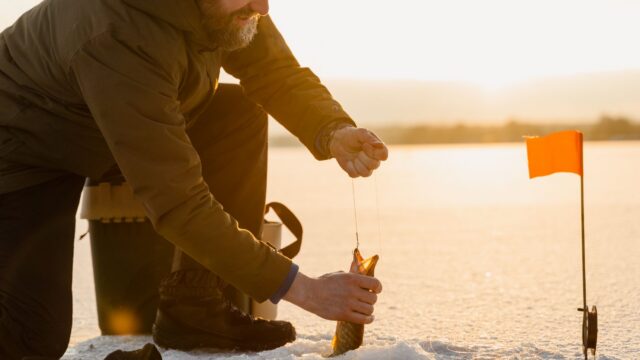
- When a flag goes up, walk to the hole calmly and watch the spool.
- Once line is moving off steadily, take the line in your hand, pull out the slack and set the hook with a firm sweep of your arm.
- Bring the fish in hand over hand with steady pressure, letting it run when it wants to.
If a pike drops the bait, re-bait and reset. A missed fish is better than one that swallowed the hooks.
What bait works best for pike through the ice?
Dead bait such as smelt, herring, ciscoes (tullibee) or large shiners catches many of the biggest pike, because large pike often scavenge in winter. Live suckers or golden shiners in the 4 to 8 inch (10 to 20 cm) range work well when pike are actively chasing. Many anglers rig both kinds and switch toward whatever draws more flags.
Many states limit moving live bait between lakes, and some ban certain baitfish species, to keep invasive species and fish diseases from spreading. Buy bait near the lake you are fishing and check your state’s bait rules.
How do you jig for pike through the ice?
Jig for pike with a medium-heavy or heavy rod about 30 to 42 inches (76 to 107 cm) long, 20 to 30 pound (9 to 14 kg) braid, a wire or heavy fluorocarbon leader, and lures larger than typical walleye baits. Good choices include:
- large jigging or flutter spoons, often tipped with a minnow head;
- lipless rattle baits and blade baits, which add vibration;
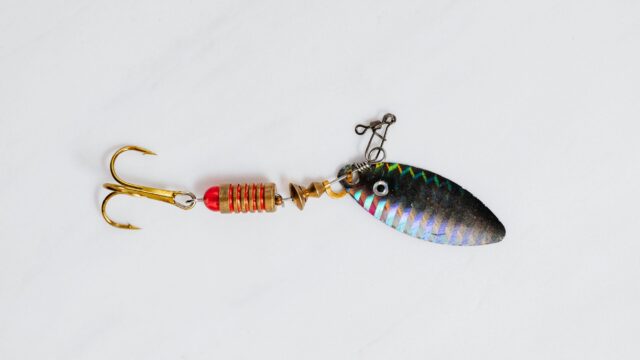
- glide baits and soft swimbaits, worked with long lifts and pauses.
Lift the lure 1 to 2 feet (30 to 60 cm), let it flutter down, then hold it still. Most strikes come on the fall or the pause. Pike often follow a lure and hang below it, so a flasher shows you when a fish is coming and when to stop moving. Rod lengths and powers are compared in our article on ice fishing rods and reels.
How do you land and handle big pike safely?
Land big pike through a hole at least 8 inches (20 cm) wide, or 10 inches (25 cm) on lakes known for large fish, then unhook them quickly and return them to the water as soon as you can.
- Guide the head into the hole first. The head and shoulders are what jam in a small hole.
- Have long-nose pliers, a jaw spreader and hook cutters out before the first flag. Cutting a hook is faster than digging it out.
- Support big pike horizontally, with one hand under the belly and the other at the gill plate, and keep fingers out of the gills.
- Keep the fish off bare ice and snow where you can, and skip long photo sessions in subzero air, which can freeze eyes and gills.
- Wear gloves that resist cuts, since pike teeth and gill rakers slice skin easily.
- Hold a released fish upright in the hole until it swims off on its own.
Many states protect pike with size slots or daily limits, so read your state’s current fishing regulations before the trip.
Quick answers
How long should you wait after a tip-up flag goes up?
With a quick-strike rig, set the hook as soon as line is moving steadily off the spool. Waiting for a second run with a single hook raises the risk of a deeply hooked fish.
What size ice hole do you need for northern pike?
An 8 inch (20 cm) hole handles most pike. Drill 10 inch (25 cm) holes on lakes that hold trophy fish.
Do you need a leader for pike through the ice?
Yes. Pike teeth cut light monofilament and braid, so use wire or heavy fluorocarbon between the main line and the hooks.
Can you fish for pike and walleye on the same trip?
Yes, where line limits allow it. Pike tip-ups on weed edges pair well with a jigging rod over nearby walleye structure, and our guide to ice fishing for walleye covers the walleye side.