How Thick Does Ice Need to Be? Official Thickness Guidelines and How to Check Ice Safely
The Minnesota DNR's minimum ice thickness chart, what clear, white and gray ice tell you, and a simple routine for checking ice before and while you fish.
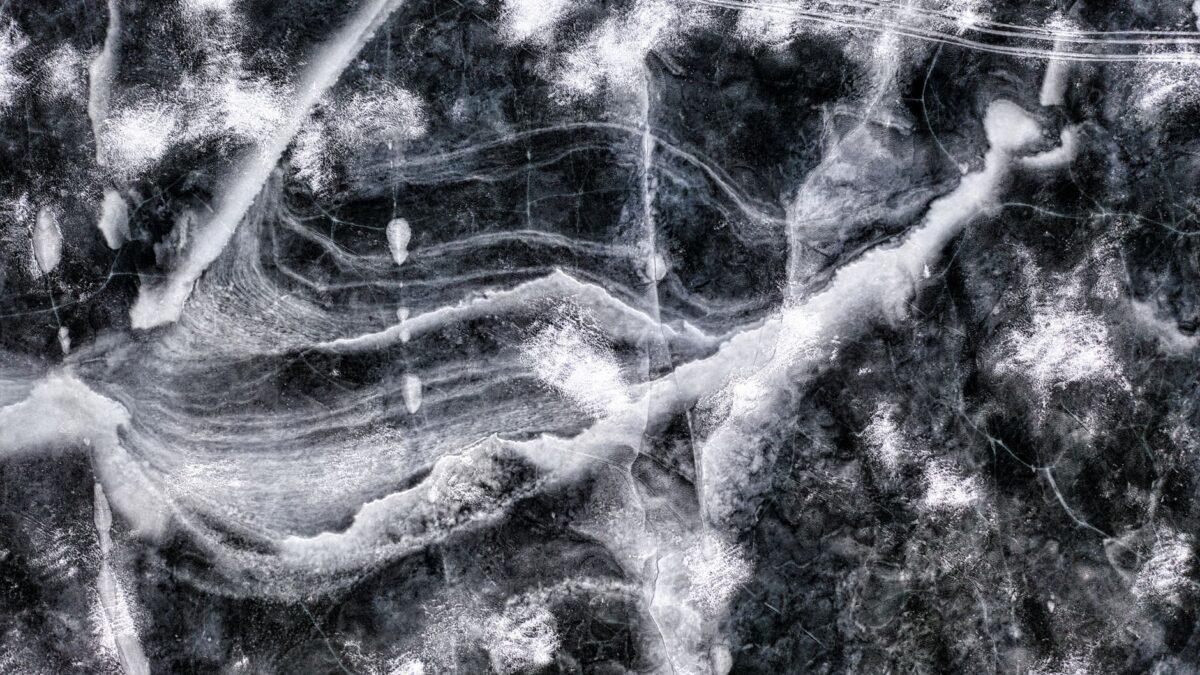
The Minnesota Department of Natural Resources recommends staying off ice that is less than 4 inches thick, and treats 4 inches of new, clear ice as the minimum for a person on foot. A snowmobile needs 5–7 inches, a car 9–12 inches and a pickup truck 13–17 inches, and you should double those numbers for white ice. Even then, no ice is ever 100% safe: thickness changes across a lake, so you check as you go.
The figures below come from the Minnesota DNR, one of the most widely cited sources on ice safety. Other state agencies publish similar advice; if your state has its own guidance, follow it.
Minimum ice thickness guidelines
These are the Minnesota DNR’s recommended minimums, and they apply to new, clear, solid ice only. They are minimums, not promises.
| Activity | Minimum new, clear ice (Minnesota DNR) |
|---|---|
| Anything | Under 4 inches: keep off |
| On foot (walking, ice fishing) | 4 inches |
| Snowmobile | 5–7 inches |
| Side-by-side ATV | 7–8 inches |
| Car | 9–12 inches |
| Truck | 13–17 inches |
| Heavy-duty truck with a wheelhouse shelter | 20 inches or more |
The DNR’s ice thickness page breaks vehicles into finer weight classes and makes a point worth repeating: you are responsible for knowing the weight of your vehicle, your gear and your passengers. A loaded truck pulling a shelter is a very different load from an empty sedan. The DNR’s own advice on driving is blunt: if you can avoid driving on the ice, don’t.
Clear ice, white ice and gray ice
Thickness is only half the story. The type of ice matters just as much.
- Clear ice (often called black or blue ice) forms as open water freezes. It is the strongest kind, and it is what the chart above assumes.
- White ice (snow ice) forms when snow or slush refreezes on top. It is full of air and much weaker, which is why the DNR says to double the thickness guidelines for white ice.
- Gray or dark, wet-looking ice usually means water is in or on the ice, from thawing or slush. Treat it as unsafe.
When you measure, measure only the solid ice. A layer of snow or slush on top adds weight but no strength. Snow also insulates the ice, slowing freezing underneath, and it hides cracks and soft spots.
Places where ice is weaker
Ice seldom freezes evenly. The DNR notes it can be a foot thick in one spot and only an inch or two a few feet away. Expect thinner or weaker ice:
- Near inlets, outlets, springs and channels between lakes, where water moves under the ice
- Around bridges, culverts, docks and aeration systems
- On the outside bends of rivers, where current is faster
- Along pressure ridges, large cracks and depressions in the surface
- Near shore late in the season, and anywhere ice has thawed and refrozen
Rivers and reservoirs with current are generally less predictable than small, still lakes. Old ice is also weaker than new ice: the DNR points out that a foot of old, partly thawed ice may not hold what 4 inches of new, clear ice will.
How to check ice as you go
Checking ice is a routine, not a one-time measurement at the shore.
- Get a local report first. Bait shops, resorts and local officials often know about pressure ridges, springs and current areas.
- Check the thermometer, not the calendar. A date that was safe last year means nothing this year.
- Test before you step. Strike the ice ahead of you with an ice chisel (spud bar). If it breaks through in a few blows, turn back.
- Drill test holes and measure. Use an auger or a cordless drill with an ice bit, then measure with a tape measure or ice-thickness gauge hooked under the bottom edge.
- Repeat at regular intervals. Conditions change as you move, especially near structure, current and pressure ridges.
- Stay spread out. Groups should not bunch up on early ice.
What to wear and carry
The Minnesota DNR recommends an ice safety kit of rope, ice picks, an ice chisel or drill and a tape measure. Add these habits:
- Wear a life jacket or buoyant clothing such as a float suit on the ice. The exception is inside a vehicle, where a bulky vest can slow your escape; keep it within reach instead.
- Keep ice picks around your neck or clipped to your jacket, not in a bucket.
- Tell someone where you are going and when you will be back, and carry a phone in a waterproof bag.
- Avoid going out alone and avoid traveling on ice at night or in fog or snow.
Our ice fishing gear checklist covers the rest of the kit, and how to dress for ice fishing explains float suits and layering.
If you go through the ice
The DNR’s self-rescue plan comes down to a few steps worth memorizing:
- Don’t panic. Cold water shock can make you gasp and hyperventilate, so get your breathing under control first.
- Keep your winter clothes on. They trap air and help you float.
- Turn toward the direction you came from. That ice held you a moment ago.
- Put your arms on the unbroken ice, dig in your ice picks and kick your legs to slide yourself out.
- Once out, lie flat and roll away from the hole to spread your weight.
- Get somewhere warm and dry right away, and get medical help for anything beyond mild chilling.
If someone else falls in, call 911 and help from a safe position: reach with a pole or rope, or throw something that floats. Do not run to the edge of the hole. The DNR’s rescue rule is “preach, reach, throw, row, don’t go.”
Driving on the ice
If you must drive, drive slowly, avoid night travel, keep windows down and doors unlocked so you can get out fast, and never go back into a sinking vehicle for gear. Plowed roads maintained by resorts can help, but they are not a guarantee; ask about conditions every trip. A first season of ice fishing is easier and safer on foot.
Bottom line
Use the Minnesota DNR chart as your floor: under 4 inches, stay off; 4 inches of new, clear ice for walking; more for machines; double it for white ice. Then verify with your own test holes, carry picks and rope, wear buoyant gear, and remember that ice is never 100% safe.
FAQ
Is 3 inches of ice safe to walk on?
The Minnesota DNR says to keep off ice less than 4 inches thick. Three inches is below that minimum, so stay off.
How much ice do you need for a car?
The DNR lists 9–12 inches of new, clear ice for a car and 13–17 inches for a truck, and it advises avoiding driving on ice whenever you can. Know your vehicle’s weight and double the guidelines for white ice.
Why is white ice weaker than clear ice?
White ice forms from refrozen snow or slush and is full of trapped air, so it is roughly half as strong. That is why the guideline is to double the thickness for white ice.
Can I trust tracks or other anglers on the ice?
No. Other people on the ice do not mean it is safe where you are standing. Thickness varies within a few feet, so test the ice yourself as you go.