How to Choose Lure Colors for Bass: Water Clarity, Light and Forage
Lure color matters, but less than most tackle walls suggest. These simple rules based on water clarity, light and what bass eat will cover most days.
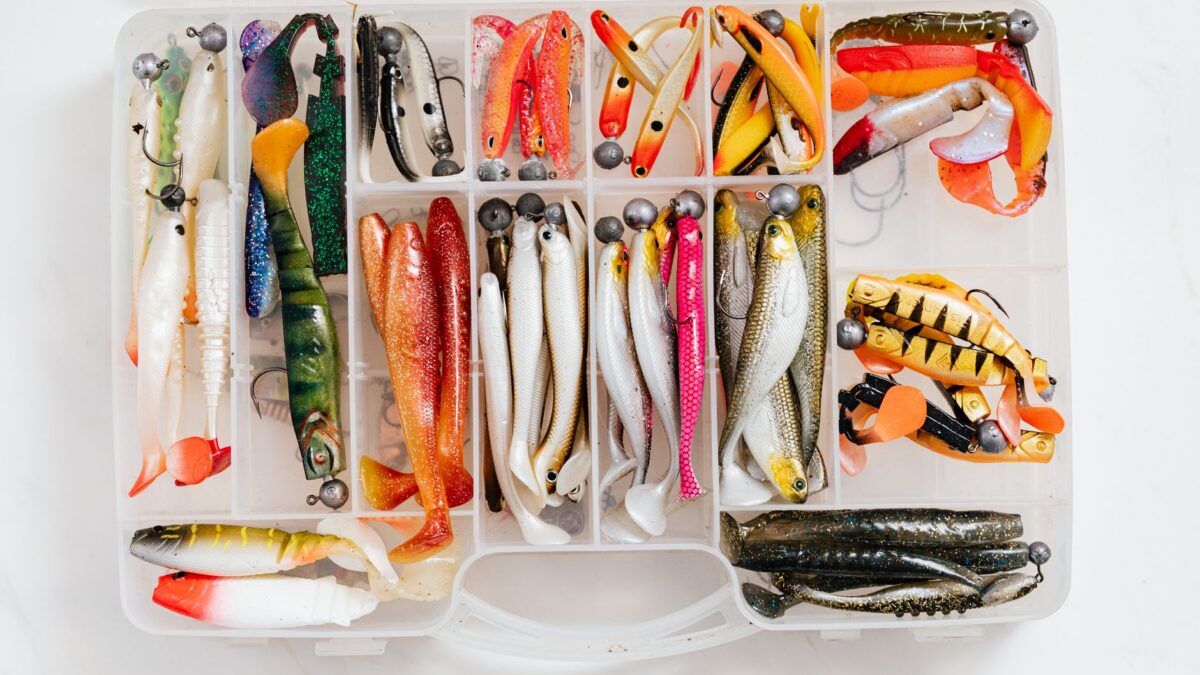
Choose lure colors by asking three questions: how clear is the water, how bright is it, and what are the bass eating? In clear water and bright sun, use natural, translucent colors like green pumpkin, watermelon and shad. In stained water, add brighter accents like chartreuse. In muddy water or low light, use solid dark colors like black and blue, or bold bright ones that stand out. And remember that size, shape, depth and action usually matter more than the exact shade.
What bass can see
Research on largemouth bass vision gives some useful clues. A 2018 study by researchers at the University of Illinois, published in Current Zoology, found that largemouth bass have two types of cone cells, most sensitive to red and green light, rather than the three types humans have. In behavioral tests, bass trained on red or green could reliably pick those colors out. The researchers’ model also predicted that bass would struggle to tell chartreuse from white, and green from blue, though the behavioral results only partly matched the model’s predictions.
The practical takeaway: bass do see color, but not the way we do. Contrast, brightness and silhouette are just as important as hue.
How water changes color
Water absorbs light, and it absorbs red first. As depth increases, reds and oranges fade and look darker or grayish, followed by yellows; greens and blues penetrate furthest. Stained or muddy water filters color even faster. That’s why color tends to matter most in shallow, clear water, and less in deep or dirty water, where a lure is mostly seen as a dark or light shape.
Rule 1: Match water clarity
A quick way to check clarity is to lower a white lure into the water and note how deep it is when it disappears.
| Water clarity | Soft plastics and jigs | Moving baits (crankbaits, spinnerbaits, swimbaits) |
|---|---|---|
| Clear (lure visible below about 6 ft) | Green pumpkin, watermelon, translucent smoke or shad colors | Natural shad, ghost or translucent patterns, silver flash |
| Stained (about 2–6 ft) | Green pumpkin with chartreuse tail, junebug, darker browns | White and chartreuse, brighter shad patterns, craw colors |
| Muddy (under about 2 ft) | Black and blue, junebug, solid dark colors | Chartreuse, solid white, black, or chartreuse with a dark back |
The logic is simple. In clear water, bass get a good look, so natural and subtle wins. In dirty water, they need to find the lure, so high contrast and a solid silhouette matter more. Our guide to fishing muddy water goes deeper on that situation.
Rule 2: Adjust for light
- Bright sun: natural colors, translucent plastics and more flash (silver blades, chrome or holographic finishes) look realistic.
- Clouds, dawn and dusk: solid colors and stronger contrast. Many anglers switch to gold blades or brighter or darker baits.
- Night: black or other dark colors create the clearest silhouette against the lighter surface above.
Rule 3: Match the forage
Look at what bass are eating on your water and lean your colors toward it. Our article on what bass eat covers forage by season.
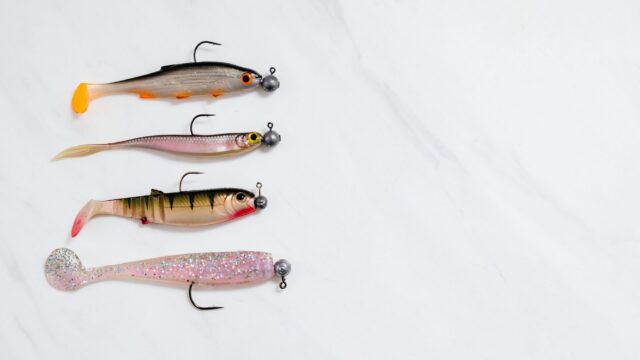
- Shad and other baitfish: white, pearl, silver and translucent blue or gray backs.
- Bluegill and sunfish: greens with blue, orange or chartreuse accents and vertical bars.
- Crayfish: browns, green pumpkin, and in some lakes red or orange tones, especially in spring.
- Yellow perch: yellow-green with dark bars and orange fins.
When color matters less
Color is rarely the main reason bass aren’t biting. It tends to matter least when:
- You’re fishing fast-moving reaction baits like spinnerbaits, bladed jigs and lipless crankbaits, where bass strike on instinct.
- You’re fishing deep, where most colors fade toward gray.
- The water is very muddy and vibration and silhouette do most of the work.
In those situations, focus first on lure type, size, depth and speed. Change color only after you’ve tried those.
Testing colors on the water
- Start with contrast. If you fish with a partner, one of you throws a natural color and the other a bold one. Switch together once one clearly gets more bites.
- Watch the fish. Follows without strikes, or short nips at the tail, can be a sign to go more natural or a size smaller.
- Re-check as conditions change. Clouds rolling in, wind muddying a bank or the sun getting higher can all shift what works during a single day.
- Keep simple notes. Jot down clarity, light and the colors that caught fish. Patterns on your own lakes are worth more than any general chart.
A simple starter color kit
- Green pumpkin: soft plastics and jigs for clear to lightly stained water.
- Black and blue: soft plastics and jigs for muddy water, low light and night.
- Watermelon or translucent shad: finesse baits and swimbaits in very clear water.
- White or white-chartreuse: spinnerbaits, bladed jigs and swimbaits.
- Natural shad: crankbaits and jerkbaits.
- Chartreuse with a dark back: crankbaits for stained or muddy water.
Those six cover the lures in our list of the best bass lures for beginners. For blade colors on spinnerbaits, see spinnerbait vs chatterbait.
Bottom line
Go natural and translucent in clear water and bright light, add chartreuse and contrast in stained water, and use solid dark or bold bright colors in muddy water and low light. Match the main forage when you can. If the fish still aren’t biting, change the lure’s size, depth or speed before you worry about color.
FAQ
What is the best all-around bass lure color?
Green pumpkin for soft plastics and jigs, and white or shad patterns for moving baits. Together they cover most clear to stained water.
Does chartreuse really work?
Chartreuse is highly visible in stained and muddy water and is a popular accent color. In very clear water, natural colors are usually a better first choice.
What color should I use at night?
Black is the most common choice because it creates a strong silhouette against the night sky. Pair it with vibration or sound.
Can bass see color?
Yes, but differently from people. Research suggests largemouth see red and green well but may have trouble separating some colors, such as chartreuse and white, so contrast and brightness are also important.