The 8 Best Bass Lures for Beginners and When to Use Each One
You don't need a wall of tackle. These eight lure types cover almost every situation a new bass angler runs into, from shallow cover to cold, clear water.
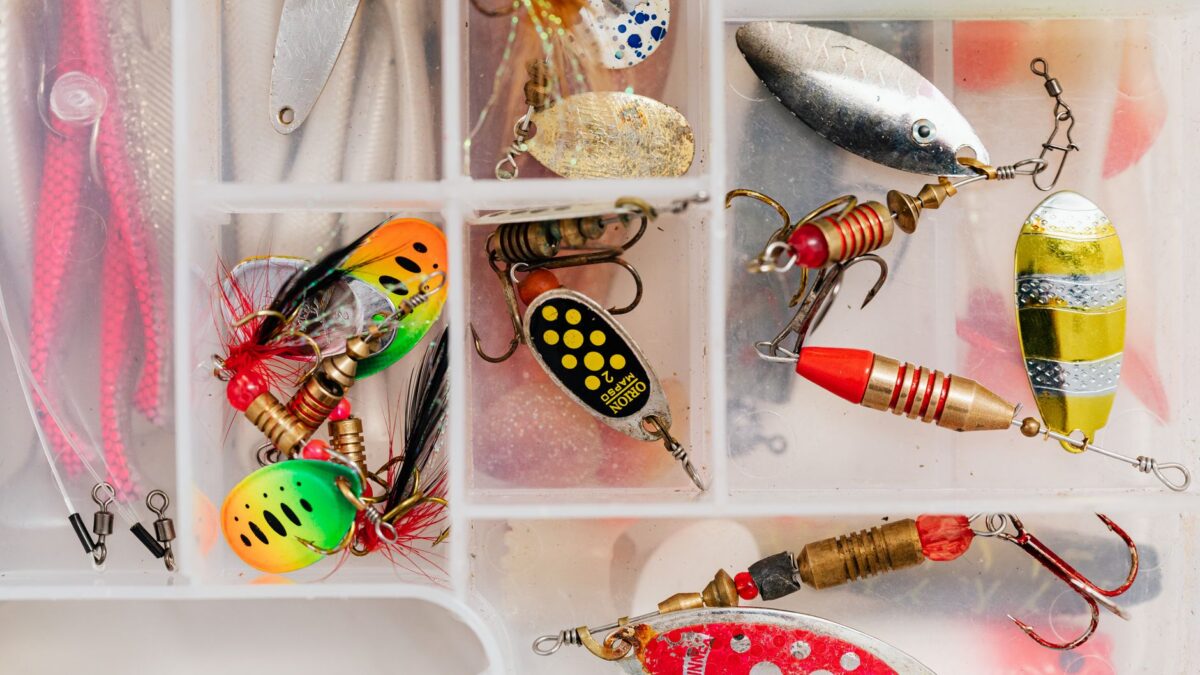
If you are new to bass fishing, start with eight lure types: a soft plastic worm, a spinnerbait, a crankbait, a jig, a topwater lure, a jerkbait, a swimbait and a Ned rig. Together they let you fish fast or slow, shallow or deep, in clear or muddy water. If you can only buy three, get a pack of plastic worms with hooks and weights, a spinnerbait and a Ned rig.
The trick is not owning lots of lures but knowing when each one earns its spot on the end of your line. Here is what each lure does, where it works and how to fish it.
Quick guide: which lure for which situation
| Lure | Best for | Typical starting size | Speed |
|---|---|---|---|
| Soft plastic worm (Texas rig) | Cover, docks, grass edges, almost any season | 6–7 in worm, 1/8–1/4 oz weight | Slow |
| Spinnerbait | Wind, stained water, wood and rock | 3/8–1/2 oz | Medium |
| Crankbait | Covering water, points, rocky banks | Square bill for 1–5 ft | Medium to fast |
| Jig | Heavy cover, rocks, cold water, bigger fish | 3/8–1/2 oz with a craw trailer | Slow |
| Topwater | Low light, warm water, calm surface | Popper or walking bait | Varies |
| Jerkbait | Cold, clear water | Suspending, about 4–4.5 in | Stop-and-go |
| Swimbait | Bass chasing baitfish | 3–5 in paddle tail | Steady |
| Ned rig | Tough bites, pressured or clear water, smallmouth | 2.5–3 in bait on a 1/10 oz head | Very slow |
1. Soft plastic worm
A plastic worm rigged weedless on a Texas rig is the most forgiving bass lure there is. It slides through brush and grass without snagging and works from early spring to late fall. Cast it near cover, let it sink to the bottom on a semi-slack line, then lift the rod tip, let it fall again and reel up the slack. Most bites feel like a tap or a sudden heaviness, or you see the line twitch sideways.
A 4–5 in stick bait fished weightless or wacky-style is a close cousin and just as easy for beginners: cast it, let it flutter down and watch the line.
2. Spinnerbait
A spinnerbait has a safety-pin wire with one or two spinning blades above a skirted hook. The wire arm deflects branches and rocks, so it is hard to snag. It shines when the wind is blowing, the water is stained and bass are shallow and active. Cast past a target, start reeling as soon as it lands and bring it back just fast enough to keep the blades turning, bumping cover when you can. White or white-and-chartreuse is a sensible first color.
3. Crankbait
A crankbait is a hard plastic or wood fish shape with a lip that makes it dive and wobble as you reel. The lip sets the depth. For beginners, a square bill that runs about 1–5 ft deep is the most useful: crank it along rocky banks, around stumps and docks, and let it bang into things. When it deflects off cover, pause for a second. That change in direction is often what triggers a strike.
4. Jig
A skirted jig with a soft plastic craw trailer imitates a crayfish and is known as a big-fish lure. Pitch it to wood, docks and grass, or drag it slowly over rocks. Jigs are a bit harder to learn because the bites can be subtle, but they are one of the best tools in cold water and heavy cover. Start with a 3/8 or 1/2 oz jig in green pumpkin or black and blue.
5. Topwater lure
Few things in fishing beat a bass exploding on a surface lure. Topwater works best early and late in the day, on cloudy days and once the water warms into roughly the 60s °F and above. Two beginner-friendly choices are a popper (twitch it so the cupped face spits water, then pause) and a walking bait (short twitches on slack line make it zigzag side to side). The hard part is patience: wait until you feel the fish before setting the hook, not when you see the splash.
6. Jerkbait
A suspending jerkbait is a slim minnow-shaped lure that stops and hangs in place when you pause it. Reel it down a few feet, then work it with sharp downward snaps of the rod tip followed by pauses. The colder the water, the longer the pause. It is one of the top lures for clear water in late fall, winter and early spring, and it works especially well for smallmouth and spotted bass.
7. Swimbait
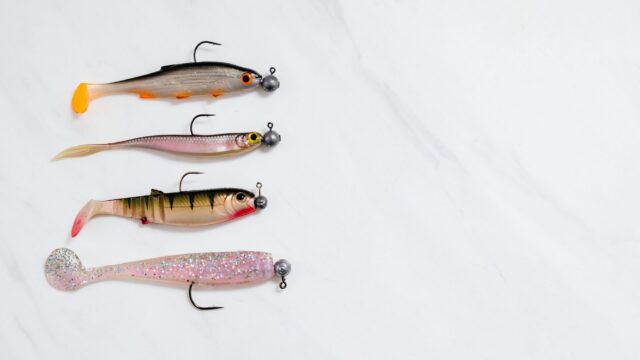
A soft paddle-tail swimbait on a jighead or weighted swimbait hook looks like a small baitfish and could hardly be simpler to fish: cast it out, let it sink to the depth you want and reel steadily. Slow down to keep it near the bottom, speed up to bring it higher. It is a good choice when you see bass chasing shad or other baitfish, and around grass edges, points and docks.
8. Ned rig
The Ned rig is a short, buoyant soft plastic on a light mushroom-shaped jighead. It is small and subtle, and it catches fish when nothing else does: after cold fronts, in clear water and on heavily fished lakes. Cast it out, let it reach bottom, and slowly drag or swim it back with an occasional gentle shake. It catches plenty of smaller bass, which is exactly what a beginner needs to learn how bites feel.
How to decide what to tie on first
- Check the water color. Clear water favors natural colors and finesse lures (Ned rig, jerkbait, swimbait). Stained or muddy water favors vibration and bold colors (spinnerbait, square bill).
- Check the temperature and light. Warm water and low light point to topwater and moving lures. Cold water points to slower lures: jigs, jerkbaits and Ned rigs.
- Look at the cover. Thick wood or grass calls for weedless baits (Texas-rigged worm, jig, spinnerbait). Open rock and gravel suit crankbaits and Ned rigs.
- Start fast, then slow down. Cover water with a moving lure to find active fish, then follow up with a worm or jig in the same spots.
Gear and colors to match
You can fish every lure on this list with two rods: a medium-light or medium spinning rod for the Ned rig, weightless stick baits and small swimbaits, and a medium-heavy casting or spinning rod for worms, jigs and spinnerbaits. See our guide to the best first bass fishing setup for line and reel suggestions.
For colors, keep it simple: green pumpkin and black/blue for soft plastics and jigs, white or shad patterns for moving baits. Our article on choosing lure colors explains when to switch.
Before your first trip, make sure you have a valid fishing license for your state and check the local size and bag limits. Rules vary by state and by individual lake or river.
Bottom line
A beginner’s bass box needs variety, not volume. Carry a soft plastic worm, spinnerbait, crankbait, jig, topwater, jerkbait, swimbait and Ned rig in a couple of natural and bright colors, and you can handle nearly any lake. Learn the worm and Ned rig first for bites, then add the moving lures to cover water and find active fish.
FAQ
What is the single best bass lure for a beginner?
A soft plastic worm, Texas-rigged or wacky-rigged. It is cheap, weedless when rigged correctly, catches bass of every size in every season and teaches you how to detect bites.
Do I need a baitcasting reel to use these lures?
No. Every lure on this list can be fished on spinning gear. A baitcaster becomes useful later for heavier lures, thick cover and heavier line, but it takes practice to cast without backlashes.
How many lures should a beginner buy?
One or two of each hard bait and a few packs of soft plastics is plenty. Duplicates matter most for the lures you snag most often, like jigs and Texas rigs.
Do expensive lures catch more bass?
Not necessarily. Choosing the right lure type, depth and speed for the conditions matters far more than price. Mid-priced lures with sharp hooks are fine to learn on.