Flipping and Pitching for Bass: How Each Cast Works and the Gear You Need
When bass bury themselves in grass, wood and docks, long casts won't reach them. Flipping and pitching will. Here is how to do both and what gear makes it easier.
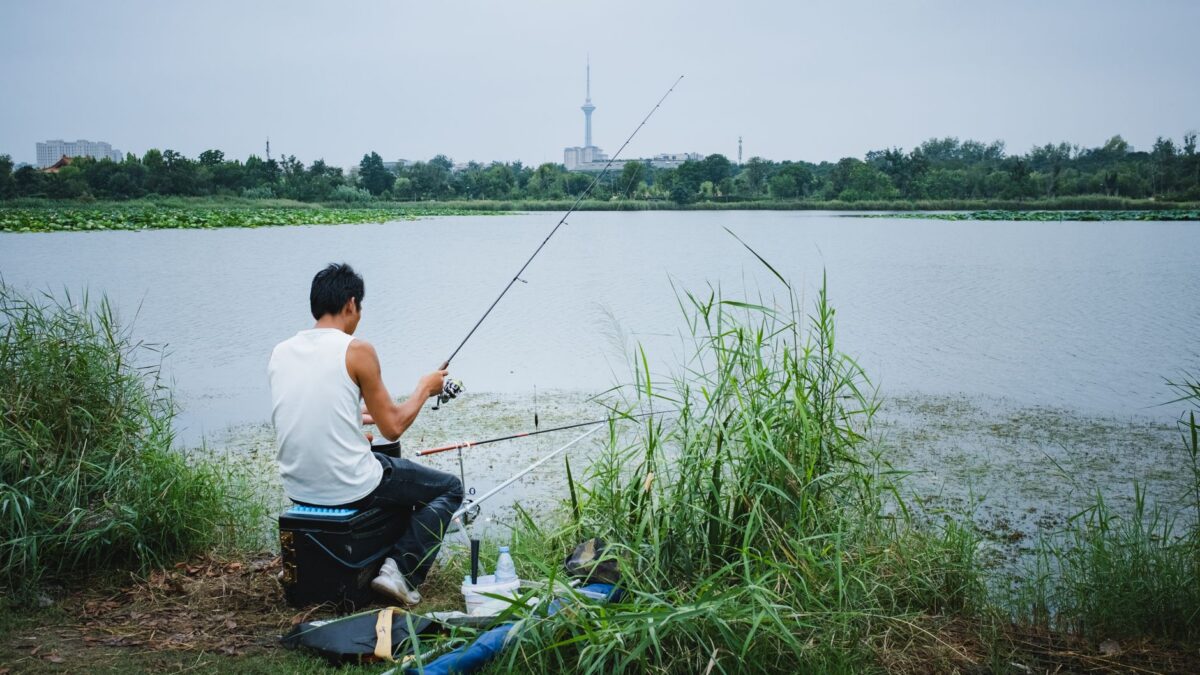
Flipping and pitching are short, quiet, underhand presentations for dropping a jig or a Texas-rigged soft plastic into heavy cover at close range. Flipping uses a fixed length of line that you swing to targets roughly 10 to 20 feet away; pitching is an underhand pendulum cast where line comes off the reel, reaching a bit farther. Both work best with a long, heavy-power casting rod, strong line and a bait that falls straight into the cover. When a fish bites, set the hook hard and pull it out before it can wrap you up.
A short history
Flipping traces back to California’s Delta in the late 1960s and early 1970s, where Dee Thomas adapted a long-pole technique for dipping baits into tule reeds. When local rules limited rod length, he moved to a 7½-foot rod, and his win at a 1975 Bassmaster tournament on Bull Shoals helped put flipping on the national map. Today, “flipping” is often used loosely for both techniques.
Flipping vs pitching
| Flipping | Pitching | |
|---|---|---|
| Distance | Very close, about 10–20 feet | Close to medium, about 15–40 feet |
| Line control | Fixed length, fed out and pulled back by hand | Line comes off the spool, controlled by your thumb |
| Best for | Dense cover, stained or muddy water, fish holding tight | Spread-out targets, clearer water, staying farther from fish |
| Noise | Very quiet entry | Quiet with a low trajectory |
| Speed | Fast between nearby targets | Fast and more versatile |
How to flip, step by step
- With the reel engaged, let out roughly a rod’s length of line from the tip.
- With your free hand, grab the line between the reel and the first guide and pull it out to the side, so you hold several extra feet of line.
- Raise the rod tip to swing the bait back toward you, like a pendulum.
- As the bait swings forward, lower the rod tip toward the target and let the line in your free hand slide out through your fingers.
- Guide the bait so it enters the water quietly next to or into the cover, and let it fall on a slack line.
- To make the next flip, pull the line back with your free hand while lifting the rod, and repeat.
How to pitch, step by step
- Put the reel in free spool and hold the spool with your thumb.
- Let out line until the bait hangs near the reel, then hold the bait in your free hand.
- Point the rod tip down and slightly toward the target.
- Lift the rod tip in one smooth motion and release the bait, letting it swing forward low over the water.
- Lift your thumb so line feeds out, then thumb the spool to stop the bait right over the target.
- Let the bait drop in and fall, engage the reel and watch the line.
A low trajectory is the goal for both: the bait should skim in rather than land from above, so it doesn’t spook fish.
Gear for flipping and pitching
Rod
Most anglers use a casting rod around 7 to 8 feet long, in heavy or extra-heavy power with a fast action. The length helps you swing the bait and pull fish up and out of cover; the power drives the hook through heavy plastic and moves fish away from snags.
Reel
A baitcasting reel with a strong drag and a fast gear ratio helps you take up slack quickly after a bite and get the bait back for the next target. See reel gear ratios explained.
Line
- Braid in heavy pound tests (commonly in the 50- to 65-pound range) for thick grass, mats and dense vegetation. It cuts through stems and has almost no stretch.
- Fluorocarbon in heavier tests (often around 15 to 25 pounds) for wood, docks and sparser cover, and in clearer water where line visibility matters.
Our guide on how to choose fishing line explains the trade-offs.
Best baits
- Flipping jig with a craw or creature trailer: a bulky, weedless bait that is great around wood and docks. See how to fish a jig.
- Texas-rigged soft plastics such as creature baits, craws, beaver-style baits and stick worms, with a pegged bullet weight so the weight and bait stay together. See our Texas rig guide.
- Punch rig for heavy grass mats: a heavy weight, often tungsten, pegged above a compact soft plastic, sometimes with a small skirt, on a strong straight-shank hook.
Weight size depends on cover. Lighter weights give a slower, more natural fall in sparse cover; heavier ones are needed to punch through thick mats. Heavy-wire flipping hooks hold up to hard hook sets and big fish.
How to work heavy cover
- Pick targets. Shady sides of docks, the thickest part of a laydown, holes and edges in grass mats, and isolated bushes or stumps.
- Enter quietly. A soft entry matters more than distance.
- Watch the fall. Many bites come as the bait falls. Watch for the line to jump, stop early or move sideways.
- Give it a few hops. Once on the bottom, shake or hop it once or twice, then move to the next target.
- Keep moving. Flipping is a numbers game; make many accurate presentations rather than many casts to one spot.
Detecting bites and setting the hook
Bites often feel like a tick, a sudden heaviness or the line going slack. When you see or feel one, reel down quickly to remove slack and set the hook hard with an upward sweep. Then keep steady pressure and steer the fish up and out of the cover right away; giving it slack lets it wrap around stems or wood. Keep your boat partner clear of your swing, and wear sunglasses to protect your eyes from a bait that pulls free.
Bottom line
Flipping and pitching are the go-to ways to catch bass buried in heavy cover. Flip for very close, quiet presentations in dense cover; pitch to reach a bit farther and cover more targets. Use a long, heavy casting rod, strong braid or fluorocarbon, and a weedless jig or Texas-rigged plastic, and pull fish out fast once they bite.
FAQ
What is the difference between flipping and pitching?
Flipping uses a fixed length of line swung by hand to very close targets. Pitching is an underhand cast where line comes off the spool, so you can reach targets a bit farther away.
What rod do I need for flipping and pitching?
Most anglers use a casting rod around 7 to 8 feet in heavy or extra-heavy power with a fast action. That gives enough leverage to set the hook and pull bass out of cover.
Should I use braid or fluorocarbon for flipping?
Braid is the usual choice in thick vegetation and mats. Fluorocarbon is common around wood, docks and in clearer water. Many anglers carry one rod rigged with each.
Can I flip and pitch with spinning gear?
You can pitch light baits with spinning gear around docks and light cover, but heavy cover calls for a baitcasting setup with strong line.