Trout Fishing for Beginners: Stocked Lakes vs Streams, Baits, Lures and Rules
The fastest way to catch your first trout is a recently stocked lake and a light spinning rod. Here's the gear, the rigs and the rules worth knowing.
The easiest way to catch your first trout is to fish a recently stocked lake or stream from your state’s stocking schedule with an ultralight or light spinning rod and 4 to 6 lb line. In lakes, fish floating dough bait or a worm on a sliding sinker rig where bait is allowed; in streams, cast small inline spinners or spoons upstream and across. Before you go, check whether the water has special rules such as artificial-only or catch-and-release, and whether your state requires a trout stamp.
Stocked lakes vs streams
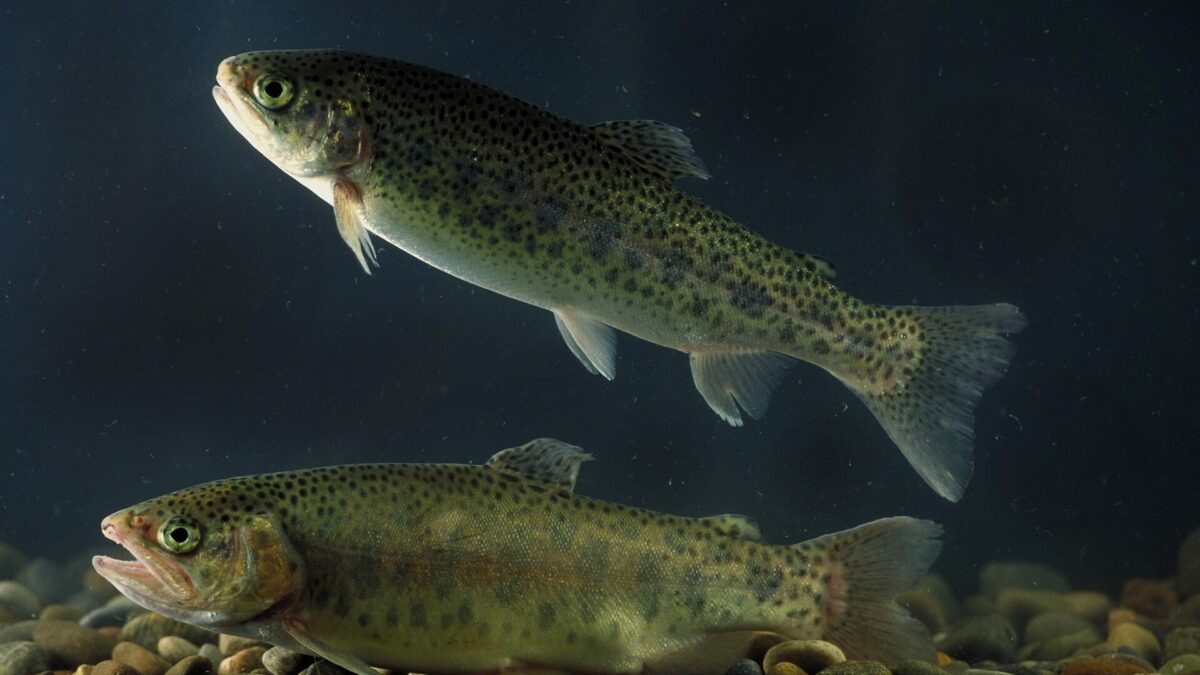
Most states raise trout in hatcheries and stock them in lakes, ponds and streams, especially where water stays cold enough. Rainbow trout are the most commonly stocked; brown and brook trout are also widespread.
| Stocked lakes and ponds | Streams and rivers | |
|---|---|---|
| Difficulty | Easiest; open shorelines, bait often allowed | Harder; current, wary fish, more snags |
| Best methods | Dough bait or worms on the bottom, small spoons, spinners, flies under a bobber | Spinners, small spoons, drifted bait where legal, flies |
| Where fish hold | Near inlets, points, drop-offs, and near stocking access points just after stocking | Seams, riffles, pools, undercut banks, behind rocks |
| Best time | Spring and fall; winter in mild southern and desert climates | Spring and fall; summer mornings on cold streams |
Freshly stocked trout are often less wary for the first days after release. Trout that survive for months (“holdovers”) and wild trout behave more like wild fish: wary, selective and tight to cover.
Use stocking schedules
Many state wildlife agencies publish stocking schedules or recent stocking reports online, listing waters and approximate dates. Some publish exact dates, others only the week or month to avoid crowds. Plan your first trips around these lists.
Water temperature matters
Trout are cold-water fish. The Missouri Department of Conservation notes that rainbow trout need water that stays below about 70 °F. That’s why many lowland lakes are stocked only in cooler months, and why summer trout fishing moves to mountain lakes, spring-fed creeks and cold tailwaters below dams. When water warms, fish early in the morning and keep released fish in the water.
Gear for beginners
- Rod and reel: a 5 to 7 ft ultralight or light spinning combo. Spinning reels handle light lures and bait easily.
- Line: 4 to 6 lb monofilament or fluorocarbon. Lighter line casts small lures farther and is less visible in clear water. See the line weight chart for other species.
- Terminal tackle: small hooks (sizes 8 to 14 for bait, small trebles for dough bait), egg sinkers, swivels, split shot, a few small bobbers.
- Extras: needle-nose pliers or forceps, a net with rubber mesh, polarized sunglasses.
Dough bait vs spinners vs flies
Floating dough bait
Floating dough baits, of which Berkley PowerBait is the best-known brand, are made for stocked trout. Fished on a long leader above a sliding sinker, the bait floats up off the bottom where cruising trout find it.
- Slide an egg sinker (1/8 to 1/4 oz) onto the main line.
- Add a bead, then tie on a small swivel.
- Tie an 18 to 30 inch leader of lighter line to the swivel.
- Add a small treble or single hook and mold a marble-sized ball of dough bait around it.
- Cast, let the sinker hit bottom, reel up slack and wait. When the line tightens steadily, lift and reel.
Worms and nightcrawlers work on the same rig, often with a little air or a small float to lift them off the bottom.
Inline spinners and small spoons
Spinners of about 1/16 to 1/6 oz and small spoons are the classic stream lures and work well in lakes too. In streams, cast upstream and across, then reel just fast enough to feel the blade turning as the lure swings with the current. Treble hooks catch fish well but can make releases harder; some special-regulation waters require single or barbless hooks.
Flies
Fly fishing is the traditional way to fish streams, and many trout waters are fly-fishing only or artificial-only. A fly under a small bobber on spinning gear can also work in lakes where it’s legal. If you want to try a fly rod, start with our guide to fly fishing for beginners.
Reading a trout stream
- Seams: the line where fast water meets slow water. Trout rest in the slow side and dart out to feed.
- Riffles: shallow, broken water with plenty of insects, best in morning and evening.
- Heads and tails of pools: where food funnels in and where fish slide back to feed.
- Cover: undercut banks, boulders, logs and shade.
Approach from downstream, move slowly, keep a low profile and avoid casting a shadow over the water. Wade only where the bottom and current are safe, and never wade fast water above your knees.
Regulations to check first
Trout rules vary more than almost any other fishing rules. Check your state wildlife agency’s current regulations for:
- License and trout stamp: some states require an extra trout stamp, permit or validation on top of the base license.
- Special waters: artificial lures only, fly-fishing only, catch-and-release, barbless hooks, or delayed-harvest seasons.
- Seasons: some streams have opening days or closed periods.
- Daily limits and size limits, which often differ between stocked and wild-trout waters.
- Bait rules: some waters ban live bait or certain baitfish.
When releasing trout, wet your hands, keep the fish in the water when possible and handle it briefly. Our catch and release guide covers the details.
Bottom line
Start with a stocked lake on your state’s stocking list, a light spinning rod with 4 to 6 lb line, and either floating dough bait on a sliding sinker rig or a small spinner. Move to streams once you’re comfortable, reading seams and pools and approaching quietly. Check license, trout stamp, bait and special-water rules before every new spot.
FAQ
What is the best bait for stocked trout?
Floating dough bait, worms and nightcrawlers are the classic choices where bait is legal. Small spinners and spoons work well where it isn’t.
What line should I use for trout?
4 to 6 lb monofilament or fluorocarbon covers most trout fishing. Go lighter in very clear water and heavier for big fish or tailwaters.
When are trout stocked?
It depends on your state and climate. Northern states often stock in spring and fall; southern and desert states often stock in winter. Check your state agency’s stocking schedule.
Do I need a trout stamp?
Some states require a trout stamp, permit or validation in addition to a fishing license, and others include trout in the base license. Our guide on how to get a fishing license explains where to check.