Catfish Fishing for Beginners: Channel, Blue and Flathead Catfish, Baits, Rigs and Night Fishing
Catfish are one of the easiest big fish to catch from shore. Learn the three main species, what each one eats and the two rigs that cover most situations.
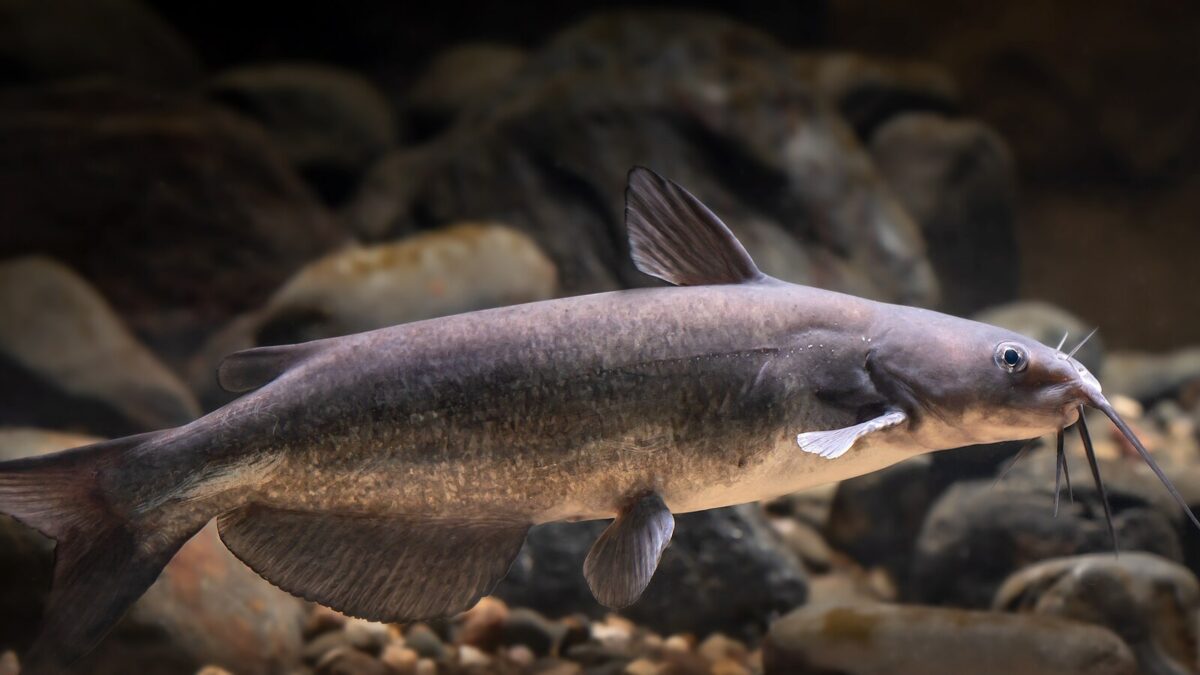
For beginners, the easiest catfish target is the channel catfish: fish a slip sinker rig on the bottom with nightcrawlers, chicken liver, cut bait or prepared bait near deeper holes, channels and current breaks, ideally in the evening or at night in summer. For big blue catfish, use fresh cut shad or herring; for flathead catfish, use live fish where it’s legal. A circle hook and a rod in a holder let the fish hook itself.
The three main catfish species
| Channel catfish | Blue catfish | Flathead catfish | |
|---|---|---|---|
| Tail | Deeply forked | Deeply forked | Squared off, not deeply forked |
| Anal fin | Rounded outer edge | Straight outer edge, like a comb | Not the key clue; check tail and head |
| Other clues | Often has dark spots (may fade in big adults) | No spots; wedge-shaped head with a sloping back | Broad, flat head; lower jaw sticks out past the upper; mottled brown-yellow |
| Typical habitat | Ponds, lakes, reservoirs and rivers almost everywhere | Large rivers and big reservoirs | Rivers and reservoirs with logjams and deep cover |
| Favorite baits | Worms, liver, cut bait, prepared and dip baits | Fresh cut shad or herring; live baitfish | Live fish; rarely eat dead bait |
| IGFA all-tackle record | 58 lb (South Carolina, 1964) | 143 lb (Kerr Lake, Virginia, 2011) | 123 lb (Elk City Reservoir, Kansas, 1998) |
The anal fin shape is the quickest way to separate a channel cat from a blue. Texas Parks and Wildlife’s catfish identification page compares the two side by side. Regulations often differ by species, so knowing which one you have matters.
Gear for beginners
- Channel cats: a 7 to 8 ft medium or medium-heavy spinning or casting rod with 12 to 20 lb monofilament.
- Big blues and flatheads: heavier rods with 30 lb or stronger line, often 50 lb or more braid or mono around snags.
- Hooks: circle hooks are popular because fish hook themselves in the corner of the mouth as they swim off. Size depends on bait size, from about 2/0 for worms and small cut bait up to 7/0 to 10/0 for big baits. See our guide to hook sizes.
- Sinkers: egg or flat “no-roll” sinkers, from 1/2 oz in ponds to several ounces in strong current.
- Extras: rod holders or sand spikes, long-nose pliers, a headlamp, a landing net and a towel or gloves.
Baits by species
Channel catfish feed partly by smell and will eat almost anything: nightcrawlers, chicken liver, shrimp, cut shad or sunfish where legal, and commercial dip, punch or dough baits. In stocked ponds, prepared baits work well.
Blue catfish prefer fresh fish. Cut gizzard shad or skipjack herring, cut into chunks with the oily side exposed, is a standard bait. Fresh bait usually beats bait that has sat in the sun.
Flathead catfish are predators that hunt live prey, mostly at night. Live sunfish, shad, suckers or other baitfish are typical, but many states restrict which species can be used as live bait, and some ban using game fish as bait. Check your state’s live bait rules first.
Two rigs that cover most catfishing
Slip sinker rig
- Slide an egg or no-roll sinker onto the main line.
- Add a bead to protect the knot.
- Tie on a barrel swivel; the sinker slides above it.
- Tie a 12 to 24 inch leader to the other end of the swivel.
- Tie on a circle hook and add bait.
The sinker holds bottom while a fish can pull line without feeling much weight.
Santee rig
The Santee rig, named after the Santee Cooper lakes in South Carolina, is a slip sinker rig with a small peg float or float bead on the leader about 4 to 6 inches above the hook. The float lifts the bait slightly off the bottom, where it moves in the current and stays out of some snags. It’s a favorite for drifting and for blue and channel catfish over open bottom.
In heavy current, many anglers use a three-way rig instead: one swivel ring to the main line, one to a dropper with the sinker, one to the hook leader. In shallow ponds, a float rig with bait a foot or two off the bottom also works.
Where to fish
Rivers
- Deep holes and outside bends, where current digs out the bottom.
- Current breaks: behind wing dams, rock piles, bridge pilings and fallen trees.
- Logjams and woody cover for flatheads, which often rest under cover by day and move to feed at night.
- Tailwaters below dams, which concentrate baitfish and catfish. Respect posted restricted zones and watch for sudden water releases.
Lakes, reservoirs and ponds
Fish creek and river channels, the edges of flats near deep water, windblown banks where baitfish pile up, and riprap. Many state agencies stock channel catfish in community and urban ponds, which makes them ideal for beginners. For moving water in general, our guide to river fishing covers reading current seams and eddies.
Night fishing
Catfish feed actively after dark, especially in summer, and flatheads in particular move out of cover at night to hunt. Night fishing is productive but needs preparation:
- Scout the spot in daylight and know your footing and the bank.
- Bring a headlamp plus a spare light, and keep hooks and knives organized.
- Wear a life jacket in a boat or near fast water, and tell someone where you’ll be.
- Check whether the water body is open at night; some parks and lakes close at dusk.
Hook setting, handling and keeping fish
With circle hooks, don’t jerk. When the rod loads steadily, simply reel and lift. Catfish have sharp spines on the dorsal and pectoral fins that can cause painful wounds. Hold smaller cats from the top with your hand behind the dorsal spine and with fingers away from the pectoral spines, or use a towel or gloves.
Catfish are excellent eating, but many waters have fish consumption advisories, sometimes stricter for larger fish. Check your state’s advisories and the EPA’s fish and shellfish advisory resources before keeping fish. Daily limits and size rules for each species vary by state and water, and you’ll need a valid license; our guide on getting a fishing license explains the basics.
Bottom line
Start with channel catfish: a slip sinker rig, a circle hook, smelly bait and an evening on a pond, lake or river hole. Graduate to fresh cut bait for blues and legal live bait for flatheads. Fish structure and current breaks, be careful with spines, and always check your state’s limits, bait rules and consumption advisories.
FAQ
What is the best bait for catfish?
For channel cats, nightcrawlers, chicken liver and prepared baits work well. For blues, fresh cut shad or herring. For flatheads, live fish where legal.
Is night fishing better for catfish?
Often, especially in summer. Catfish feed in daylight too, particularly in stained water or on cloudy days.
Should I use circle hooks or J hooks?
Circle hooks are easier for beginners using rod holders, because the fish hooks itself and is usually hooked in the mouth. Don’t set hard; just reel and lift.
Do catfish stings hurt?
Yes. The fin spines can cause painful puncture wounds. Clean any wound well and get medical help if it swells or shows signs of infection.