Drop Shot Rig: How to Tie It, Leader Length, Hooks and When to Use It
The drop shot holds a small bait above the bottom, right in front of the fish. Here's how to tie it correctly, pick the parts and know when it's the right call.
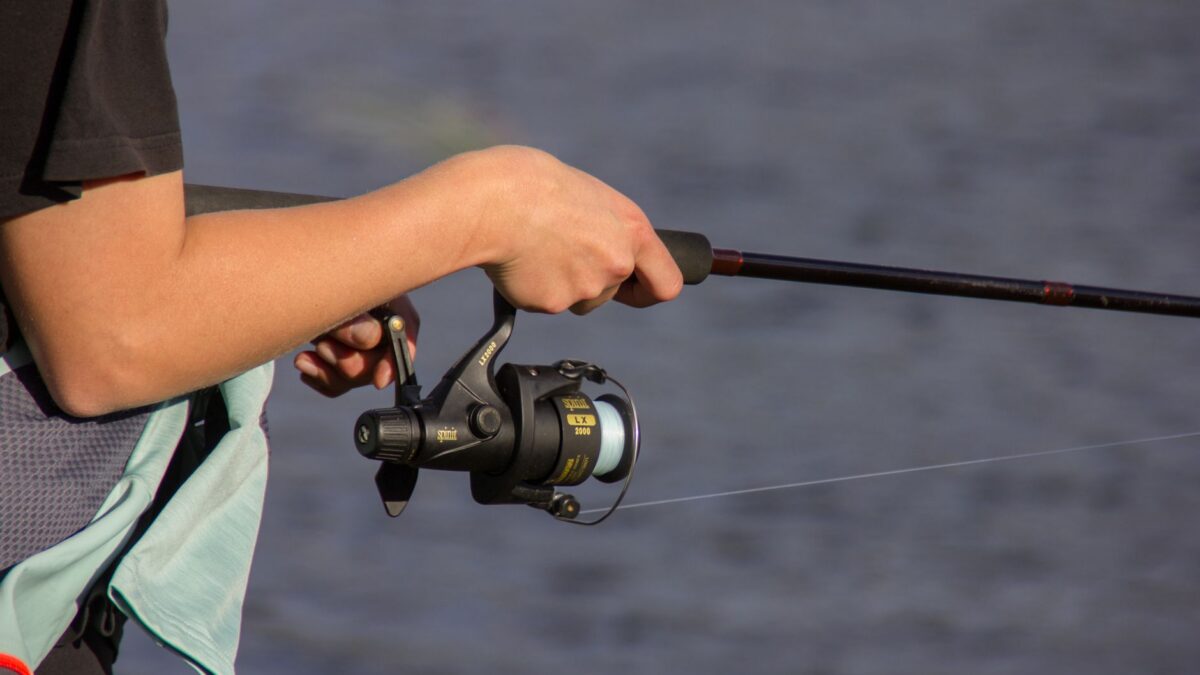
A drop shot is a hook tied directly to your line with a Palomar knot and a weight clipped to the tag end below it, so a small soft plastic hovers above the bottom instead of lying on it. A good starting setup is a medium-light spinning rod, 6–8 lb fluorocarbon (or light braid with a fluorocarbon leader), a size 1 or 2 drop shot hook, a 3–5 in finesse bait, a 1/4 oz weight and about 12–18 in between hook and weight. Use it when bass are deep, pressured, in clear water or holding tight to the bottom.
The technique came from Japan, where anglers developed it for heavily fished lakes, and it reached the U.S. through the West Coast, usually dated to the late 1990s. It has since become a staple everywhere, especially for smallmouth.
Drop shot gear at a glance
| Part | Typical choice | Notes |
|---|---|---|
| Rod | About 6 ft 10 in to 7 ft 3 in, medium-light or medium, fast action | A soft tip shows bites and protects light line |
| Reel | Small to mid-size spinning reel | Smooth drag matters more than speed |
| Line | 6–8 lb fluorocarbon, or 10–15 lb braid with a 6–10 lb fluorocarbon leader | Braid adds feel in deep water |
| Hook | Size 1–2 drop shot hook; 1/0–2/0 offset or EWG for weedless rigging | Light wire penetrates easily |
| Weight | 1/8–3/8 oz, cylinder, teardrop or round | Clip or slip-on types grip the tag line |
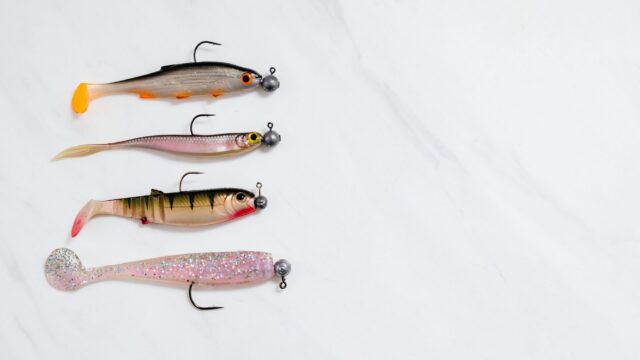
| Bait | 3–5 in finesse worms, small minnow baits, small craws | Thin, lively tails work well |
How to tie a drop shot rig
- Pull 2–3 ft of line off the reel. About 18–24 in from the end, double the line into a loop, push the loop through the hook eye and tie a Palomar knot. The long free end below the hook is your tag; don’t trim it.
- Hold the hook so the point faces up. Thread the tag end back through the hook eye from the top (the point side) and pull it snug. This makes the hook stand out from the line with the point up.
- Decide your leader length and clip the weight onto the tag end at that distance below the hook.
- Trim any extra line below the weight, leaving a little so the weight can slide off if it snags rather than breaking off everything.
- Nose-hook the bait: insert the hook just through the tip of the bait’s head so the body hangs free. For grassy or brushy areas, Texas-rig the bait on an offset or EWG hook instead.
How long should the leader be?
The distance between hook and weight decides how high the bait floats. Match it to where the fish are:
- About 4–8 in: bass tight to the bottom, cold water or when fish are feeding on bottom-dwelling prey.
- About 12–18 in: the all-around default.
- About 18–30 in or more: fish suspended a bit off the bottom, or when you need to keep the bait above grass.
A fish finder helps a lot here. If you can see fish holding a foot or two off the bottom, set the bait at that height. Our guide to reading a fish finder explains how to tell fish from bait and bottom clutter.
How to fish a drop shot
There are two basic approaches.
Vertical
Drop the rig straight down to fish you’ve marked under the boat, a dock or a ledge. Keep the weight on the bottom and gently shake the slack line so the bait twitches in place without moving the weight. Pause often; many bites come when the bait sits still.
Casting
Cast to a point, ledge, rock pile or grass edge and let the weight sink. Then slowly drag the weight a few inches, shake the bait, pause and repeat. Think of it as moving the weight from spot to spot while the bait dances above it.
Bites range from a sharp tap to the line simply feeling heavy. Because the hook is exposed and light-wire, you don’t need a huge hookset. Reel quickly until the line is tight and sweep the rod firmly to the side or up. Let the drag do its job on light line.
When a drop shot is the right choice
- Deep water: bass on ledges, humps and channel edges in summer and winter.
- Pressured lakes: a small bait barely moving can draw bites from fish that ignore bigger lures.
- Clear water: light fluorocarbon and a natural bait look realistic.
- After a cold front: when fish hold tight and feed less. See fishing after a cold front.
- Smallmouth: in rocky lakes and rivers, drop shots are among the most dependable smallmouth rigs. More in our smallmouth fishing tips.
It’s less suited to heavy wood and thick matted grass, where a Texas rig or jig is the better tool.
Common mistakes
- Overworking it: shake the line, not the weight. If the weight hops around, the bait isn’t staying in the strike zone.
- Hook point down: if the tag isn’t passed back through the eye from the top, the hook hangs wrong and you miss fish.
- Line twist: a swivel-style drop shot weight and a straight-rigged bait reduce twist.
- Too heavy a weight: in shallow water, a lighter weight is easier to keep in place and less likely to snag.
Bottom line
Tie the hook with a Palomar knot, run the tag back through the eye so the point faces up, clip on a 1/8–3/8 oz weight about 12–18 in below and nose-hook a small finesse bait. Fish it on light spinning tackle, shake slack line rather than moving the weight, and reach for it whenever bass are deep, finicky or in clear water.
FAQ
What size hook is best for a drop shot?
A size 1 or 2 drop shot hook suits most 3–5 in baits. For weedless rigging in grass or wood, use a 1/0 or 2/0 offset or EWG hook.
What weight should I use on a drop shot?
Start with 1/4 oz. Go to 1/8 oz in shallow or calm water and 3/8 oz or more in deep water, wind or current.
Can I fish a drop shot from shore?
Yes. Cast it to drop-offs, rocks and dock edges and slowly drag it back. Keep the leader on the shorter side to reduce snags.
Why do I need a Palomar knot?
It is strong, simple to tie and, with the tag passed back through the eye, makes the hook stand out from the line with the point up, which improves hookups.