How to Choose a Fishing Rod: Power, Action, Length and the Right Rod for Each Technique
Power, action and length decide what a rod can do. Here's how to read the specs printed above the handle and match a rod to the way you fish.
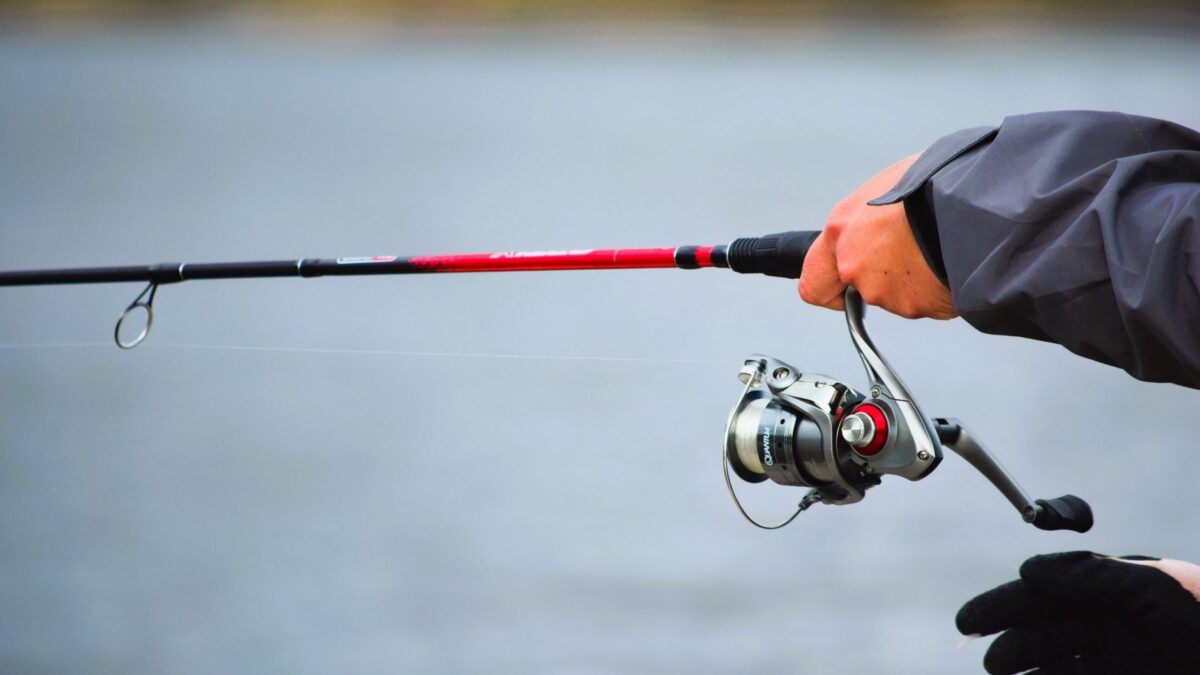
Choose a fishing rod by matching three specs to the lures you’ll throw most: power (how much force it takes to bend the rod), action (where along the blank it bends) and length. For most bass fishing, a 7-foot medium or medium-heavy rod with a fast action is the safest first choice. Then decide spinning or casting based on lure weight: light baits favor spinning, heavier baits and heavy line favor casting.
Everything you need is usually printed on the blank just above the handle: length, power, action, line rating and lure rating. Learn to read that label and you can compare any two rods in a few seconds.
Rod power: how much the rod can lift
Power describes the rod’s backbone. A heavier-power rod needs more force to bend, handles heavier line and lures, and can pull fish out of thick cover. Common labels run from ultralight (UL) through light (L), medium-light (ML), medium (M), medium-heavy (MH), heavy (H) and extra-heavy (XH).
There is no industry standard for these labels, so one brand’s medium-heavy can feel like another’s medium. Use the line rating and lure rating on the blank as the real guide. The ranges below are typical, not universal.
| Power | Typical line (mono/fluoro) | Typical lure weight | Common uses |
|---|---|---|---|
| Ultralight / Light | 2–8 lb | 1/32–1/8 oz | Panfish, stocked trout, small streams |
| Medium-light | 4–10 lb | 1/16–3/8 oz | Finesse bass rigs, walleye jigs |
| Medium | 6–12 lb | 1/4–3/4 oz | All-around bass and walleye, crankbaits, jerkbaits |
| Medium-heavy | 10–17 lb | 3/8–1 oz or more | Texas rigs, jigs, spinnerbaits, Carolina rigs |
| Heavy / Extra-heavy | 15–25 lb (or heavy braid) | 1/2–1 1/2 oz or more | Flipping, punching mats, frogs, big swimbaits |
Because braid is much thinner than mono for the same strength, rods are often fished with braid that tests higher than the printed mono rating. Our fishing line pound-test chart covers which line strength suits which technique.
Rod action: where the rod bends
Action describes how far down the blank the rod flexes under load.
- Extra-fast: bends mostly in the top section. Very sensitive and quick on the hookset; good for single-hook finesse baits, drop shots and jigs.
- Fast: bends in roughly the top third. The most versatile bass action, used for Texas rigs, jigs, spinnerbaits and many topwaters.
- Moderate-fast / Moderate: bends well into the middle. The slower load gives fish time to take a lure and keeps treble hooks from tearing out, which is why crankbait and bladed-jig rods are often moderate.
- Slow: bends into the butt. Mostly seen on ultralight panfish rods and some fiberglass rods; fun with small fish but slow on the hookset.
A simple rule: single hooks that need a firm hookset want a faster action; treble-hooked moving baits do better with a more forgiving, moderate action.
Length: casting distance vs. accuracy
Most bass rods fall between about 6 ft 6 in and 7 ft 6 in. Longer rods cast farther, pick up more slack on a long hookset and help steer fish around cover. Shorter rods are more accurate for short pitches, easier to skip under docks and easier to handle in a kayak or small boat. Ultralight panfish rods are often 4 1/2 to 6 ft.
If you fish mostly from shore, a 7 ft rod or slightly longer helps you reach more water. In a kayak, 6 ft 6 in to 7 ft is easier to manage when you land fish beside you.
Materials: graphite, fiberglass and composite
- Graphite (carbon fiber): light, stiff and sensitive, so you feel bottom and light bites better. It is also less forgiving of knocks and high-sticking.
- Fiberglass: heavier and less sensitive but tough, with a slower, more forgiving bend that suits crankbaits and treble-hook lures.
- Composite: a blend of both, aiming for some sensitivity with more durability. Common on crankbait and all-around rods.
Manufacturers also quote graphite “modulus” ratings. Higher modulus usually means lighter and stiffer, but the numbers are not standardized between brands, so compare actual weight, action and price rather than the label.
Spinning rod or casting rod?
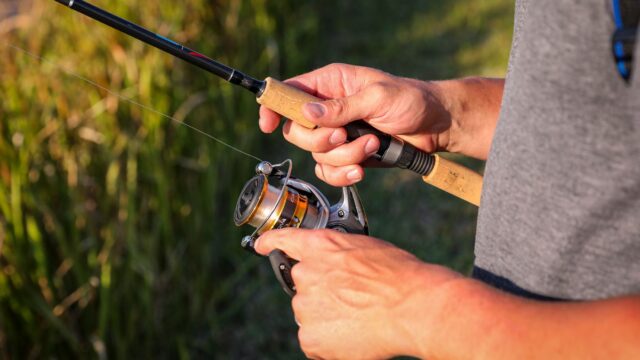
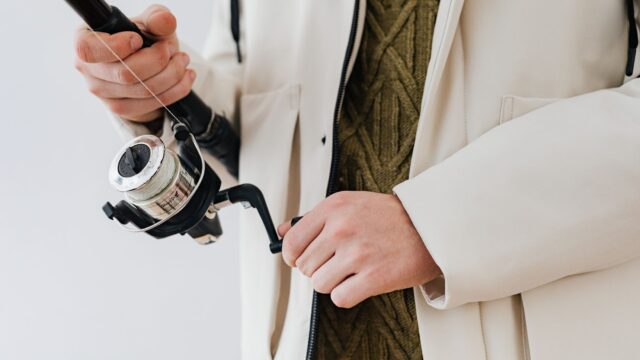
A spinning rod has large guides on the underside and holds the reel below the rod. It suits light lures, light line and beginners because the reel is easy to cast. A casting rod has smaller guides on top and usually a trigger grip, and it pairs with a baitcasting reel. It handles heavier line and lures, gives better leverage around cover and is more accurate once you learn to control the spool. Our spinning vs. baitcasting guide explains the reel side in detail.
Make sure the rod type matches the reel. A baitcaster on a spinning rod, or the reverse, puts the line in the wrong guides and casts badly.
Rod by technique: a quick spec chart
| Technique | Rod type | Length | Power / action |
|---|---|---|---|
| Drop shot, Ned rig, wacky rig | Spinning | 6’10″–7’2″ | ML–M, fast or extra-fast |
| Texas rig, jigs | Casting | 7’–7’4″ | MH–H, fast |
| Spinnerbaits, swim jigs | Casting | 7’–7’3″ | MH, moderate-fast or fast |
| Crankbaits, bladed jigs | Casting | 7’–7’6″ | M–MH, moderate or moderate-fast |
| Jerkbaits, walking topwaters | Casting or spinning | 6’6″–7′ | M, fast or moderate-fast |
| Flipping, punching, frogs | Casting | 7’2″–7’11” | H–XH, fast |
| Panfish and stocked trout | Spinning | 5’–6’6″ | UL–L, moderate or fast |
| Walleye jigging | Spinning | 6’3″–7′ | ML–M, fast or extra-fast |
| Channel catfish | Spinning or casting | 7’–8′ | MH, moderate |
Other details worth checking
- Handle: cork feels warm and light; EVA foam is durable and cheap. Split grips save weight; full grips are comfortable for long days.
- Guides: look for smooth inserts with no cracks. Braid is hard on cheap or damaged guides.
- Pieces: one-piece rods give the cleanest bend; two-piece rods are easier to transport. For backpacks and travel, see our look at telescopic rods.
- Warranty: rods break, often in car doors and boat lockers. A good warranty is worth something.
If you can only buy one rod
For bass, a 7 ft medium or medium-heavy, fast-action spinning rod handles soft-plastic worms, wacky rigs, small swimbaits, spinnerbaits and lighter crankbaits, and it is easy to learn on. If you are already comfortable with a baitcaster, a 7 ft medium-heavy fast casting rod is the classic all-rounder. Our guide to the best first bass setup pairs that rod with a reel and line.
Bottom line
Start with the lures you’ll use most, then pick power to match their weight, action to match the hooks and length to match where you fish. Read the line and lure ratings on the blank instead of trusting the power label alone, and choose spinning for light baits or casting for heavier ones. Take Me Fishing’s rod selection overview is a useful second reference.
FAQ
What is the difference between rod power and rod action?
Power is how much force it takes to bend the rod, from ultralight to extra-heavy. Action is where the rod bends: fast rods flex near the tip, moderate rods flex into the middle.
What length fishing rod is best for bass?
Most bass rods are 6 ft 6 in to 7 ft 6 in. A 7 ft rod is a good default; go longer for distance and heavy cover, shorter for accuracy, docks and kayaks.
Can I use braid heavier than the rod’s line rating?
Often, yes. Line ratings are usually given for mono, and braid is much thinner for its strength. Stay sensible with drag settings so you don’t overload the blank on snags.
Is a more expensive rod worth it?
Higher-end rods are usually lighter and more sensitive, which helps with bottom-contact baits. For a first rod, correct power, action and length matter far more than price.