How to Set the Hook: Single Hooks, Trebles, Circle Hooks and Why Fish Come Off
A good hookset depends on the hook. Soft plastics need a firm snap, crankbaits a steady sweep, and circle hooks no hookset at all.
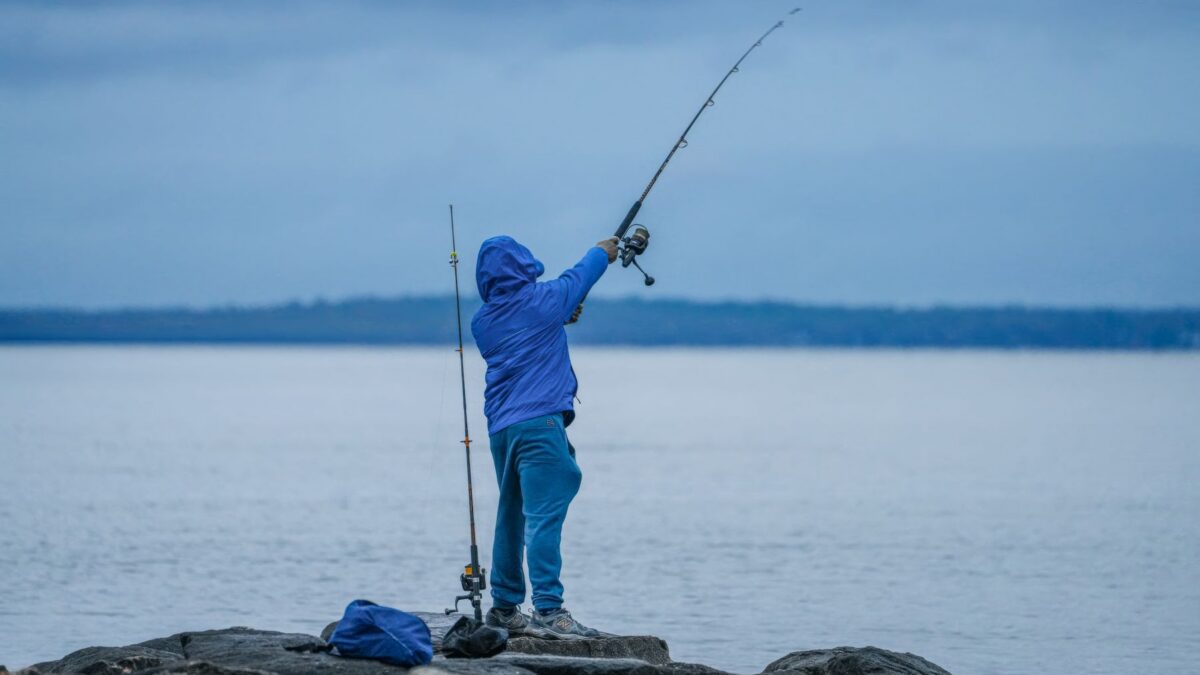
To set the hook, first reel up the slack until you feel the fish’s weight, then match the hookset to the hook. With single hooks buried in soft plastics or jigs, make a firm, fast snap of the rod. With treble-hook lures like crankbaits, use a steady sweep or simply keep reeling and lean back. With circle hooks, don’t jerk at all: reel steadily and let the hook slide into the corner of the mouth.
What a hookset actually does
A hookset drives the point and barb into the fish’s mouth. How much force that takes depends on the hook and what’s between it and the fish. A Texas-rigged worm with the point buried in plastic needs enough force to push the point through the bait first. A small, sharp treble on a crankbait often penetrates as soon as the line tightens. The line matters too: monofilament stretches a lot, fluorocarbon somewhat less, and braid barely at all, so the same rod movement delivers very different force at the hook.
Single hooks: soft plastics and jigs
Texas rigs, jigs, wacky rigs and most bottom-contact soft plastics use a single hook, often with the point tucked into the bait. These need a decisive hookset.
- Recognize the bite. It may be a tick, a thump, the line jumping or swimming sideways, or the bait just feeling “mushy” and heavy.
- Drop the rod tip toward the fish and reel up slack quickly, without pulling the bait away.
- Feel the weight. When the line comes tight and you feel the fish, don’t wait.
- Snap the rod firmly upward or sideways, using your forearms and the rod’s backbone rather than a big full-body swing.
- Keep reeling and keep the rod loaded. Most fish lost right after the hookset escape during a moment of slack.
For rigging that lets the hook come through the plastic cleanly, see our guide to the Texas rig. A hook that’s too small for a thick bait is a common reason for missed fish: the plastic blocks the point.
Treble hooks: crankbaits, jerkbaits and topwaters
Treble hooks are thinner and have three points, so they grab with much less force. A hard, jerking hookset can tear them out or pull the lure away from a fish that hasn’t fully committed. Instead:
- Sweep set. When you feel the fish, keep reeling and pull the rod smoothly to the side in a long arc.
- Reel set. On moving baits, many bites load the rod by themselves. Just keep cranking and lean into the fish as the rod bends.
- Use a softer rod. A moderate-action rod (or fiberglass/composite crankbait rod) bends more and helps keep trebles from pulling free.
Topwater bites
The visual explosion makes everyone react too early. With walking baits, poppers and buzzbaits, wait until you feel the fish’s weight before sweeping. With hollow-body frogs, many anglers pause a beat so the fish closes on the frog, then set hard, because a frog’s hooks sit tight against a soft body. Our guide to topwater lures for bass covers timing for each type.
Circle hooks: don’t set them
A circle hook’s point curves back toward the shank. When a fish swallows the bait and swims off, tension slides the hook out of the throat and rotates it into the corner of the jaw. A hard jerk pulls it out of the mouth instead.
- Let the fish take the bait and start moving.
- Reel steadily as the line comes tight; don’t swing the rod.
- When the rod loads, lift and keep steady pressure.
Circle hooks reduce deep hooking, which is why some fisheries require them. Along the Atlantic coast, for example, rules adopted through the Atlantic States Marine Fisheries Commission require inline (non-offset) circle hooks when fishing for striped bass with natural bait. For how that works in practice, see catching striped bass with live bait. Rules vary by state and water, so check your state’s current regulations.
Hookset by bait type
| Bait or hook | Hookset | Notes |
|---|---|---|
| Texas rig, jig, wacky rig | Firm, fast snap after reeling slack | Hook size must match bait thickness |
| Drop shot, Ned rig, finesse plastics | Lighter sweep or steady reel-and-lift | Light line and small exposed hooks penetrate easily |
| Crankbait, jerkbait, lipless crankbait | Sweep set or reel set | Trebles; avoid jerking |
| Walking topwater, popper | Wait for weight, then sweep | Don’t react to the splash alone |
| Hollow-body frog | Short pause, then hard set | Usually heavy braid and a stout rod |
| Live bait on a circle hook | No set; reel steadily until tight | Required for some species and waters |
| Live bait on a J-hook | Set fairly soon after the bite | Waiting too long increases deep hooking |
Line, rod and drag
With braid, a short, controlled set is usually enough; overdoing it with light-wire hooks can bend them or tear the mouth. With monofilament on a long cast, much of a hookset is lost to stretch, so a longer sweep and fast reeling help. Fluorocarbon sits in between. Set your drag so it slips under a hard pull but isn’t loose enough to give line on a normal hookset. More on line trade-offs in braid vs fluorocarbon vs monofilament.
Why fish come unbuttoned
- Dull hooks. Drag the point lightly across a thumbnail; if it slides instead of catching, sharpen or replace it.
- Slack line. Slack during a jump or a run toward the boat lets the hook fall out, especially a barbless or treble hook. Keep steady pressure, and keep the rod tip low when a bass jumps.
- Setting too early. On topwaters and bait, setting before the fish has the lure pulls it away.
- Too much force for the gear. Hard sets with trebles or light-wire hooks tear out or bend.
- Drag too tight or too loose. Too tight breaks line or rips hooks; too loose never sets the hook.
- Lifting fish by the line. Swinging a heavy fish into the boat is a common last-second loss. Use a net or lip it at the boat.
Bottom line
Every good hookset starts with reeling up slack and feeling the fish. Then match the set to the hook: a firm snap for single hooks hidden in plastic, a steady sweep for trebles, and no set at all for circle hooks. Keep hooks sharp, keep pressure on throughout the fight, and you’ll land a bigger share of the bites you get.
FAQ
How hard should I set the hook on a bass?
Hard enough to drive the hook through the bait and into the jaw. That means a firm snap with Texas rigs and jigs, but a smooth sweep with crankbaits and other treble-hook lures.
Should you set the hook with a circle hook?
No. Reel steadily until the line comes tight and the rod loads. A hard jerk tends to pull a circle hook out of the fish’s mouth.
Why do I keep missing bites on soft plastics?
Common causes are slack line, a hook too small for the bait, or setting before the fish has the bait. Reel down until you feel weight, then set firmly.
Does braided line change the hookset?
Yes. Braid has very little stretch, so you need less movement to set the hook. Use a controlled set, especially with light-wire hooks.