Trolling Motor Buying Guide: Thrust, Shaft Length, Bow vs Transom Mount, Voltage and GPS Anchoring
A trolling motor that is too weak or too short makes every windy day a fight. Here is how to size thrust, voltage and shaft length, pick a mount and decide whether GPS anchoring is worth it.
To choose a trolling motor, work through four decisions in order: thrust (Minn Kota recommends at least 2 pounds of thrust for every 100 pounds of fully loaded boat weight, with extra if you fight wind or current), voltage (12, 24 or 36 volts, which sets how many batteries you carry), shaft length (long enough to keep the motor well below the surface), and mount (transom for small boats, bow for boats you fish from the front). Then decide whether GPS anchoring and fish finder integration are worth the extra cost.
Thrust: how much power you need
Trolling motors are rated in pounds of thrust. Base your choice on fully loaded weight: the boat, outboard, fuel, batteries, people and gear. Minn Kota’s sizing chart gives these recommended minimums:
| Loaded boat weight | Max boat length | Minimum thrust | Batteries (voltage) |
|---|---|---|---|
| 1,500 lb or less | 14 ft | 30 lb | 1 (12 V) |
| 2,000 lb | 17–18 ft | 40–45 lb | 1 (12 V) |
| 2,500 lb | 20–21 ft | 50–55 lb | 1 (12 V) |
| 3,000–3,500 lb | 23 ft | 70 lb | 2 (24 V) |
| 4,000 lb | 25 ft | 80 lb | 2 (24 V) |
| 4,500 lb or more | 25 ft and up | 101–112 lb | 3 (36 V) |
Those are minimums. If you fish rivers, big windy lakes or with a heavy load, step up. Wind is the most common reason to want extra thrust; our guide to fishing in the wind explains why windy banks are worth fishing, and a stronger motor makes them easier to hold.
Voltage and batteries
Each 12-volt battery adds 12 volts to the system, so a 24-volt motor needs two batteries and a 36-volt motor needs three. Higher-voltage systems deliver more thrust for bigger boats; lower-voltage systems are lighter, simpler and cheaper.
- Use deep-cycle batteries designed for repeated discharge, not starting batteries.
- Lithium (LiFePO4) batteries cost more but weigh much less and deliver more usable capacity. Use a charger made for their chemistry.
- Install the circuit breaker and wire size specified in the motor’s manual.
- An onboard charger makes recharging multi-battery systems far easier.
Small boats and kayaks often keep electronics on a separate small battery; see batteries for a kayak fish finder for the runtime math.
Shaft length
A shaft that is too short lets the prop break the surface, which wastes power, makes noise and loses control in waves. Minn Kota recommends submerging the center of the motor at least 12 inches and adding 5 inches to your measurement if you fish rough water.
Measure from where the motor mounts (the top of the transom, or the bow deck) down to the waterline, then use the maker’s chart. Minn Kota’s chart suggests:
| Mount | Mount to waterline | Recommended shaft |
|---|---|---|
| Transom | 0–10 in | 30 in |
| Transom | 10–16 in | 36 in |
| Transom | 16–22 in | 42 in |
| Bow | 0–10 in | 36 in |
| Bow | 16–22 in | 42–45 in |
| Bow | 22–28 in | 48–52 in |
| Bow | 28–44 in | 54–72 in |
For measurements between rows, or above 22 inches on a transom, check the manufacturer’s full chart or ask the factory.
Bow mount vs transom mount
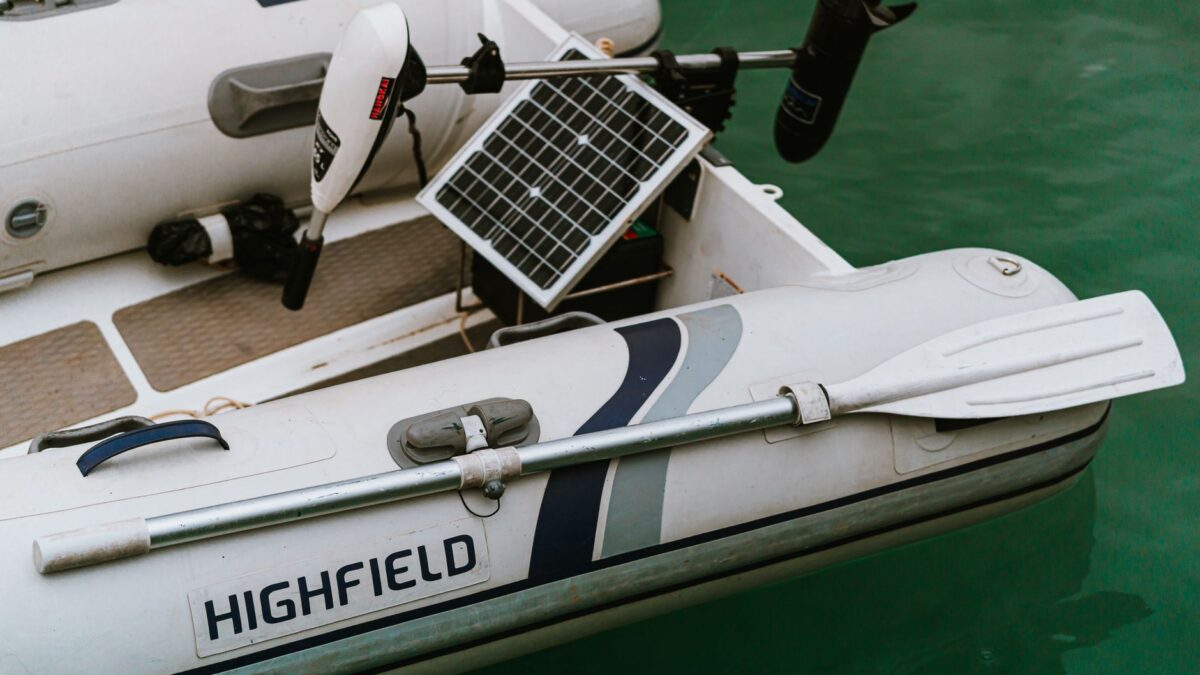
- Transom mount: clamps to the back of the boat and steers with a tiller handle. Inexpensive and simple, ideal for jon boats, small aluminum boats and canoes with a bracket. Pushing from the stern gives less precise control in wind.
- Bow mount: sits on the front deck and pulls the boat, which tracks better and holds position more easily in wind. Steering options include a foot pedal (cable or electric), a hand tiller and wireless remotes. Bow mounts are standard on bass boats and common on larger aluminum boats.
- Kayaks: some fishing kayaks have built-in motor mounts or motor-ready hulls; others use aftermarket transom-style mounts.
GPS anchoring and smart features
GPS-equipped motors use a GPS receiver and heading sensor to hold the boat on a spot without dropping an anchor. Minn Kota calls this Spot-Lock; Garmin’s Force offers anchor lock; Lowrance’s Ghost offers similar position holding. Common extra features include:
- Heading lock to hold a straight course while you fish a bank.
- Jog to nudge the anchored position a few feet at a time.
- Route recording and following, including tracking a depth contour on compatible maps.
- Control from the fish finder, such as setting an anchor point on a waypoint. This works within the same ecosystem; see Garmin vs Humminbird vs Lowrance.
Some premium motors use brushless designs that the manufacturers market as quieter and more efficient. GPS features cost considerably more, but they make boat control much easier, especially on windy days, on offshore structure and when using live sonar.
Freshwater or saltwater
If you fish brackish or salt water, buy a motor sold for saltwater use, which has added corrosion protection. Rinse any motor after saltwater use.
Rules and safety
- Registration: in many states, adding any motor, including an electric trolling motor, means a boat, canoe or kayak must be registered. Rules vary by state, so check with your state’s boating agency.
- Local restrictions: some lakes allow only electric motors, and some ban motors entirely. Check the rules for each water.
- Safety basics: wear a life jacket, keep hands and line clear of the prop, and disconnect power before working on the motor. Our fishing boat basics cover required safety equipment.
Minn Kota’s motor sizing guide has the full thrust and shaft length charts.
Bottom line
Size thrust from your fully loaded weight and add more for wind and current, pick the voltage that delivers that thrust, measure for shaft length rather than guessing, and choose a bow mount if you fish from the front of the boat. GPS anchoring is optional but the most useful upgrade if your budget allows, especially if it works with your fish finder.
FAQ
What size trolling motor do I need for a 14-foot jon boat?
Minn Kota’s chart suggests at least 30 pounds of thrust for boats of about 14 feet and 1,500 pounds or less fully loaded. Go higher if you fish wind, current or with two adults and gear.
How long will a trolling motor run on one battery?
It depends on battery capacity, the speed setting and conditions. Motors draw far more current at high speed than at low speed, so check the manufacturer’s amp-draw figures and divide your battery’s usable amp-hours by the draw at your usual setting.
Is GPS anchoring worth the money?
It is not essential, but it makes boat control much easier in wind, on offshore structure and when you want both hands free for fishing or watching sonar.
Can I put a trolling motor on a kayak?
Yes, with a compatible mount and battery. Check your state’s registration rules first, because adding a motor often changes how the kayak is classified.