Kayak Fishing Gear Checklist: Safety Gear, Anchoring, Storage, Electronics and Rigging Tips
Space is tight on a kayak, so every item has to earn its place. Start with required safety gear, then add the anchoring, storage and electronics that make fishing easier.
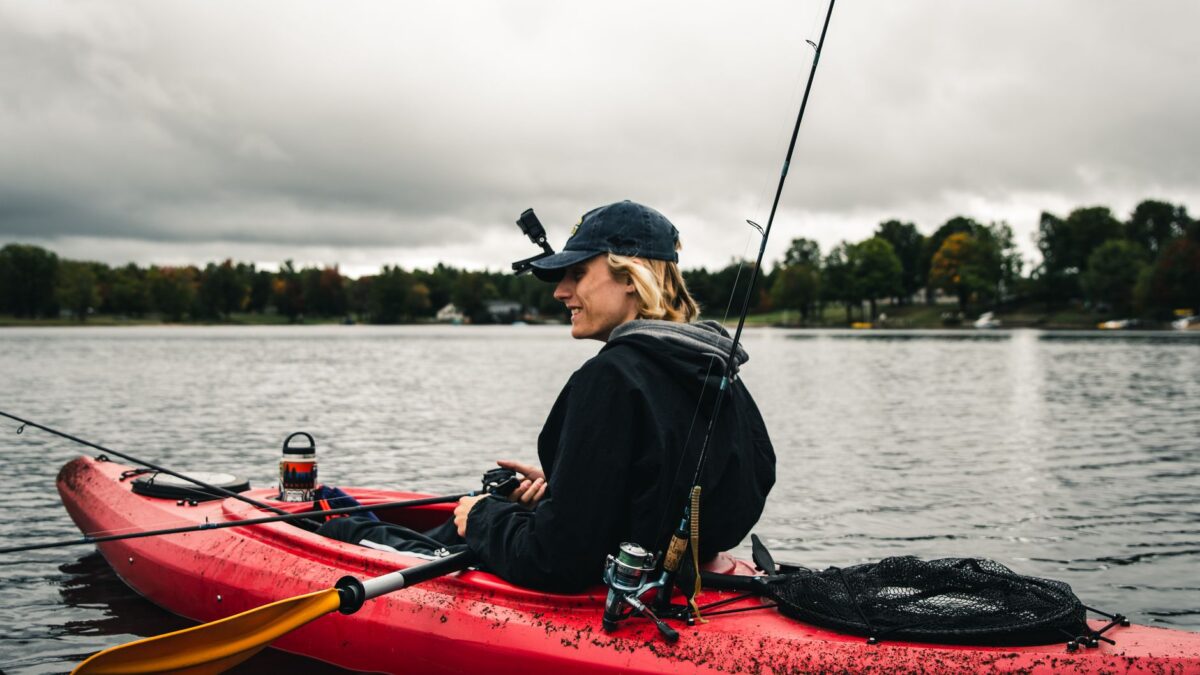
Every kayak fishing trip starts with the required safety gear: a U.S. Coast Guard-approved life jacket that you wear, a whistle or other sound device, and a white light if you’ll be out between sunset and sunrise. After that, the items that make the biggest difference are rod holders, a way to hold position (an anchor trolley with a small anchor, or a stakeout pole in shallow water), a crate for tackle, leashes for gear you can’t afford to lose, and a visibility flag. A fish finder and a dry bag round out a complete setup.
Required and essential safety gear
- Life jacket (PFD): federal rules require a Coast Guard-approved, wearable life jacket of the right size for each person, and states set their own wear rules, such as for children or, in some states, for small craft during colder months. Choose a paddling or fishing vest with a high back that clears your seat and pockets for pliers and small tackle. Inflatable belt packs are not recommended where you expect to end up in the water.
- Whistle or horn: a sound-producing device is required. Clip a whistle to your life jacket.
- White light: between sunset and sunrise, paddle craft need a white light, such as a flashlight or lantern, ready to show in time to avoid a collision. A mounted 360-degree light held above head height is easier to see.
- Visual distress signals: on coastal waters and the Great Lakes, federal visual distress signal rules can apply after dark. Check the requirements if you fish those waters.
- Phone in a waterproof case, kept on your body, not in a hatch.
- Clothing for the water temperature, not the air temperature. Cold water is dangerous even near shore; in cold seasons, wear immersion clothing such as a wetsuit or drysuit.
- Small first-aid kit, sunscreen, a hat and drinking water.
- Knife within reach to cut an anchor line or tangled line in an emergency.
The Coast Guard’s life jacket guide explains types and fit. A throwable cushion is not required on canoes and kayaks under federal rules, but state rules can add requirements, so check your state boating agency.
Holding position
- Anchor trolley: a pulley system along the side of the kayak that lets you move the anchor line to the bow or stern. Anchoring from the end keeps the kayak pointed into wind or current; anchoring from the side can let wind or current roll you.
- Small folding grapnel anchor with enough rope for the depths you fish, plus a float or quick-release so you can let it go fast.
- Stakeout pole: a pole pushed into soft bottom through a scupper or trolley ring. Quick and quiet in shallow water.
- Drift sock: slows your drift in wind without stopping you, useful on open flats and points.
Avoid anchoring in strong current, below dams or in moving water with debris. If the anchor snags in current, release it rather than fighting it.
Rods, tackle and storage
- Rod holders: flush-mount holders behind the seat for transport and trolling, and one or two adjustable holders in front of you for quick access.
- Crate: a milk crate or purpose-built tackle crate in the tank well, with rod tubes zip-tied or mounted to the sides.
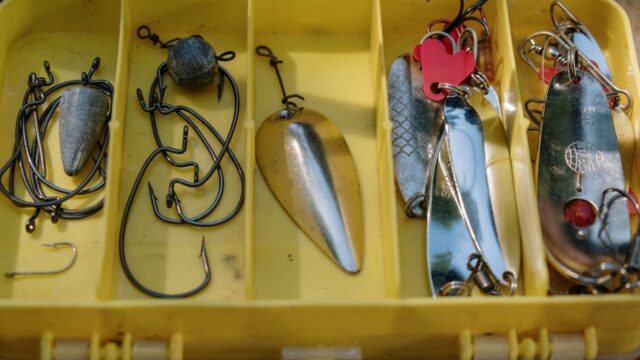
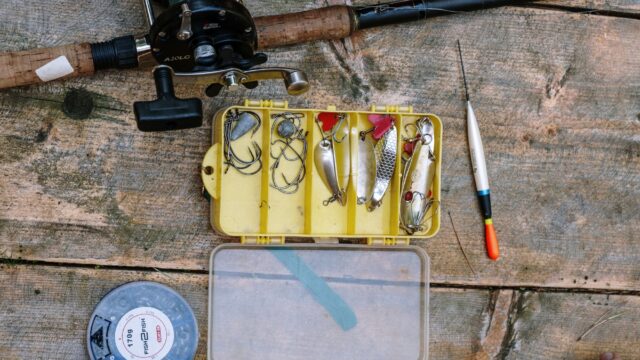
- Tackle boxes: a few small, waterproof utility boxes rather than one large box.
- Dry bag for keys, a spare layer and snacks.
- Leashes: for the paddle and any rod you can’t afford to lose. Keep them short and tidy so they don’t tangle around you if you tip over.
- Short-handled net or lip grip and long-nose pliers on a tether.
- Measuring board or tape, since many waters have length limits.
Electronics
- Fish finder: a compact unit mounted on a track or rail, with the transducer in a scupper, through-hull pocket or arm mount. Our guide to portable and kayak fish finders compares options.
- Battery: lithium batteries are lighter and give more usable capacity than lead-acid of the same rating; store and charge them per the maker’s instructions. See our guide to kayak fish finder batteries.
- VHF radio on big water and coastal areas where cell coverage may be unreliable.
Visibility
- Visibility flag: a tall, brightly colored flag on a mast helps powerboats see a low kayak, especially in waves. Some waters may require one, so check local rules.
- Bright clothing or life jacket rather than camouflage on busy water.
- Reflective tape on paddle blades and the hull.
Rigging tips
- Keep the paddle stroke clear. Mount rod holders and electronics so they don’t block your paddle or snag line.
- Put frequently used items within arm’s reach: pliers, lip grip, the tackle box you’re using and water.
- Balance the load. Heavy items low and centered; avoid stacking gear high in the crate.
- Rig over land first. Plan mount locations before drilling, and use marine-grade hardware and sealant.
- Stay within the capacity rating. Gear, battery and cooler add weight quickly; our kayak buying guide explains capacity.
- Practice re-entry in calm, shallow, warm water with your full setup so you know what floats, what’s leashed and how to climb back aboard.
Before every trip
- Check the forecast and wind; turn back early if conditions build.
- Tell someone where you’ll launch and when you’ll be back.
- Carry your fishing license and know the local regulations, which vary by state and water.
- Check for registration requirements if your kayak has a motor.
Bottom line
Wear your life jacket, carry a whistle and a light for low-light hours, and dress for the water temperature. Add rod holders, a crate, an anchor trolley or stakeout pole, short leashes and a visibility flag, then a fish finder if you want one. Rig for balance and easy reach, and practice re-entry before you need it. Take Me Fishing’s guide on how to fish from a kayak is a good follow-up.
FAQ
What safety gear is required on a fishing kayak?
Under federal rules, a Coast Guard-approved wearable life jacket for each person, a sound-producing device and a white light between sunset and sunrise. States may add more.
Do I need an anchor on a fishing kayak?
Not required, but useful. An anchor trolley with a small grapnel, or a stakeout pole in shallow water, lets you hold position on a spot.
Should I leash my fishing rods?
Many anglers leash expensive rods and always leash the paddle. Keep leashes short and organized to avoid entanglement in a capsize.
What is an anchor trolley for?
It lets you move the anchor attachment point to the bow or stern, so the kayak faces into wind or current instead of sitting sideways.