Spinnerbait vs Chatterbait: How They Differ and When to Throw Each
Both lures flash, thump and catch bass in stained water, but they behave very differently around cover. Here's how to choose between them.
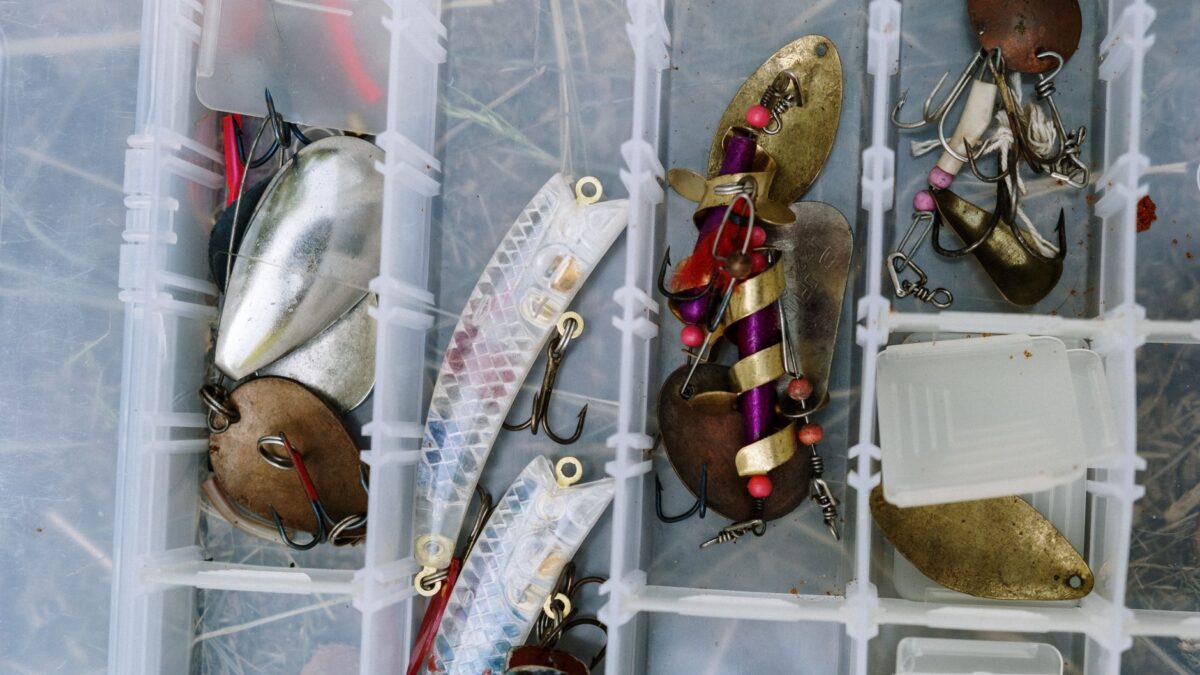
Throw a spinnerbait when you’re fishing wood, rock or wind-blown banks and want a lure that’s very hard to snag and easy to run at any depth. Throw a bladed jig (often called a chatterbait) when you’re fishing submerged grass or shallow, stained water and want a hard, erratic thump. Both are 3/8–1/2 oz reaction baits for active bass, and many anglers keep one of each tied on.
A quick note on the name: ChatterBait is a trademark of Z-Man, which acquired the design from South Carolina lure maker Ron Davis, who developed it in the late 1990s and early 2000s. Anglers use “chatterbait” loosely for any bladed jig, which is how it’s used here.
How they’re built
A spinnerbait has a bent wire shaped like an open safety pin. The lower arm holds a weighted head, skirt and hook; the upper arm holds one or two blades that spin on a swivel. The wire arm runs ahead of the hook and deflects off branches and rocks.
A bladed jig is a skirted jig with a hexagonal blade attached directly to the line tie at the front of the head. When you reel, the blade swings side to side and makes the whole lure shimmy and knock, with a vibration you can feel through the rod.
Spinnerbait blades
| Blade | Shape | What it does | Best for |
|---|---|---|---|
| Willow | Long, slim | Lots of flash, little lift or thump, comes through grass easily | Clear water, fast retrieves, grass |
| Colorado | Round | Strong thump, lots of lift, slower spin | Muddy water, slow rolling, night, cold water |
| Indiana | Teardrop | A balance of flash and thump | All-around use, stained water |
Many spinnerbaits combine blades, such as a Colorado in front and a willow behind. Silver blades give more flash in sun; gold blades are a common choice in stained water and low light.
Head-to-head comparison
| Spinnerbait | Bladed jig | |
|---|---|---|
| Snag resistance | Excellent in wood and rock | Good, but less than a spinnerbait in wood |
| Through grass | Fair; can foul | Excellent; rips free of vegetation |
| Vibration | Steady thump or flash depending on blades | Hard, erratic knocking |
| Depth control | Easy to slow-roll deep or burn shallow | Best in shallow to mid depths |
| Speed | Slow roll to burning | Medium; stops and pauses work |
| Profile | Baitfish (shad, bluegill) | Baitfish or crawfish, depending on trailer |
When to choose a spinnerbait
- Wood and rock: the wire arm lets you bump stumps, laydowns and riprap with few snags.
- Wind: wind-blown banks and points push baitfish around, and the spinnerbait’s flash and vibration stand out in the chop. See fishing in the wind.
- Deeper or colder water: a Colorado or Indiana blade lets you slow-roll a spinnerbait near the bottom.
- Clear water with active fish: willow blades on a fast retrieve imitate fleeing baitfish.
When to choose a bladed jig
- Submerged grass: when the lure catches vegetation, snap the rod to rip it free; strikes often come right after.
- Stained or muddy water: the hard vibration helps bass find the lure by feel. More in our guide to fishing muddy water.
- Shallow flats in spring: bladed jigs are a popular choice around pre-spawn and post-spawn shallow cover.
- When you want a pause: a bladed jig can be killed and allowed to fall like a jig, then started again.
Trailers
For bladed jigs, a soft plastic swimbait or paddle tail adds swimming action and makes it look like a baitfish. A craw or chunk trailer slows it down and gives a crawfish look. Thin, flat trailers keep the vibration tight; bulky ones add lift.
Spinnerbaits are often fished without a trailer, or with a small swimbait or grub to add bulk. A trailer hook (an extra hook on the main hook) can help with short strikes in open water but makes the bait more likely to snag in cover.
How to fish them
- Cast past the target so the lure reaches running depth before it gets there.
- Start reeling as soon as it lands. Keep it just fast enough for the blades to work.
- Steer it into or alongside cover. Deflections and contact trigger strikes.
- Add variety: a twitch, a pause, a burst of speed, or (with a bladed jig) a hard rip out of grass.
- When you feel weight or the vibration stops, keep reeling and sweep the rod to set the hook.
Gear and colors
A 7–7.5 ft medium-heavy casting rod with a moderate-fast tip handles both lures. A slightly softer tip helps keep fish pinned on bladed jigs, which can shake loose as fish jump. Use 15–20 lb fluorocarbon or 30–50 lb braid for heavy grass.
For colors, white or shad patterns are standard in clear to stained water; chartreuse and white or black and blue stand out in muddy water and low light; green pumpkin and brown imitate crawfish on bladed jigs. Our article on choosing lure colors has more.
Bottom line
A spinnerbait is the better choice around wood, rock and wind, and when you need to slow-roll deeper. A bladed jig is the better choice in grass and shallow, stained water when you want a hard thump. Both are reaction baits for active fish, so keep them moving, run them into cover and change blades, trailers and colors to match the water.
FAQ
Is a chatterbait the same as a spinnerbait?
No. A spinnerbait has blades spinning on a wire arm above the hook. A chatterbait, or bladed jig, has a single blade attached to the front of a jig head that makes it vibrate side to side.
Which is better in grass?
A bladed jig. It can be ripped free of vegetation, which often triggers a strike. Spinnerbaits are better in wood.
Which is better in muddy water?
Both work. A bladed jig gives a harder thump; a spinnerbait with a Colorado blade also produces strong vibration and can be fished more slowly.
What size spinnerbait or bladed jig should I start with?
About 3/8 oz for shallow water and 1/2 oz for a little more depth, wind or bigger trailers.