Fishing Hook Sizes and Types Explained: Size Chart, Worm, EWG, Circle, Treble and Octopus Hooks
Hook sizing runs in two directions and isn't standardized between brands. Here's how to read the numbers, pick a size for your target fish and choose the right hook style.
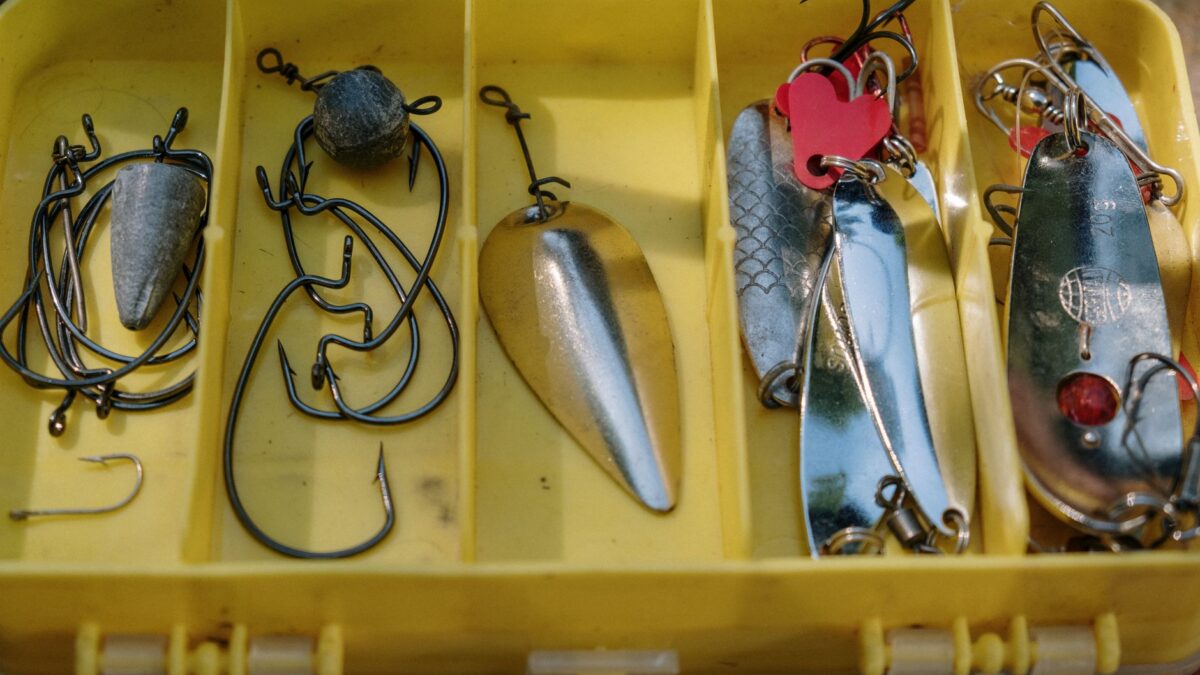
Fishing hook sizes run in two directions. From size 32 (tiny) up to size 1, bigger numbers mean smaller hooks, so a #10 is smaller than a #2. After size 1 come the “aught” sizes: 1/0 (one-aught), 2/0, 3/0 and up, where bigger numbers mean bigger hooks. As a quick guide, panfish take about #6 to #10, bass soft plastics usually 1/0 to 5/0, and catfish anywhere from #4 trebles for small baits to large circle hooks for cut bait. Sizes aren’t standardized, so a 2/0 from one brand can be larger than another’s.
How the size scale works
Take Me Fishing describes the full range as running from size 32, the smallest, to size 1, then from 1/0 up to 19/0, the largest. Freshwater anglers mostly use the middle of that scale.
Three things make sizes hard to compare:
- Brands differ. There’s no industry-wide standard; one maker’s 3/0 can be noticeably larger than another’s.
- Styles differ. A 1/0 jig hook, a 1/0 circle hook and a 1/0 worm hook are different shapes and sizes.
- Size isn’t the whole story. The gap (distance between point and shank) and wire gauge (thickness) change how a hook performs.
When you find a hook you like, sticking with the same brand and model keeps sizing consistent.
Hook size chart by species
| Target | Typical hook sizes | Notes |
|---|---|---|
| Bluegill, sunfish, perch | #6–#10 | Long-shank hooks are easier to remove |
| Crappie | #2–#6 | Light-wire hooks bend free of snags |
| Stocked trout (bait) | #8–#14 | Treble or single bait hooks for dough baits |
| Walleye (live bait) | #2–#6 | Octopus or bait-holder styles |
| Bass, live bait | #1–2/0 | Match to bait size |
| Bass, soft plastics | 1/0–5/0 | Bigger plastics need bigger hooks |
| Channel catfish | #2–4/0 | Circle or J hooks; trebles for dip and dough baits |
| Blue and flathead catfish | 5/0–10/0 | Large circle hooks with big cut or live bait |
These are starting points; adjust to the bait. A hook should leave enough gap for the point to reach the fish rather than being buried in a bulky bait.
Hook types and when to use them
Offset worm hooks
An offset worm hook has a bend just below the eye that holds a soft plastic in place and lets you bury the point back into the bait so it’s weedless. It’s the standard hook for a Texas rig. Common bass sizes are 1/0 to 2/0 for small plastics, 3/0 for 6–7 inch worms and 4/0 to 5/0 for large worms and bulky baits.
EWG (extra wide gap) hooks
EWG hooks have a wide, rounded gap that leaves room for thick plastics such as creature baits, tubes, craws and fat stick worms. The extra space helps the point clear the plastic on the hookset.
Straight-shank and flipping hooks
Straight-shank worm hooks, often with a bait keeper, are popular for flipping and pitching heavy cover. Heavy-wire flipping hooks resist bending when you pull big fish out of wood and grass on braid.
Circle hooks
Circle hooks have a point that turns back toward the shank. They tend to slide to the corner of the fish’s mouth and hook there, which reduces deep hooking. Don’t set the hook hard: let the fish take the bait and reel steadily until the line comes tight. They are popular for catfish and catch-and-release bait fishing.
In some fisheries circle hooks are required. For example, Atlantic coast states adopted a rule requiring circle hooks when fishing for striped bass with bait, under an Atlantic States Marine Fisheries Commission addendum. Hook rules vary by state and water, so check your state’s current regulations.
Octopus hooks
Octopus hooks are short-shank, often with an upturned or angled eye. They’re a standard choice for live bait, nightcrawler rigs and many drop-shot rigs, because the short shank keeps the hook light and the bait lively.
Treble hooks
Treble hooks have three points on one shank. They come on crankbaits, jerkbaits and topwaters and are used for dough baits. They hook fish well but can be harder to remove and more harmful to fish you plan to release. Some special-regulation waters require single hooks or barbless hooks, so read the rules for the water you’re fishing.
Jig hooks and drop-shot hooks
Jig hooks are molded into a lead or tungsten head, usually with a 60- or 90-degree eye. Drop-shot and finesse hooks are small, light-wire hooks, often size 1 to 1/0 for bass, used to nose-hook small plastics.
Hook sharpness
A dull hook costs fish. Check points often, especially after hitting rock or wood:
- Drag the point lightly across your thumbnail at a shallow angle.
- If it catches and digs in, it’s sharp. If it skates across, it’s dull.
- Touch up the point with a few light strokes of a small hook file on the sides and underside of the point, then test again.
- Replace rusty hooks and hooks with bent or broken points instead of sharpening them.
When you handle hooks, keep pliers ready and point hooks away from you when casting near others. If you plan to release fish, crimping barbs flat with pliers makes removal easier. Our hookset guide explains how to drive each hook type home, and our catch-and-release tips cover safe removal.
Bottom line
Below size 1, smaller numbers mean bigger hooks; above it, larger aught numbers mean bigger hooks, and brands vary. Use small #6–#10 hooks for panfish, 1/0–5/0 offset or EWG hooks for bass plastics, octopus hooks for live bait and circle hooks where deep hooking is a concern or required. Keep points sharp and check local hook rules. Take Me Fishing’s hook size guide has more examples.
FAQ
Is a size 6 hook bigger than a size 2?
No. In the numbered range, larger numbers are smaller hooks, so a #2 is bigger than a #6.
Is a 2/0 hook bigger than a 1/0?
Yes. In the aught range, a higher number means a bigger hook, so 2/0 is larger than 1/0.
What size hook should I use for bass?
For live bait, about #1 to 2/0. For soft plastics, 1/0 to 2/0 for small baits, 3/0 for 6–7 inch worms and 4/0 to 5/0 for large or bulky baits.
Do I set the hook with a circle hook?
No hard hookset. Let the fish take the bait, then reel steadily until the line tightens; the hook rotates into the corner of the mouth.