How to Choose a Fishing Kayak: Sit-On-Top vs Sit-In, Paddle vs Pedal, Size and Capacity
Fishing kayaks range from simple paddle boats to pedal-driven, motor-ready platforms. Here's how to match the hull, drive and size to the water you fish and how you'll transport it.
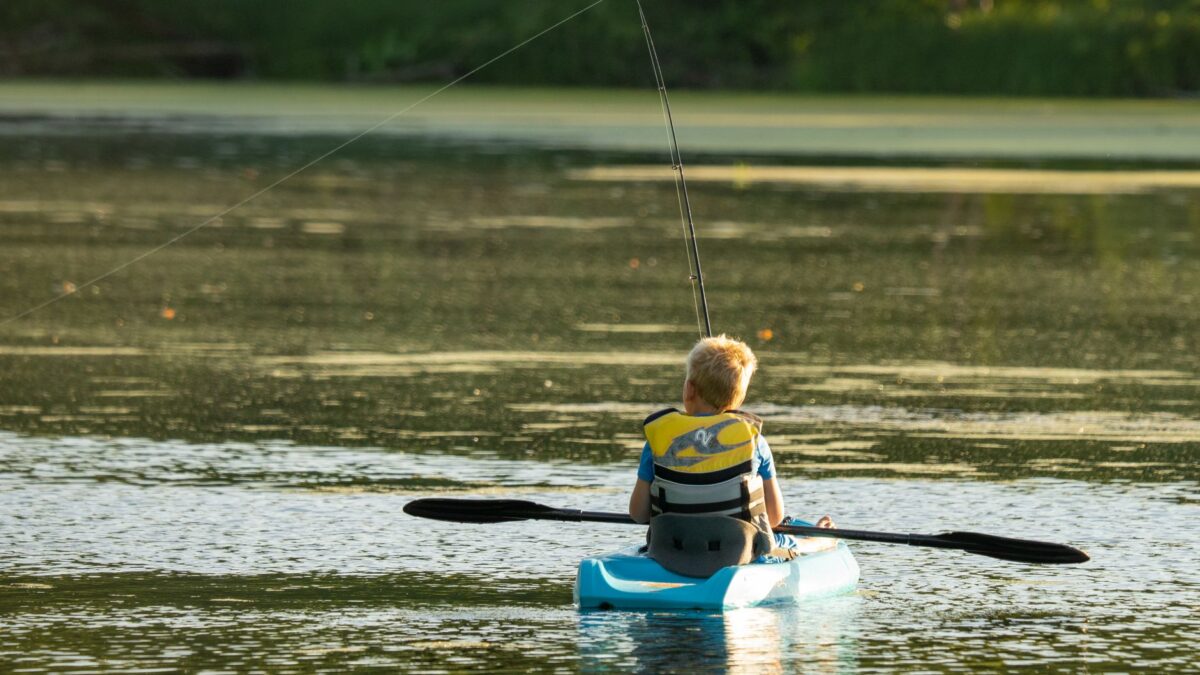
For most freshwater anglers, the best fishing kayak is a sit-on-top roughly 10 to 12 feet long and around 32 to 36 inches wide, which gives stability, easy re-entry and room for gear on lakes, ponds and slow rivers. Choose paddle power to save money and weight, pedal power to keep your hands free for fishing, or a motor for big water, keeping in mind that a motor usually means registering the kayak. Then check weight capacity, how you’ll transport it and where your rods and tackle will ride.
Sit-on-top vs. sit-in
| Sit-on-top | Sit-in | |
|---|---|---|
| Stability and standing | Usually wider; many fishing models are built to stand on | Lower seat; standing is rarely practical |
| Getting on and off | Easy; you can slide off and climb back on | Harder to re-enter after a capsize |
| Water in the boat | Self-bailing scupper holes drain it | Water collects inside; needs a pump or sponge |
| Weather protection | You’ll get wet from splashes and drips | Lower body stays drier and warmer |
| Weight | Often heavier | Often lighter and easier to carry |
| Best for | Most fishing, warm weather, standing to sight-fish | Cool weather, small budgets, carrying to remote water |
Most purpose-built fishing kayaks are sit-on-tops because of the open deck, elevated seats and mounting space. A sit-in can still be a good, lighter choice for small ponds and cool-season fishing.
Propulsion: paddle, pedal or motor
Paddle
Paddle kayaks are the lightest, simplest and least expensive. They work anywhere, including very shallow water. The trade-off is that your hands are busy whenever you move, and holding position in wind takes paddling between casts. An anchor or stakeout pole helps.
Pedal
Pedal drives let you move and hold position with your legs while your hands fish. Most use either a propeller or underwater fins, and many models can reverse. Pedal kayaks are heavier, cost more, and the drive unit needs some depth to clear the bottom, so check how easily it kicks up or lifts out in shallow water. Keep a paddle aboard anyway, in case the drive fails or you need to push through very shallow areas.
Motor
Some kayaks are built to accept a small electric motor, often a trolling motor mounted at the stern or bow, and some can take a GPS-anchoring motor. A motor covers big water with little effort but adds weight, cost and a battery to manage. In many states, adding a motor of any kind means the kayak must be registered like a motorboat; New York, for example, requires registration for canoes and kayaks with small electric or gas motors. Check your state’s boating agency before you buy.
Length and width
Most fishing kayaks run about 10 to 14 feet. Width for fishing models commonly falls between about 30 and 36 inches, with some stand-up platforms wider still.
- Shorter (about 10 ft): easier to turn, carry and store; good for ponds, small rivers and tight creeks. Slower over distance.
- Longer (12–14 ft): faster and tracks straighter, better for big lakes and covering distance; heavier and harder to transport.
- Wider (33 inches and up): more stable for standing and casting, but slower to paddle.
- Narrower: faster and more efficient to paddle, with less initial stability.
Width is only part of stability; hull shape matters too. If possible, try a kayak at a demo day or rental before buying.
Weight capacity and hull weight
Every kayak lists a maximum capacity, which includes you, your clothing, your gear and any motor or battery. Loading right up to that figure makes a kayak sit low and paddle sluggishly. A common rule of thumb is to keep your total load at no more than roughly 70 to 75 percent of the rated capacity. Add it up honestly: tackle crate, cooler, anchor, fish finder and battery add up fast.
Also check the kayak’s own weight. Fishing kayaks often weigh somewhere around 60 to 120 pounds, and pedal drives and motors add more. If you’ll load it alone onto a roof rack, a lighter boat or a trailer or truck bed may make the difference between fishing often and leaving it in the garage. A kayak cart helps at launches with a long walk.
Storage, seating and rigging
- Rear tank well sized for a milk crate or tackle crate.
- Front hatch or bow storage for dry bags and extra gear.
- Rod holders and rod storage: flush-mounted holders behind the seat plus a way to store rods inside the hull or along the side when passing under branches.
- Mounting tracks for fish finders, rod holders and cameras.
- Elevated frame seat for comfort and a better view, at the cost of a higher center of gravity.
- Transducer scupper or pocket if you plan to add a fish finder. See our guide to portable and kayak fish finders.
Where you’ll fish
- Ponds and small lakes: 10–11 ft paddle or pedal sit-on-top.
- Big lakes and reservoirs: 12–14 ft pedal or motor kayak with good tracking; watch wind and boat traffic.
- Rivers: shorter, maneuverable paddle kayak; pedal drives can strike rocks in shallow riffles.
- Cold water seasons: plan for immersion clothing, since a capsize in cold water is dangerous even close to shore.
Safety and legal basics
Kayaks are vessels under federal boating rules. You need a U.S. Coast Guard-approved wearable life jacket for each person, and a sound-producing device such as a whistle; between sunset and sunrise you need a white light, such as a flashlight, ready to display. The Coast Guard’s guide to federal requirements for recreational boats lists the details, and many states add their own rules. Wear the life jacket rather than storing it; most paddling drownings follow a capsize. Our kayak fishing gear checklist covers the full list.
Bottom line
Pick a sit-on-top around 10–12 ft and 32–36 inches wide for most freshwater fishing. Go paddle for low cost and light weight, pedal for hands-free fishing, motor for big water with registration in mind. Keep the load well under the rated capacity, make sure you can transport the boat, and choose storage and mounts that fit how you fish. Take Me Fishing’s kayak fishing tips are a good next read.
FAQ
Is a sit-on-top or sit-in kayak better for fishing?
For most anglers, sit-on-top. It’s more stable, easier to re-enter, drains itself and has more room for gear. Sit-ins are lighter and drier in cool weather.
Is a pedal kayak worth the extra cost?
If you fish in wind, cover a lot of water or want to hold position while casting, often yes. For small ponds and shallow rivers, a paddle kayak is simpler and lighter.
Do I need to register a fishing kayak?
Rules vary by state. Some states require registration or a launch permit even for paddle-only kayaks, and many require registration once a motor is added. Check your state’s boating agency.
Can you stand up in a fishing kayak?
Many wide fishing kayaks are designed for standing. Practice in calm, shallow water, and always wear your life jacket.