Crappie Fishing Tips: Seasons, Spawn, Brush Piles, Jigs, Minnows and Slip Bobbers
Crappie school up around cover and move with the seasons. Find the depth, show them a small jig or minnow slowly, and you can catch plenty.
To catch crappie, find cover at the right depth for the season, such as brush piles, docks, standing timber or bridge pilings, then present a small jig or live minnow slowly at the depth where the fish are holding. A slip bobber makes that depth easy to repeat. In spring, crappie move shallow to spawn; the rest of the year they’re usually deeper and often suspended, so electronics and patience pay off.
Black crappie vs white crappie
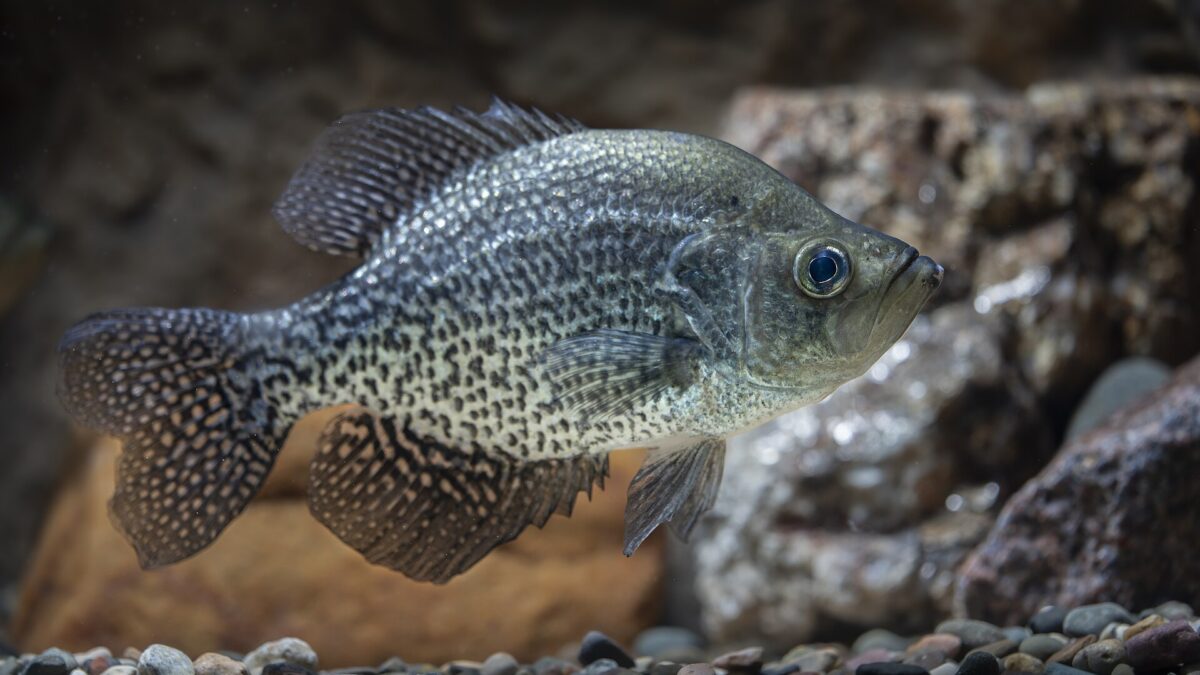
Both species are widespread in the US and are fished the same way. The surest way to tell them apart is to count the spines in the front of the dorsal fin.
| Black crappie | White crappie | |
|---|---|---|
| Dorsal spines | Usually 7 or 8 | Usually 6 (sometimes 5) |
| Markings | Irregular dark speckles and blotches | Dark markings that form faint vertical bars |
| Typical water | Often clearer water with vegetation | Tolerates more turbid, stained water |
Color varies with water clarity and season, and the two species can hybridize, so spines are the better check. The Texas Parks and Wildlife crappie profile has a clear species description.
Where crappie are through the year
Crappie follow water temperature and food, mostly small baitfish such as shad and minnows, plus insects and crustaceans. Typical patterns:
| Season | Where to look | What to use |
|---|---|---|
| Winter | Deeper water near creek and river channels; schools often suspended | Small jigs or minnows fished vertically, very slowly |
| Pre-spawn | Channel edges, points and brush leading into spawning coves | Jigs and minnows under slip bobbers; slow trolling |
| Spawn | Shallow coves, wood, reeds and docks, often 1 to 6 ft deep | Jig under a small float; minnow under a bobber |
| Post-spawn | First drop-off outside spawning areas, docks, brush in mid-depths | Jigs, slip bobbers; dock shooting |
| Summer | Deeper brush piles, bridge pilings, shaded docks; above the thermocline in stratified lakes | Vertical jigging, minnows; night fishing under lights |
| Fall | Following baitfish into creek arms; scattered on flats and brush | Cover water with small jigs, then slow down on schools |
The spawn
State agencies give slightly different numbers, but crappie generally spawn in spring when water temperatures reach roughly the mid-50s to upper 60s °F, with peak activity often in the low to mid 60s. Males build and guard nests, often in loose colonies, and turn darker during the spawn. Timing runs from late winter in the Deep South to late spring in northern states. A cold front can push fish back out a few feet for a few days.
Cover: brush piles and docks
Brush piles are classic crappie cover. Many state agencies and reservoir managers sink fish attractors and publish their locations, so check your state wildlife agency’s website. Approach slowly, fish the edges and top of the brush first, then work into it.
Docks hold crappie all year, especially those with deep water nearby, shade and brush underneath. Floating docks on reservoirs often hold suspended fish in summer. Skipping or “shooting” a small jig under a dock reaches fish others can’t; our guide to fishing docks covers the casts and the etiquette around private docks.
Jigs vs minnows
- Jigs: 1/32 to 1/8 oz heads with tube, curly-tail or minnow-shaped plastics. Use the lightest head that reaches the fish; go heavier in wind or deeper water. Common colors combine a dark and a bright tone in stained water and natural, translucent colors in clear water.
- Minnows: small live minnows on a light-wire hook, size 2 to 6, hooked lightly through the lips or behind the dorsal fin. Light-wire hooks often bend free of snags. Check live bait rules in your state, and never release unused bait into the water.
- Both: tipping a jig with a minnow or a scent product is common when fish are slow.
Line from 4 to 8 lb is typical for most crappie fishing; see the line weight chart for details. Crappie have thin mouth membranes, which is why they’re called “papermouths”, so use a gentle, steady hook set and a light drag.
How to set up a slip bobber
- Tie a bobber stop knot or slide a rubber stop onto the main line.
- Add a small bead so the stop can’t pass through the bobber.
- Thread on the slip bobber.
- Tie on a jig or a light-wire hook with a split shot about a foot above it.
- Slide the stop to set the depth. Start just above the brush or the depth where you see fish on your electronics.
- Cast, let it settle, and twitch it now and then. A bobber that lies flat or rises can mean a crappie lifted the bait.
Spider rigging basics
Spider rigging means slowly pushing or trolling several long rods fanned out from the front of the boat, each set at a slightly different depth. It’s a way to find and stay on scattered or suspended crappie, often at very slow speeds well under 1 mph. A trolling motor, rod holders, long rods and good electronics are the core gear.
Rod limits vary widely by state and even by lake. Some places allow many rods per angler; others allow only one or two. Check your state’s regulations for line limits before rigging more than one rod.
Electronics help
Side imaging finds brush piles and schools away from the boat; down imaging and 2D sonar show suspended fish and depth. Live forward-facing sonar has become popular for crappie because it shows fish around brush in real time. Our guide to reading a fish finder explains what you’re seeing.
Bottom line
Crappie fishing is mostly about depth and cover. Find the brush, docks or timber that match the season, put a small jig or minnow just above the fish, and move it slowly. Shallow in spring, deeper and suspended the rest of the year. Check your state’s creel, length and rod limits, which vary from water to water.
FAQ
What is the best time of day for crappie?
Low light at dawn and dusk is often best, and summer nights under lights can be excellent. Cloudy days can keep crappie active longer.
What size jig should I use for crappie?
Start with 1/16 oz. Go to 1/32 oz for shallow or slow fish and 1/8 oz for deeper water or wind.
Are minnows better than jigs?
Minnows can be better on slow, cold-water days. Jigs cover water faster and avoid the hassle of keeping bait alive. Many anglers carry both.
Do crappie bite in winter?
Yes. They school in deeper water and feed more slowly. Small baits fished vertically over the school work well, and in the North they’re a top target under the ice; see ice fishing for crappie.