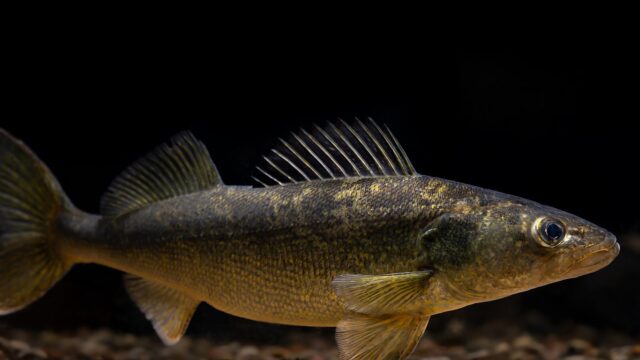
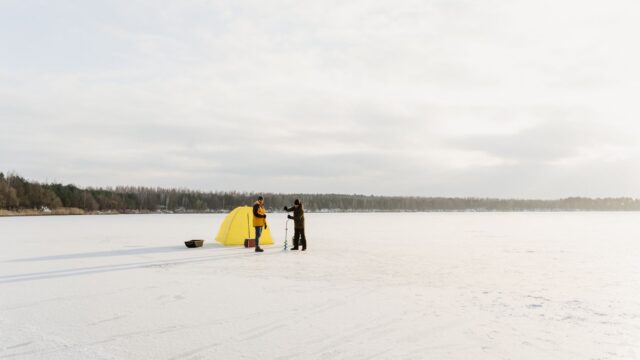
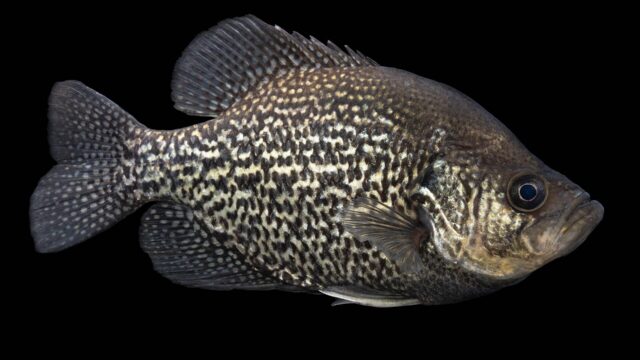
Ice Fishing Flasher vs LCD Fish Finder: How They Work and Which to Buy
A flasher is the simplest real-time view of your jig and the fish below it; an LCD unit adds history, maps and year-round use. Here is how to choose.
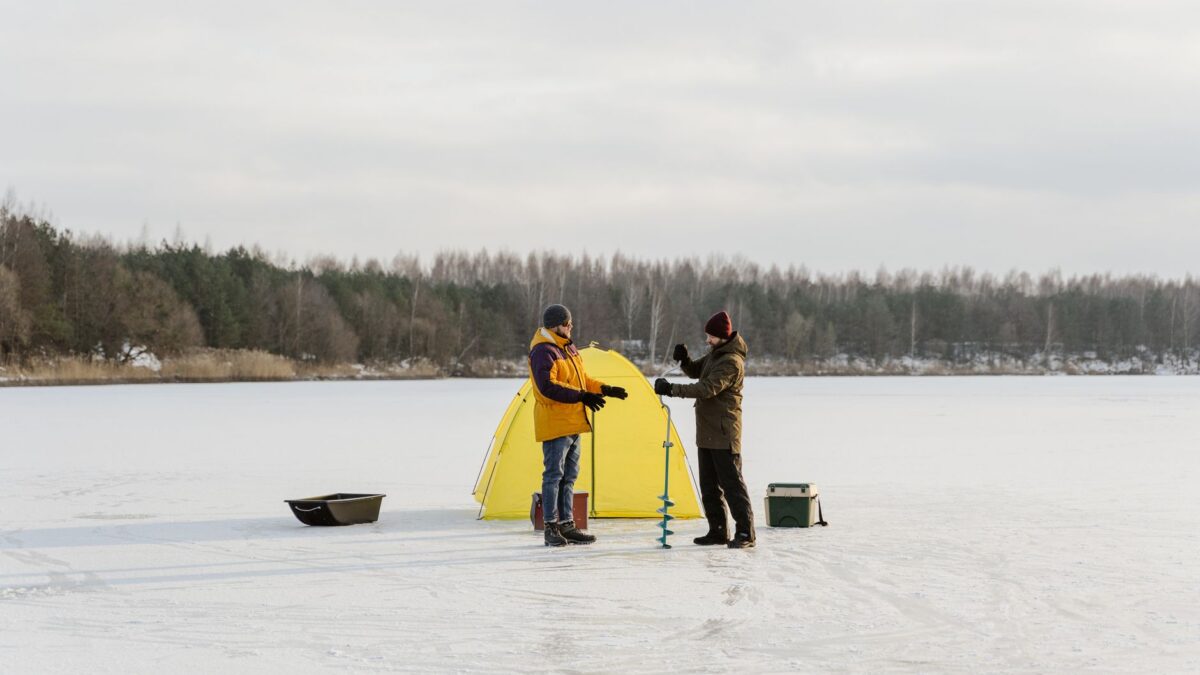
A flasher shows sonar returns as colored marks on a circular dial in real time, so you see your jig and any fish that move toward it the instant it happens. An LCD fish finder with an ice mode can show a similar flasher-style dial, plus a scrolling history, GPS maps and the option to use the same unit on a boat in summer. If you mainly jig for panfish and walleye and want the simplest, most immediate view, a flasher is hard to beat. If you want maps and one unit for the whole year, an ice-ready LCD makes more sense.
How a flasher works
An ice transducer hangs in the hole on a float or arm, pointing straight down. It sends out sonar pulses in a cone and listens for echoes from the bottom, fish, weeds and your lure. The flasher displays each echo as a colored mark at the depth it came from, updating many times a second, which makes the display look like a live picture.
- The bottom shows as a wide band at the water depth.
- Your jig shows as a thin mark that moves when you lift or drop the rod.
- Fish show as thicker marks that appear, move up toward your jig, or drift away.
Many flashers use a three-color scheme in which red marks the strongest returns, orange or yellow medium and green the weakest. Palettes differ by model, so check your manual.
Flasher settings that matter
- Gain (sensitivity): high enough to see a small jig, low enough that the screen isn’t cluttered.
- Range: set it a little deeper than the water so the bottom is easy to read.
- Zoom or bottom zoom: magnifies the bottom few feet, useful for fish tight to bottom.
- Interference rejection: reduces noise from other units nearby, common when anglers fish close together.
- Cone angle: some transducers let you switch between a narrower cone for precise jigging and a wider cone to see more water.
The same ideas apply to any sonar; our fish finder settings guide explains them in more detail.
How an LCD fish finder works on ice
An LCD fish finder uses the same kind of sonar, but displays it on a pixel screen. Most ice-ready units offer a circular flasher view alongside a scrolling 2D chart, so you can see what passed under you while you were tying a knot. Many also include GPS and lake maps for marking spots and finding structure before you drill.
Many sonar makers sell ice kits or ice bundles for some of their units, typically a portable case or bag, an ice transducer and a battery. That makes a single unit useful on the ice in winter and on a boat or kayak in summer. Reading the 2D history works just like it does in open water; see how to read a fish finder.
Flasher vs LCD vs live sonar
| Flasher | LCD with ice mode | Live (forward-facing) sonar | |
|---|---|---|---|
| What you see | Real-time returns under the hole | Flasher view plus history and maps | Moving images of fish and lures around you |
| Strength | Simple, immediate, easy to read | Versatile, year-round, GPS mapping | Finds and targets fish away from the hole |
| Weakness | No history or maps | More menus; screen can be harder to read at a glance | Highest cost, more gear, steeper learning curve |
| Best for | Dedicated jiggers chasing panfish and walleye | Anglers who want one unit for ice and open water | Serious anglers searching for suspended fish |
Live sonar systems such as Garmin LiveScope, Humminbird MEGA Live and Lowrance ActiveTarget are also used on the ice, mounted on a pole in the hole. They show fish to the side, not just below, but they cost far more than a flasher. Our forward-facing sonar guide explains how they work.
Pros and cons of a flasher
Pros:
- Instant feedback on how fish react to your jig, so you can change cadence on the spot
- Very little to set up: power on, drop the transducer, adjust gain
- Typically designed for cold-weather use and easy to read with gloves on
Cons:
- No record of what passed by while you looked away
- No built-in GPS or lake maps on most models
- Shows only what is under the hole you are fishing
Which one should you buy?
- Mostly jigging for panfish, perch and walleye, ice only: a flasher.
- You also fish from a boat or kayak in summer: an LCD unit with an ice kit, so one investment covers both seasons.
- You want maps to find humps, points and weed edges: an LCD unit with GPS, or a flasher plus a phone mapping app.
- You already know the basics and want to target suspended fish: consider live sonar, keeping the cost and extra gear in mind.
Whichever you choose, check the transducer cone angle, battery type and runtime, the case or carrier, and whether replacement parts are available.
Tips for better readings
- Keep the transducer level and centered in the hole, below the bottom of the ice.
- Clear slush; floating ice crystals and air bubbles can clutter the reading.
- On clear, solid ice you can often get a depth reading without drilling by clearing snow and pouring a little water on the ice before setting the transducer on it. It won’t work through snow, slush or cloudy ice.
- Keep the battery charged and warm. Cold reduces battery capacity.
Bottom line
A flasher gives the fastest, simplest view of your jig and the fish below, which is why many dedicated ice anglers rely on one. An ice-ready LCD unit adds history, mapping and summer use. Live sonar is the premium option for finding fish away from the hole. For a first ice electronics purchase, choose the unit that matches how and where you fish.
FAQ
Can I use my boat fish finder for ice fishing?
Often, yes. Many units work on the ice with an ice transducer and portable power, and some manufacturers sell ice kits for their models. Check your unit’s compatibility first.
Why do anglers prefer flashers for jigging?
A flasher shows your jig and approaching fish in real time with very little lag or menu clutter, so you can react quickly when a fish moves toward the bait.
Do I need live sonar for ice fishing?
No. Live sonar is a premium tool for finding fish around you. A flasher or 2D unit catches plenty of fish when paired with good spot selection.