Ice Fishing Sled Packing List and How to Haul Gear Safely on Ice
Pack safety gear on top, heavy items low and centered, and pull the sled on a rope harness. A full packing list plus tips for hauling across the ice.
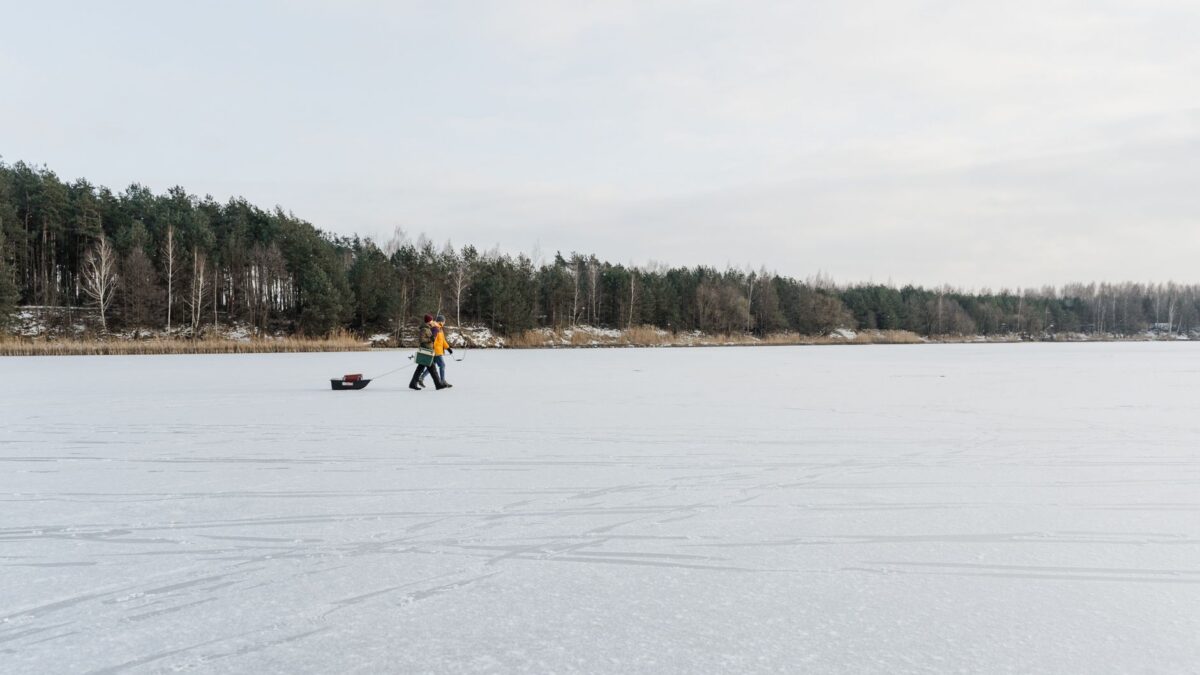
An ice fishing sled should carry safety gear first (ice picks, a spud bar, a throw rope and a spare set of dry clothes), then the auger, rods, tackle, a sonar unit, bait and a skimmer. Load heavy items low and toward the center, strap everything down, and pull the sled with a harness or a long rope so the load trails behind you instead of pushing on your heels. Check ice thickness as you walk, because a loaded sled adds weight that you need to account for on new or questionable ice.
What should go in an ice fishing sled?
A sled holds everything for a day on the ice, and packing it the same way every trip makes it hard to forget something. A working list looks like this:
- Safety: ice picks worn around the neck, a spud bar or ice chisel, a throw rope in a bag, a whistle, a small first aid kit and a fully charged phone in a waterproof pouch.
- Hole making: hand, gas, propane or battery auger, with a blade guard on, plus a slush skimmer or ladle.
- Fishing: short ice rods in a rod case or tube, tip-ups if your state allows them, a tackle box of jigs, spoons and spare line, and needle-nose pliers or a hook remover.
- Electronics: flasher or fish finder with a charged battery, and a spare battery if you fish all day.
- Bait: minnow bucket with an aerator, wax worms or spikes kept from freezing in an inside pocket or small cooler.
- Comfort: a bucket or folding seat, hand warmers, a thermos, food and a towel for wet hands.
- Extra clothing: dry gloves, socks and a hat in a sealed bag, in case you get wet.
For a longer breakdown of each category, the ice fishing gear checklist goes item by item, including clothing layers.
How should you pack the sled so it pulls well?
Put the heaviest items, such as a gas or battery auger, a portable heater or a power pack, in the middle and as low as possible. A low, centered load is less likely to tip on drifts or rough ice, and the sled tracks straighter behind you.
- Lay the auger flat along the center, blade guard on, power head toward the front.
- Set the bait bucket and battery boxes next to it so they cannot slide.
- Put rod cases, the seat and soft bags on top and around the edges.
- Keep ice picks on your body and the throw rope where you can grab it without unpacking.
- Cover the load and strap it with bungee cords or a cargo net.
Fuel and propane cylinders ride upright and secured in a separate box, away from any heater. A heater should only be used in a shelter with ventilation, and a carbon monoxide detector inside the shelter is cheap insurance.
Is it safe to pull a loaded sled across the ice?
Pulling a sled is safe on ice that is thick enough for you and the load, and the danger comes from walking onto thin spots without checking. Many state agencies, including the Minnesota Department of Natural Resources, publish minimum thickness guidelines for clear, new ice and stress that no ice is guaranteed safe.
- Strike the ice ahead of you with a spud bar every few steps on early or late ice. If the bar goes through in one hit, turn back the way you came.
- Drill test holes and measure as you move out, since thickness changes across a lake.
- Stay away from pressure ridges, inlets, outlets, springs, docks, bridges and dark or slushy patches.
- Spread out when walking with a group instead of walking in a tight cluster.
Early-season ice needs the most care. The guide to fishing first ice safely explains how to read new ice and what to carry before the season fully sets.
Should you use a harness or a rope to pull the sled?
A waist or shoulder harness with rigid poles is the easiest way to pull a heavy sled, because the poles keep the sled from running into your legs on downhill grades and on glare ice. A rope works for lighter loads. Use a rope long enough that the sled stays several feet behind you.
Some anglers tie a quick-release knot or clip on the tow line. If the ice gives way, you can drop the sled instead of being pulled back by it. Never wrap the tow rope around your wrist or hand.
How do you haul gear on glare ice, slush or deep snow?
Ice cleats or creepers on your boots matter more than anything in the sled on bare, glare ice. Walk with short steps and keep your knees bent.
Slush and deep snow are harder. Slush can hide thin ice and soaks boots and sled runners, so test the ice under it with the spud bar and step around wet patches. In deep snow, a wider sled floats better than a narrow one, and following an existing trail that you know is safe saves energy. Some anglers use snowshoes for long walks on heavy snow.
What size and type of sled works best?
Hard plastic utility sleds are the most common choice because they are cheap, slide well and hold a lot. Pick one long enough to lay your auger flat. Deeper sleds keep gear from bouncing out, and runners or wear bars on the bottom protect the plastic on rough ice and gravel landings.
Flip-over shelters are built on a sled base, so the shelter, seat and gear move as one unit. They weigh more to pull but set up quickly. A beginner fishing a short walk from shore can start with a basic sled and add a shelter later. Ice fishing for beginners covers which gear to buy first.
What are common sled-packing mistakes?
- Packing ice picks and the throw rope at the bottom of the sled, where you cannot reach them in an emergency.
- Leaving the auger blade uncovered, which dulls it and can cut bags and rod tips.
- Stacking heavy gear high, so the sled rolls on drifts.
- Letting batteries ride in the open cold, which shortens run time for flashers and augers.
- Forgetting spare dry clothes in a waterproof bag.
- Carrying rods loose, where they get stepped on or snapped. A rod tube protects them, and the guide to ice fishing rods and reels explains why short ice rods break easily at the tip.
Quick answers
Can you pull an ice fishing sled with an ATV or snowmobile?
Yes, many anglers tow sleds behind machines, but vehicles need much thicker ice than foot traffic. Check your state agency’s guidelines and local reports before driving onto any lake.
Where should ice picks go?
Wear them around your neck or clipped to your jacket, outside the sled. They only help if you can reach them while in the water.
How do you keep bait from freezing in the sled?
Keep live grubs in an inside coat pocket and minnows in an insulated bucket with an aerator. A small cooler also keeps bait from freezing on very cold days.
Should the sled be tied to you on unknown ice?
Use a harness or line you can release quickly, so the sled cannot drag you if the ice breaks.