Largemouth vs Smallmouth Bass: How to Tell Them Apart and How Tactics Change
Check the jaw and the markings and you'll never mix them up again. Then learn why the two bass live in different water and how that changes the way you fish.
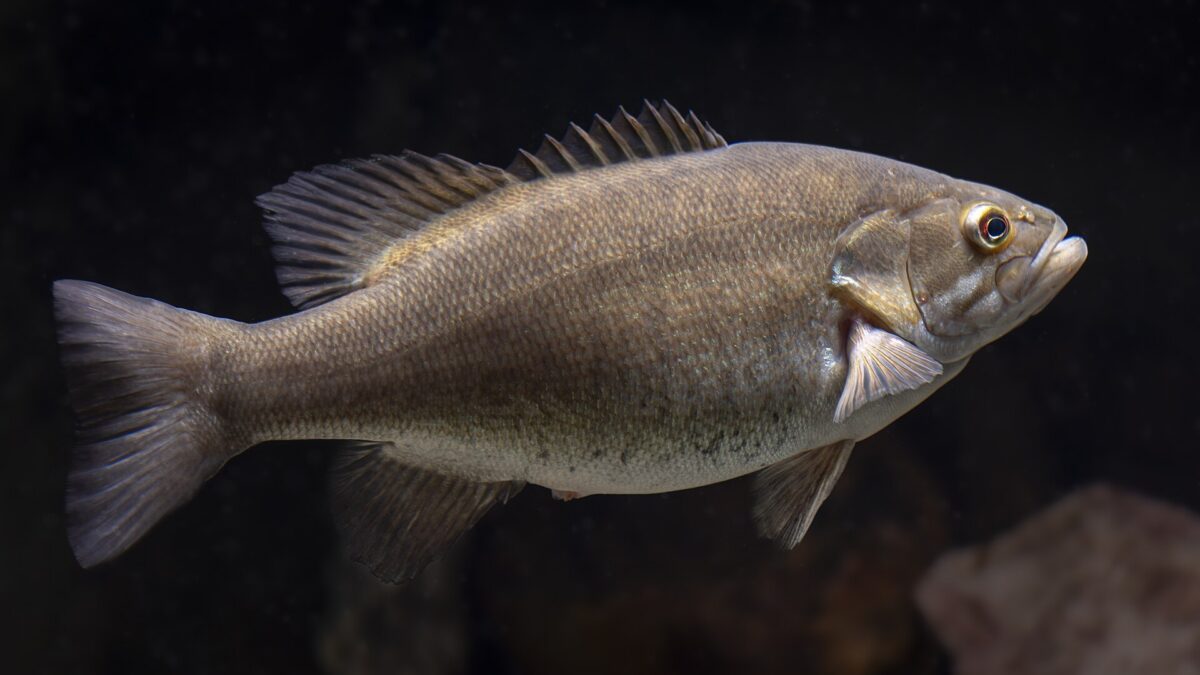
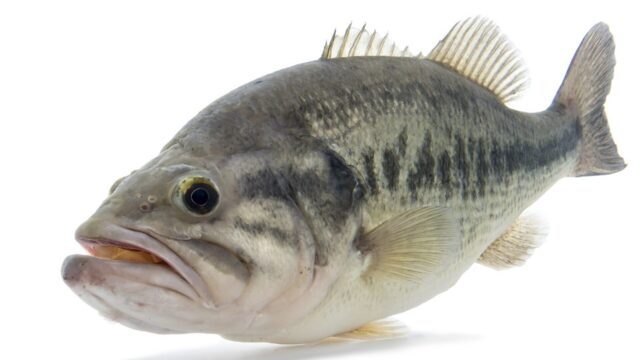
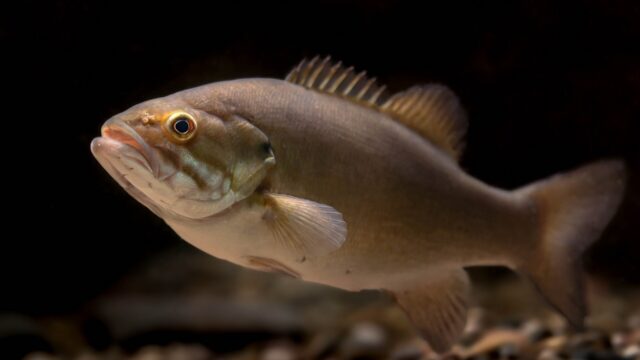
The fastest way to tell a largemouth from a smallmouth is the jaw: close the fish’s mouth, and if the upper jaw reaches past the back of the eye, it’s a largemouth; if it stops around the middle of the eye, it’s a smallmouth. Largemouth are green with a dark horizontal stripe; smallmouth are bronze or brown with vertical bars. Largemouth favor warm, weedy, still water and heavy cover, while smallmouth prefer cooler, clearer water with rock and current, so you fish them with different baits, line and locations.
Side-by-side comparison
| Largemouth bass | Smallmouth bass | |
|---|---|---|
| Upper jaw | Extends past the rear of the eye | Reaches about the middle of the eye |
| Color | Green to olive, white belly | Bronze, brown or olive; can look almost gold |
| Markings | Dark horizontal stripe, often broken into blotches | Vertical bars or blotches; dark lines radiating from an often reddish eye |
| Dorsal fin | Deep notch between spiny and soft parts | Shallow notch; parts clearly joined |
| Preferred water | Warm, still or slow, often weedy or stained | Cooler, clearer, rocky; tolerates current well |
| Favorite cover | Weeds, lily pads, wood, docks | Rock, gravel, boulders, reefs, current breaks |
| Main foods | Fish (shad, bluegill, perch), crayfish, frogs | Crayfish, small fish, gobies in the Great Lakes, insect larvae |
| Spawning start | Around 60°F, often into the low 70s | Around 60°F, mostly high 50s to mid 60s |
| Typical size | Larger on average; double-digit fish possible in the South and West | Smaller on average; 4+ pounds is a big fish |
| All-tackle world record (IGFA) | 22 lb 4 oz (shared, 1932 and 2009) | 11 lb 15 oz (Dale Hollow Lake, 1955) |
Color varies with water clarity and stress, so rely on the jaw first. If the fish has a rough tooth patch on its tongue and rows of small spots on its belly, it’s probably a spotted bass rather than either of these two.
Habitat: why they live in different places
In lakes where both live, they often split the water. Largemouth hang around weed beds, shallow bays, docks and wood. Smallmouth roam rocky points, gravel bars, reefs and deeper, clearer areas. In rivers, smallmouth take the faster, rockier runs and pools, while largemouth sit in backwaters, sloughs and slack water near wood.
Temperature is the other big difference. Largemouth grow best in warm water and range all the way to the Gulf Coast and Mexico. Smallmouth do best in cooler water and are most abundant in Northern lakes, the Great Lakes and highland rivers and reservoirs. In the South, smallmouth are mostly found in deep, clear, cool highland reservoirs and tailwaters.
The fight
Both are strong fighters, but they fight differently. Largemouth tend to make a powerful first surge, then try to bury into weeds or wood and often jump and shake their heads near the surface. Smallmouth are famous for repeated jumps and long, stubborn runs, often in open water or current. Many anglers consider smallmouth harder-fighting pound for pound, though that’s opinion rather than measurement.
How tactics change
Line and rods
- Largemouth: heavier gear for cover, often a medium-heavy or heavy rod, 12- to 20-pound fluorocarbon or 30- to 65-pound braid for weeds and wood.
- Smallmouth: lighter gear for clear, open water, often a medium-light or medium spinning rod with 6- to 10-pound fluorocarbon or light braid with a fluorocarbon leader.
Baits
- Largemouth favorites: Texas-rigged worms and creature baits, flipping jigs, hollow-body frogs, spinnerbaits, square-bill crankbaits, big swimbaits.
- Smallmouth favorites: tubes, Ned rigs, drop shots, suspending jerkbaits, small swimbaits, hair jigs and blade baits.
Overlap is huge. A soft plastic on a jighead, a crankbait or a topwater catches both, and pressured largemouth bite finesse baits too.
Where and how you fish
- For largemouth, make accurate casts and pitches into cover, and work slowly through it.
- For smallmouth, cover more water, use electronics to find schools on structure, and fish wind-blown rock and current seams.
Our guides to largemouth bass and smallmouth fishing tips go deeper into each species.
Seasonal timing
Both spawn in spring as water warms toward 60°F. Smallmouth in cooler Northern waters often spawn later in the calendar than largemouth farther south. In a lake with both species, they may spawn at roughly the same time but in different places: largemouth in soft-bottomed, protected pockets near cover, smallmouth on gravel and rock, sometimes deeper. In winter, many anglers find smallmouth bite better than largemouth in very cold water, which helps explain why cold-water jerkbait and blade-bait fishing is so popular for smallmouth.
Rules can differ
Some states set different size limits, bag limits or seasons for largemouth and smallmouth, and some waters have special rules for one species. In parts of the West, smallmouth are non-native and may have liberal limits. Always check your state wildlife agency’s current regulations, especially if you plan to keep fish.
Bottom line
Look at the jaw first: past the eye means largemouth, middle of the eye means smallmouth. Then check the markings: horizontal stripe vs vertical bars. Largemouth live in warmer, weedier, still water and call for heavier line and cover-busting baits; smallmouth live in cooler, clearer, rocky water and current and respond best to lighter line, finesse plastics and jerkbaits.
FAQ
Can largemouth and smallmouth live in the same lake?
Yes. Many lakes and reservoirs hold both. They usually separate by habitat, with largemouth in weeds, wood and shallow bays and smallmouth on rock, gravel and deeper structure.
Which bass gets bigger?
Largemouth. The largemouth world record is 22 pounds, 4 ounces, about double the smallmouth record of 11 pounds, 15 ounces.
Which is better to eat?
Both are edible and taste similar; many people prefer fish from cool, clean water. Follow size and bag limits and check state and EPA fish consumption advisories for the water you fish.
Can largemouth and smallmouth interbreed?
Black bass species can hybridize. Smallmouth crosses with spotted bass and introduced Alabama bass are well documented in some reservoirs; largemouth and smallmouth usually spawn in different habitats, which limits contact between them.