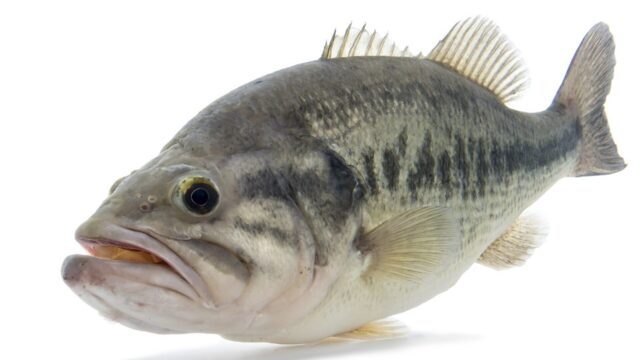
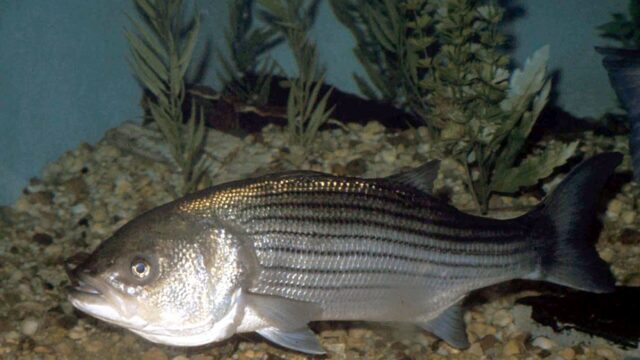
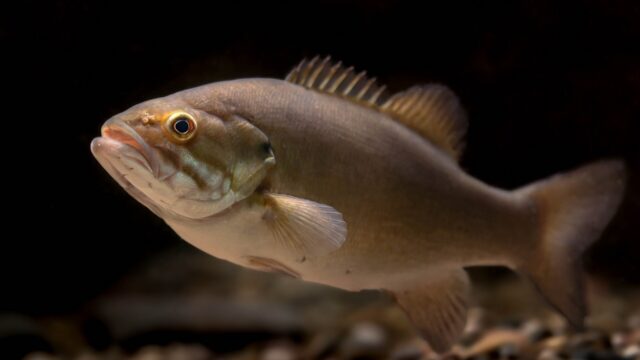
Spotted Bass: How to Tell Them From Largemouth, Where They Live and How to Catch Them
Spots look like small largemouth until you check the jaw, the tongue and the belly. Here's how to identify them, where they hold and what they bite.
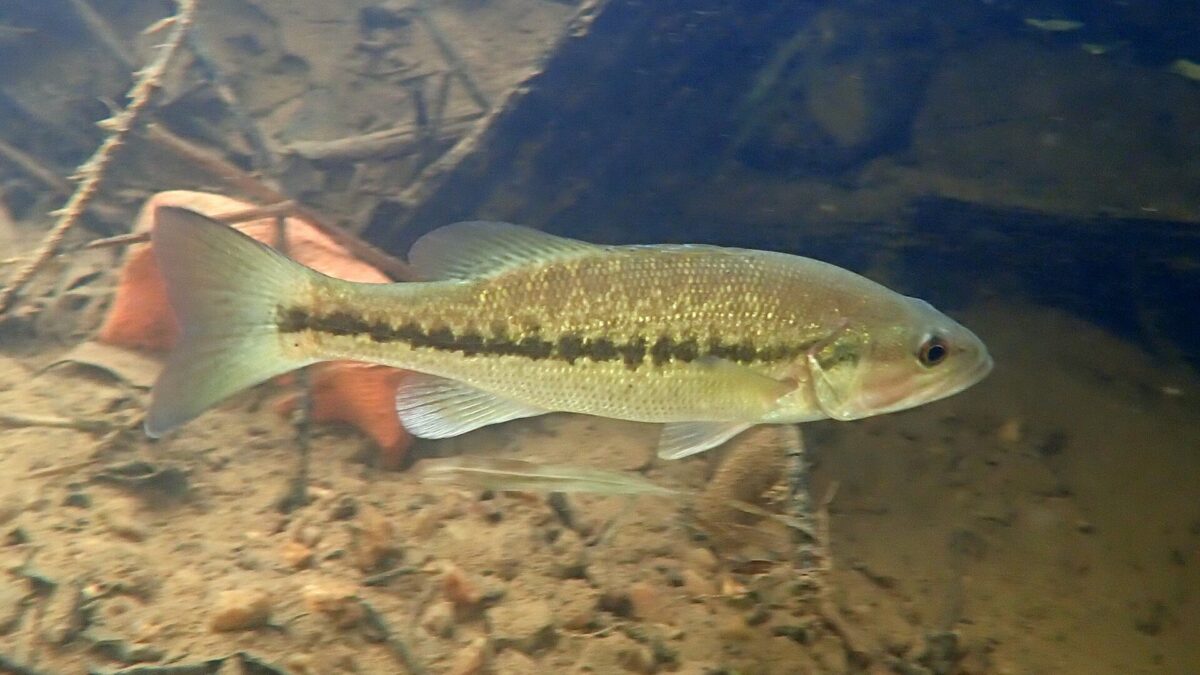
A spotted bass looks like a small largemouth, but its upper jaw stops at or before the back of the eye, it usually has a rough tooth patch on the tongue, and neat rows of small dark spots run along its lower sides and belly. Spots live in rivers and clear, rocky reservoirs across the central and southern US, often deeper than largemouth and in schools. Catch them with finesse baits such as drop shots, shaky heads and Ned rigs on rocky points and channel edges.
How to tell a spotted bass from a largemouth
Spotted bass (often just “spots” or “Kentucky bass”) share water with largemouth across much of the South, and the two are easy to confuse. Check several features, because none is perfect on its own:
| Feature | Spotted bass | Largemouth bass |
|---|---|---|
| Upper jaw (mouth closed) | Ends at or before the rear edge of the eye | Extends past the rear edge of the eye |
| Tongue | Usually a rough tooth patch you can feel with a fingertip | Usually smooth (a small share of largemouth do have a patch) |
| Lower sides and belly | Rows of small dark spots that form thin lines | Plain white belly without rows of spots |
| Side stripe | Row of dark blotches, often more broken | Broad dark stripe, often more continuous |
| Dorsal fin | Spiny and soft parts clearly connected | Deep notch, looks almost like two fins |
| Cheek scales | Smaller than the body scales | About the same size as body scales |
The quickest field check is to run a wet fingertip over the tongue. A rough, sandpaper-like patch points strongly to a spotted bass. Then close the mouth and look at the jaw. If you’re unsure whether you have a smallmouth, compare with our smallmouth bass guide: smallmouth have vertical bars rather than a side stripe and lack the rows of belly spots. Texas Parks and Wildlife has a clear bass identification chart.
Spotted bass vs Alabama bass
For decades, the bass of Alabama’s Mobile River basin were treated as a subspecies of spotted bass. Around 2008, researchers and agencies accepted them as a separate species, the Alabama bass. Alabama bass look very similar; biologists separate them partly by scale counts, and their tongue tooth patch is often smaller and fainter.
The distinction matters because anglers have illegally moved Alabama bass into many lakes in the Southeast and beyond. There they compete with largemouth and interbreed readily with smallmouth and native spotted bass, which can eventually replace those populations. North Carolina, for example, removed size and creel limits on Alabama bass in 2020 and asks anglers to keep every one they catch. North Carolina’s wildlife agency also notes that outside a few mountain drainages where true spotted bass are native, a fish there that looks like a spot is likely an Alabama bass. Never move live fish between waters, and check your state’s rules, because limits for spotted and Alabama bass can differ.
Where spotted bass live
The native range covers the Ohio River basin, the central and lower Mississippi River basin, and Gulf Coast drainages from Texas to Florida. Stocking and illegal introductions have spread spots and Alabama bass well beyond that.
Habitat preferences sit between the other two black bass:
- They like more current than largemouth and do well in rivers and streams.
- They tolerate water that is warmer and more turbid than smallmouth prefer.
- In reservoirs they favor clear, deep, rocky lakes: rocky points, bluff walls, channel swings, humps and long tapering banks.
- They often school and suspend in open water near bait, especially in summer and winter.
- They often hold deeper than largemouth in the same lake, especially in clear water.
What they eat and how they spawn
Young spots eat zooplankton, then insects; adults eat crayfish and small fish such as shad, minnows and young sunfish. In reservoirs with threadfin shad or blueback herring, schools of spots often follow the bait into open water.
According to Texas Parks and Wildlife, spotted bass spawn at water temperatures of about 57–74°F, usually over rock or gravel. As with other black bass, the male builds and guards the nest.
How to catch spotted bass
Spots are usually smaller than largemouth but are known for hard fights and aggressive schooling bites. These approaches work well:
- Drop shot: a small worm or minnow-shaped plastic for fish you can see on sonar near the bottom or suspended. See our drop shot rig guide.
- Shaky head and Ned rig: a small jighead with a finesse worm or short stick bait, crawled and shaken on rock and gravel. Our Ned rig guide covers the slow retrieve.
- Small swimbaits: paddle-tail plastics on a light jighead for schooling fish chasing shad.
- Crankbaits and jerkbaits: along rocky banks and points in spring and fall.
- Jigging spoons and blade baits: vertical presentations for deep winter schools.
- Topwater: walking baits and poppers when spots blow up on bait at the surface.
Use a 6’10” to 7’2″ medium-light or medium spinning rod with 6- to 10-pound fluorocarbon, or light braid with a fluorocarbon leader. In clear reservoirs, a fish finder makes a big difference because spots often roam open water; our guide on reading a fish finder explains how to separate bait from fish.
Seasonal pattern in a nutshell
- Winter: deep, steep rock and channel edges; schools near bait; slow vertical presentations.
- Spring: moving up to rocky and gravel banks and points to spawn; crankbaits, jerkbaits and finesse plastics.
- Summer: deeper points, humps and brush; early topwater, then drop shots and shaky heads.
- Fall: chasing shad in creeks and on flats; swimbaits, topwater and crankbaits.
Bottom line
To identify a spotted bass, check three things: the jaw stops at or before the back of the eye, the tongue usually has a rough tooth patch, and rows of dark spots line the lower sides. Spots favor current, rock and clear deep reservoirs, often school deeper than largemouth, and bite well on drop shots, shaky heads, Ned rigs and small swimbaits. Learn the difference from Alabama bass, never move fish between lakes, and follow your state’s limits, which may treat these species differently.
FAQ
Is a Kentucky bass the same as a spotted bass?
Yes. “Kentucky bass” and “Kentucky spotted bass” are common regional names for the spotted bass.
Can a largemouth have a tooth patch?
Occasionally. A small percentage of largemouth have a rough patch on the tongue, so confirm with the jaw length, belly spots and the connection between the dorsal fins.
How big do spotted bass get?
Much smaller on average than largemouth. Texas Parks and Wildlife puts the known maximum in Texas at a little over 5.5 pounds, less than a third of the largemouth’s. Outside the native range, an unusually big “spot” may actually be an Alabama bass.
Should I release spotted bass?
Follow your state’s regulations. Native spotted bass are managed like other black bass in most of their range, but where Alabama bass have been illegally introduced, agencies may encourage or require harvest.