Tackle Box Essentials for Bass Fishing: Lures, Terminal Tackle, Tools and Storage
A good bass box is small, organized and built around a few proven lures. Here's what to pack, how to store it and what you can safely leave behind.
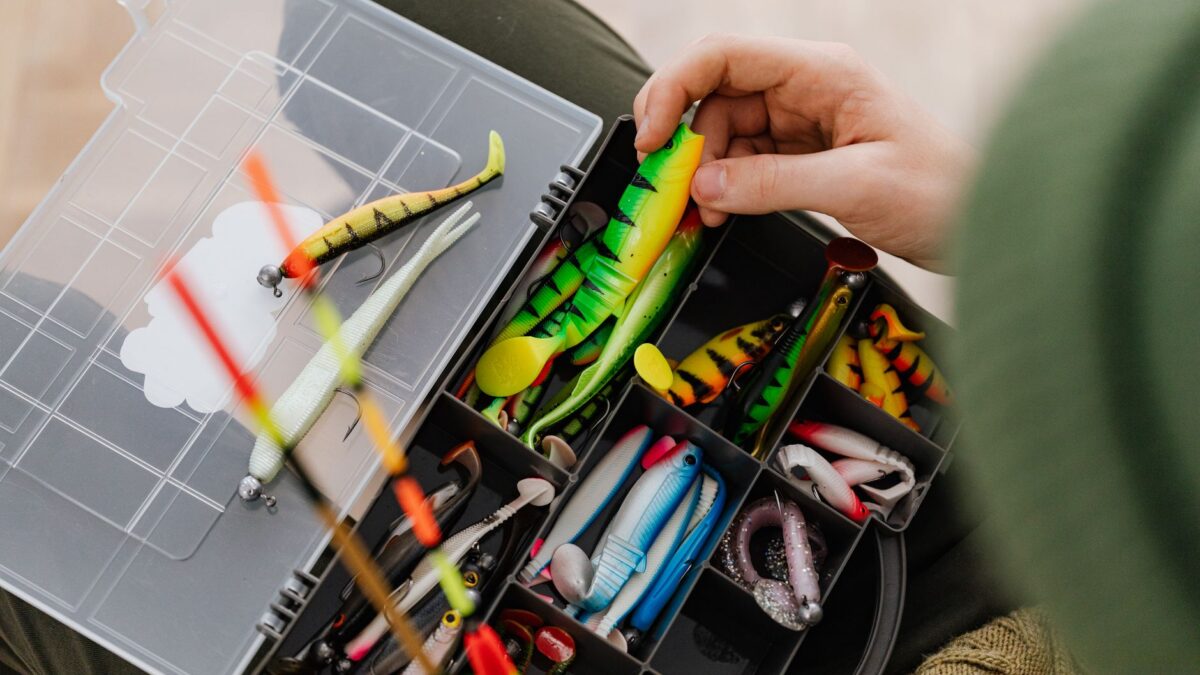
A bass tackle box needs less than most anglers think: a handful of proven lure types in two or three colors each, the hooks and weights to rig soft plastics, a few essential tools, and storage that keeps everything dry and easy to find. Build it around how you fish, carry only what you’ll use that day, and leave duplicates and specialty baits at home.
Core lures
These lure types cover most bass situations from spring through fall. Carry a natural color (green pumpkin or brown), a baitfish color (white, silver or shad) and one dark or bright option for stained water.
| Lure | What to carry | Best for |
|---|---|---|
| Soft-plastic stick worms | 5-inch, two colors | Wacky rig, Neko rig, Texas rig |
| Plastic worms and creature baits | 6–7 inch worms, a craw or creature | Texas and Carolina rigs around cover |
| Jigs | 3/8–1/2 oz, plus craw trailers | Wood, rock and docks |
| Spinnerbaits or bladed jigs | 3/8–1/2 oz, white or chartreuse and white | Wind, stained water, covering water |
| Crankbaits | A squarebill and a medium diver | Shallow cover and points |
| Topwater | A popper or walking bait; a hollow-body frog if you fish grass | Low light and warm water |
| Finesse baits | Ned rig heads and plastics, drop-shot baits | Clear water, cold fronts, pressured fish |
| Jerkbait | One suspending model | Cold and clear water |
For when and how to fish each one, see our guide to the essential bass lures, and for picking colors by water clarity, our lure color guide.
Terminal tackle
Terminal tackle is everything at the business end of the line other than the lure. It takes little space and you’ll lose it often, so carry spares.
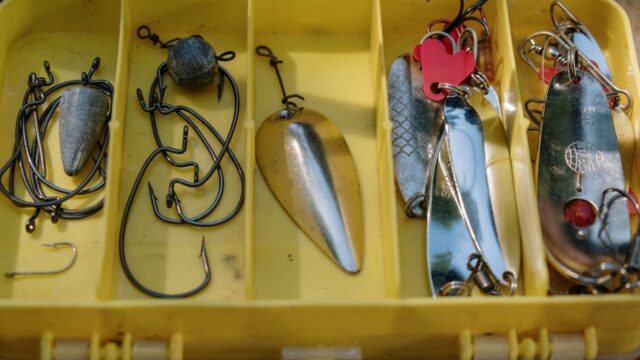
- Hooks: offset worm hooks (2/0–4/0), EWG hooks for bulky plastics (3/0–4/0), wacky or Neko hooks (#1–1/0), drop-shot hooks (#1–1/0) and a few heavy-wire flipping hooks if you fish thick cover. Our hook size guide explains the numbers.
- Weights: bullet weights from 1/8 to 1/2 oz, drop-shot weights around 1/4 to 3/8 oz, and a couple of heavier weights for Carolina rigs or punching.
- Jigheads: Ned heads around 1/10 to 1/6 oz and a few shaky heads.
- Extras: bobber stops or pegs for Texas rigs, glass or plastic beads and barrel swivels for Carolina rigs, snap swivels for spinning baits, O-rings for wacky rigs, and a few split rings and replacement treble hooks.
Lead isn’t allowed everywhere. Some states restrict small lead sinkers and jigs on certain waters to protect loons and other water birds, so check your state’s rules; tungsten and other non-lead options are widely sold.
Tools
- Needle-nose or fishing pliers for removing hooks, crimping barbs and opening split rings.
- Line clippers, plus sharp scissors if you use braid.
- Hook file to keep points sharp.
- Lip grip or a rubber-mesh net for landing fish without harming them.
- Measuring tape or board; many lakes have length limits.
- Small first-aid kit, including something to cover hook punctures.
- Headlamp or flashlight for early starts and dusk.
Personal and safety items
- Your fishing license, and a copy of the current regulations for the water you’re fishing; rules vary by state and by lake.
- Polarized sunglasses to cut glare and protect your eyes from hooks.
- Sunscreen, a hat, water and a rain jacket.
- A life jacket for any time you’re in a boat or kayak.
Storage systems
Utility boxes
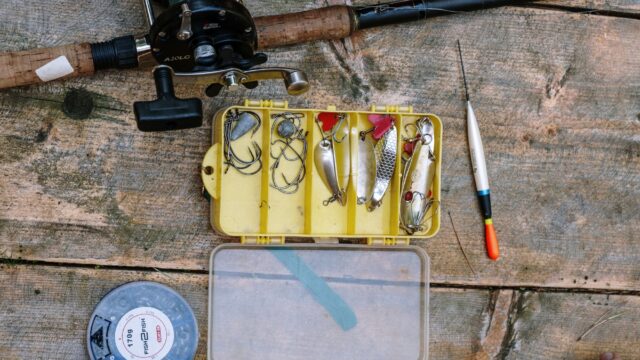
Clear plastic utility boxes with adjustable dividers are the standard. The most common sizes are known as 3700 (about 14 x 9 x 2 inches) and 3600 (about 11 x 7 x 1.75 inches), with deep versions for bulky baits. Exact dimensions vary a little by maker, so check before buying a bag or rack that holds them.
- Sort boxes by lure type or technique: one for hard baits, one for terminal tackle, one for jigs and spinnerbaits.
- Label the ends so you can grab the right box without opening every one.
- Use waterproof boxes with a gasket for kayaks and open boats.
Soft plastics
Keep soft plastics in their original bags, which show the color name and size, inside binders or zip bags sorted by type. Some soft plastics can react with certain plastics and lure finishes, which is why many boxes are labeled worm-proof; keeping plastics in their bags avoids the problem.
Bags and backpacks
A soft-sided tackle bag holds several utility boxes plus tools and is easy to carry to a boat. For shore fishing and kayaks, a tackle backpack or a sling pack keeps hands free; our kayak gear checklist covers crate setups.
Keeping it dry
Open boxes after a wet trip and let them air-dry before closing. Rust spreads quickly from one hook to the next, so remove rusty hooks and swap them. Moisture-absorbing packets or rust-inhibiting inserts in each box help.
What to leave at home
- Duplicates and excess colors. Three colors per lure type covers most water.
- Lures for species you won’t target that day.
- Rusty hooks and damaged lures. Fix them or throw them out.
- Old line, which belongs in a recycling bin, not your bag.
- Everything for every season. Rotate boxes as the season changes instead of carrying them all.
Bottom line
Pack a few proven lure types in a small color range, plenty of hooks and weights for soft plastics, pliers, clippers, a hook file and a way to measure fish. Store it in labeled, dry utility boxes, keep soft plastics in their bags, and carry your license and the local rules. A lighter, organized box means more time fishing and less time digging.
FAQ
What should be in a beginner’s bass tackle box?
Stick worms and wacky hooks, plastic worms with offset hooks and bullet weights, a spinnerbait, a squarebill crankbait, a topwater, pliers and line clippers.
What size tackle box is best?
For most anglers, a soft bag that holds three to five 3600- or 3700-size utility boxes. Shore and kayak anglers often prefer a backpack with smaller boxes.
How do I keep hooks from rusting?
Dry boxes after every wet trip, store them with moisture-absorbing packets, and separate rusty hooks before they spread rust to others.
Do I need a scale and measuring board?
A measuring tape or board is worth carrying because many waters have length limits. A scale is optional unless you track weights or fish tournaments.