How to Use Tip-Ups for Pike and Walleye: Setup, Bait, Depth and Flags
A tip-up holds a live or dead bait at a set depth and raises a flag when a fish takes it. Here is how to rig, place and fish them legally.
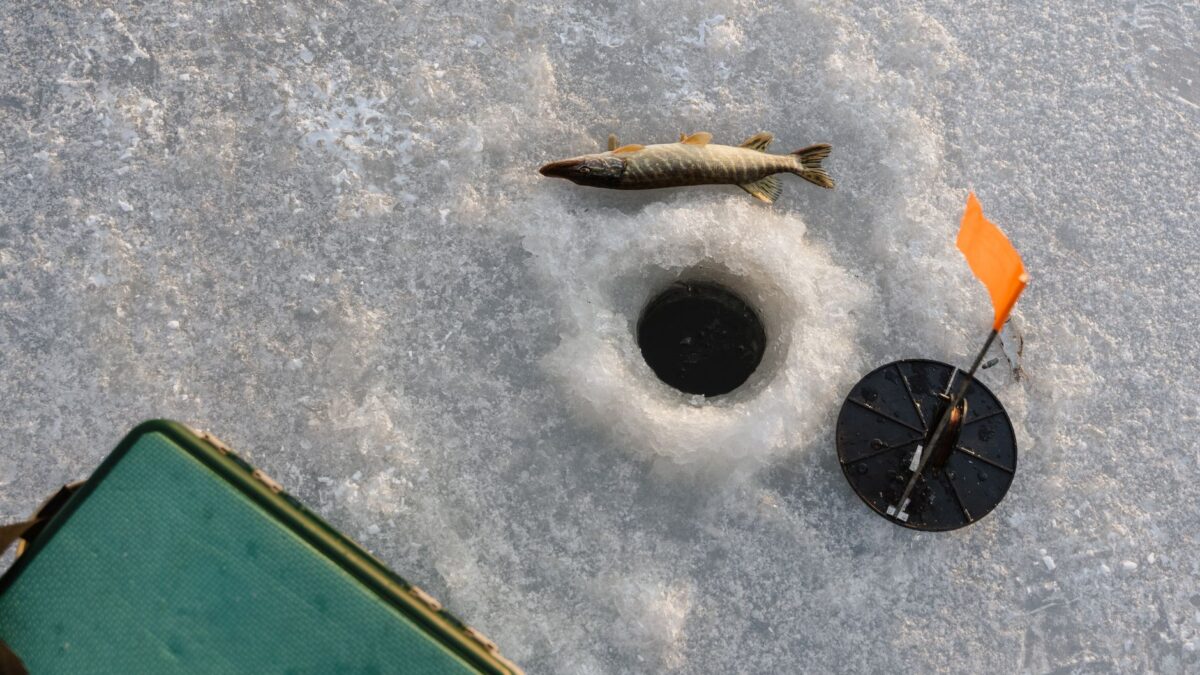
A tip-up is a spool of line on a frame that sits over the hole, with a flag that pops up when a fish pulls line. To use one, spool it with braided tip-up line, add a leader and hook, bait it with a minnow, set the depth (about a foot or two off bottom for walleye, near or just above weed tops for pike), place it along a weed edge or drop-off, and stay close enough to respond when the flag trips. The number of lines and how far you may be from them are set by each state, so check your rules first.
Types of tip-ups
- Cross-arm (classic) tip-ups sit on two crossed sticks over the hole, with the spool underwater. They are cheap and simple, but the hole can freeze around them in severe cold.
- Round or insulated tip-ups cover the whole hole with an insulated disc, which helps keep it from freezing over and keeps light out.
- Wind tip-ups use a small sail or paddle to jiggle the bait in the breeze.
How to rig a tip-up
- Spool with tip-up line. Use a braided or coated tip-up line made for the job; it handles cold and wet better and is easier to grip than thin mono. A few dozen yards is plenty for most water.
- Add a leader. For pike, a wire, titanium or heavy fluorocarbon leader helps prevent bite-offs. For walleye, a lighter fluorocarbon leader is less visible.
- Tie on the hook. Common choices are a single hook (octopus or circle) for walleye, and a quick-strike rig (two small trebles) or a single large hook for pike. Some states limit hook numbers or configurations, so check.
- Add weight. A split shot or small sinker above the leader keeps the bait at depth.
- Find the bottom. Clip a depth-finder weight to the hook, lower it until the line goes slack, then reel or adjust up to your chosen depth and mark the line.
- Set the trip. Set the flag so it trips with a light pull but not every gust of wind.
Bait
| Species | Common bait | Hooking |
|---|---|---|
| Northern pike | Larger live minnows such as suckers or shiners; dead bait where legal | Quick-strike rig, or a single hook lightly under the dorsal fin |
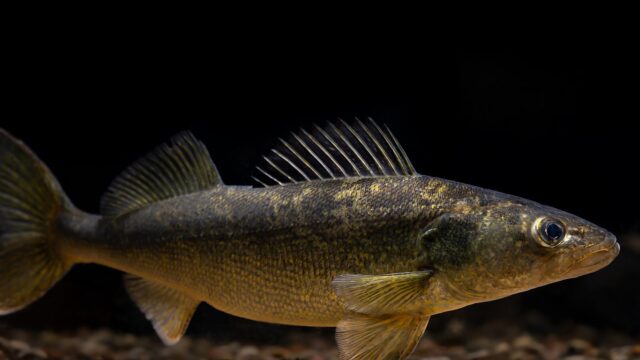
| Walleye | Medium minnows such as shiners or fatheads, or small suckers | Single hook lightly through the back below the dorsal fin, or through the lips |
Bait rules vary. Some states restrict moving live bait between waters, or using certain species or dead fish as bait, to prevent the spread of disease and invasive species. Buy bait locally and check your state’s rules.
Where and how deep to set them
- Pike: shallow weed flats and weed edges, bays and points near weeds. Set baits near the weed tops or partway down in open lanes.
- Walleye: points, drop-offs, rock or gravel humps and the edges of flats. Set baits about one to two feet off bottom.
- Spread them out. Cover different depths and spots along a feature, then move tip-ups that sit untouched for a long time.
Timing matters: pike are mostly daytime feeders, while walleye usually bite best at dawn and dusk. See the best time of day for ice fishing and our guide to ice fishing for walleye.
When the flag goes up
- Walk, don’t run. Slipping on ice is a common way to get hurt, and heavy footsteps can spook fish in shallow water.
- Look at the spool. If it’s turning, a fish is running with the bait. If it’s still, the fish may have dropped it, or wind may have tripped the flag.
- Decide when to set. With a quick-strike rig, set the hook soon after the fish takes the bait; that is what the rig is designed for and it helps prevent deep hooking. With a single hook, many anglers wait until the fish stops and starts moving again.
- Set the hook by hand. Lift the tip-up out, take the line in your hand, take up slack gently until you feel weight, then set with a firm sweep of your arm.
- Fight hand over hand. Let the fish take line if it runs, and lay the line on the ice so it doesn’t tangle. Guide the fish’s head into the hole and lift it out in one motion.
More on timing your hook set is in how to set the hook.
Handling and releasing fish
Pike have sharp teeth and gill rakers, so use long-nose pliers and, if needed, a jaw spreader. If you plan to release a fish, unhook it quickly and get it back in the hole; very cold air can damage gills and eyes. Our catch and release guide has more.
Regulations on lines and tip-ups
Tip-up rules differ from state to state, and sometimes from lake to lake:
- Number of lines: states set how many lines each angler may fish through the ice, and a tip-up counts as a line.
- Distance: many states require you to stay within sight of your lines or within a set distance. Minnesota law, for example, allows an unattended line through the ice if you are within sight of it, or if a tip-up is attached and you are within 200 feet of the tip-up (Minnesota Statutes 97C.321).
- Identification: some states require your name or ID on each tip-up.
- Seasons and limits: pike and walleye seasons, size limits and bag limits vary, and some waters close before ice-out.
Check your state wildlife agency’s current regulations before you set a single tip-up.
Bottom line
Rig with braided tip-up line, a leader suited to the species and a single hook or quick-strike rig, bait with a lively minnow, and set depth carefully: near weed tops for pike, a foot or two off bottom for walleye. Spread tip-ups along good structure, watch them closely, walk to every flag, and follow your state’s rules on lines and distance.
FAQ
How far off the bottom should I set a tip-up for walleye?
About one to two feet off bottom is a common starting point. Adjust if your flasher shows fish holding higher in the water column.
What line should I use on a tip-up?
Use a braided or coated line made for tip-ups, which handles easily with cold hands, plus a fluorocarbon leader for walleye or a wire or heavy fluorocarbon leader for pike.
Why does my tip-up flag go up with no fish?
Wind, a fish that dropped the bait, or a bait minnow swimming hard can all trip a sensitive flag. Adjust the trip setting and check that the spool isn’t moving before you set the hook.
How many tip-ups can I use?
It depends on your state. Each tip-up counts as a line, and states set their own limits on lines and distance, so check current regulations.