River Bass Fishing: Current Seams, Eddies, Water Levels and Wading Safety
Rivers move bass and their food in predictable ways. Learn to read current breaks and water levels, and you can find fish in any stretch of moving water.
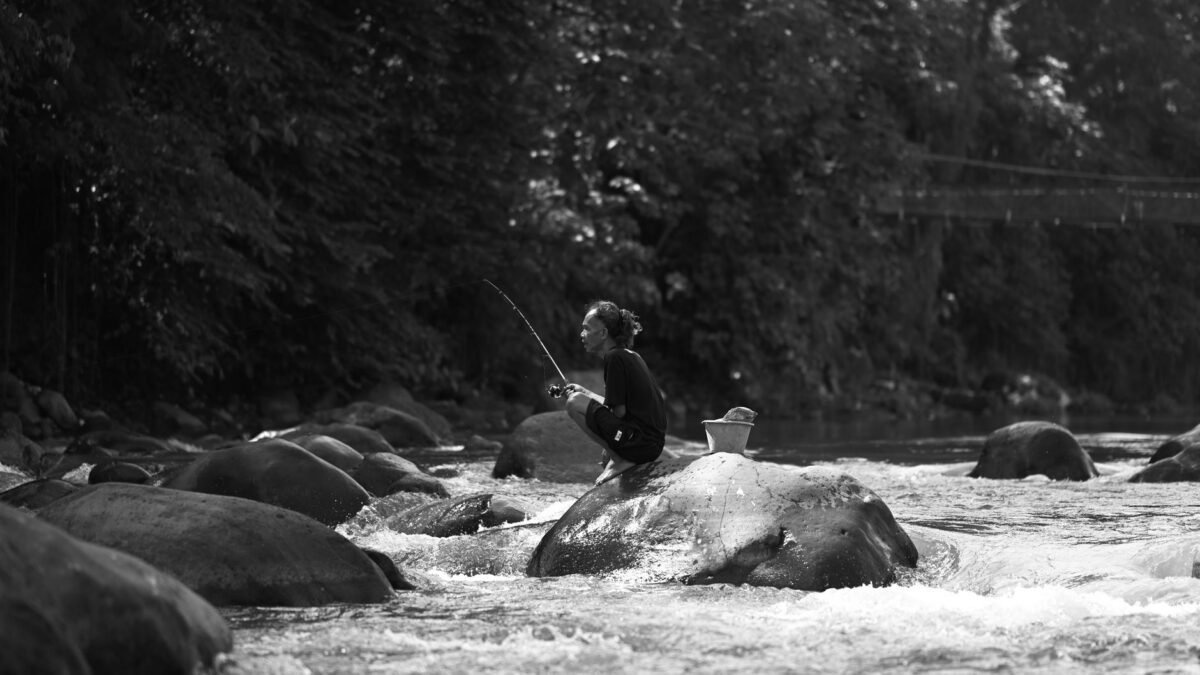
River bass sit where they can rest out of the strongest current while food drifts past: current seams, eddies, and the slack water behind rocks, wood and points. Cast upstream or across, let your bait move naturally with the flow, and target the slower water next to fast water. Smallmouth usually hold in rockier, faster stretches; largemouth favor backwaters and slow, wooded areas. Check water levels before you go, and wear a life jacket and wade only where the current is safe.
How current positions bass
Current carries food (baitfish, crayfish, insects) downstream. Bass save energy by holding in slower water and darting into faster water to feed. Find the boundary between fast and slow, and you’ve found fish.
- Current seams: the visible line where fast water meets slow water. Look for a change in surface texture or a line of foam. Fish the slow side and the seam itself.
- Eddies: slack or reverse-flow water behind points, boulders, bridge pilings and bends. Bass often sit at the upstream edge of an eddy, facing into the current.
- Current breaks: anything that blocks flow, including rocks, logs, root wads, bridge piers and rock ledges. Fish both the upstream face and the calm pocket behind it.
- Riffles, runs and pools: riffles are shallow and fast, runs are moderate and deeper, pools are slow and deep. Bass often hold at the tail of a riffle where it drops into a run or pool, and at the head of pools.
- Outside bends: current cuts deeper water and undercut banks on the outside of a bend; inside bends are shallower and slower.
Rock and wood
Rock holds crayfish and breaks current. Boulders, ledges, gravel bars and riprap banks are prime smallmouth cover. Wood (laydowns, logjams and root wads) gives bass shade and ambush points, especially in slower, muddier rivers. When rock or wood sits next to a seam or deep water, it’s a high-percentage spot.
Smallmouth vs largemouth (and spots) in rivers
| Species | Typical river habitat | Good baits |
|---|---|---|
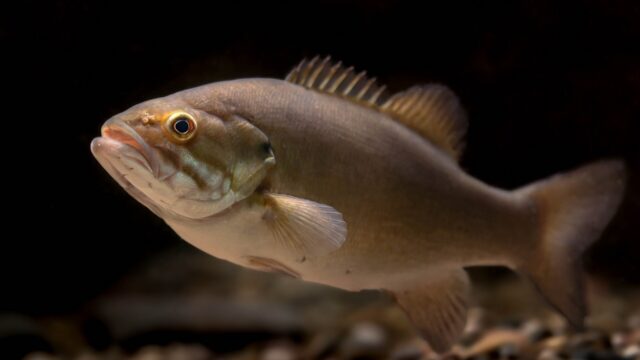
| Smallmouth | Clearer, rocky rivers; riffle tails, runs, boulder fields, ledges, pool heads | Tubes, Ned rigs, small crankbaits, inline spinners, jerkbaits, topwater |
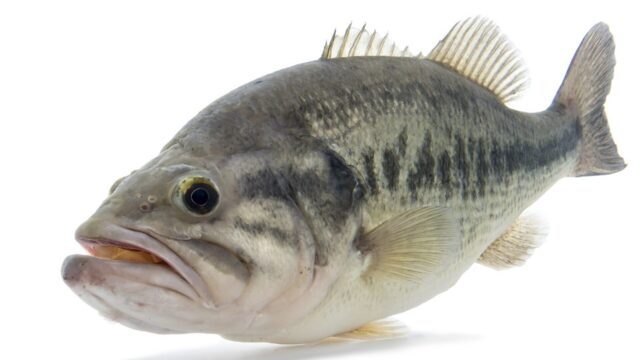
| Largemouth | Slower water: backwaters, sloughs, oxbows, wooded banks, weed beds, tributary mouths | Texas-rigged plastics, spinnerbaits, square-bills, frogs |
| Spotted bass | Moderate current in Southern and Midwestern rivers; rock and wood | Shaky heads, small swimbaits, crankbaits |
Many rivers hold more than one species, separated by current speed and bottom type. See our guide to smallmouth fishing tips for more on river smallmouth and our spotted bass guide for identification.
How to fish moving water
- Cast upstream or up-and-across. Let the bait tumble downstream toward the fish, which face into the current. Reel just enough to stay in contact.
- Match weight to current. Use the lightest jighead or sinker that reaches the bottom; too heavy snags, too light never gets down.
- Fish the seam from the slow side, drifting your lure along the edge where fish wait.
- Hit the eddy’s edges rather than the dead center.
- Keep moving. River bass are often spread out; fish a spot thoroughly but briefly, then move to the next break.
A 6’6″ to 7′ medium spinning rod with 8- to 10-pound fluorocarbon, or light braid with a fluorocarbon leader, handles most river smallmouth fishing. Go heavier for largemouth around wood.
Water levels and clarity
River conditions change quickly with rain, snowmelt and dam releases, and they make a big difference to fishing and safety.
- Stable or slowly falling, clearing water: often the best fishing; bass move back to normal spots and feed.
- Rising water: bass move toward the banks and into eddies and slack water to escape strong current. Fishing can be good early in a rise, but conditions deteriorate as water gets high and muddy.
- High, muddy water: fish tight to the bank and in backwaters, using dark or bright baits with vibration. Our guide to fishing muddy water has more ideas. Don’t wade high water.
- Low, clear water: bass concentrate in deeper pools and runs and spook easily; use lighter line, smaller baits and longer casts.
Check current streamflow and gauge height on USGS Water Data before you go, and compare it with normal levels for that river. Below dams, check release schedules: water can rise quickly and without much warning.
Wading and boating safety
Rivers are more dangerous than they look. Follow these basics:
- Wear a life jacket in any boat or kayak, and consider an inflatable one while wading deeper rivers.
- Wade slowly and shuffle your feet; don’t take big steps on slick rock. A wading staff adds a third point of contact.
- Don’t wade fast water deeper than about knee height, and never cross where you can’t see the bottom.
- Beware foot entrapment: if you fall in current, don’t try to stand up in fast water. Float on your back with feet downstream and pointed up, and work toward shore.
- Avoid low-head dams. The recirculating current below them can trap swimmers and boats; stay well clear above and below.
- Use a wading belt with waders, and dress for cold water in spring and fall.
- Watch the weather and leave the river if it starts rising, gets muddy suddenly, or a storm approaches.
- Tell someone your plan, especially when wading alone.
Floating a river in a kayak or canoe opens up water that’s hard to reach on foot; our guide to choosing a fishing kayak covers stable, river-friendly designs.
Access and rules
Laws on wading, floating and walking riverbanks differ a lot by state. In some states, the streambed of certain rivers is public; in others, the bank and bottom may be private even if the water is navigable. Use public access sites, ask landowners for permission, and check your state wildlife agency’s regulations, which may include special bass limits or catch-and-release sections on certain rivers.
Bottom line
River bass hold where slow water meets fast: seams, eddies and the calm pockets behind rock and wood. Smallmouth favor rocky, faster stretches; largemouth stay in backwaters and slow, wooded water. Cast upstream, let your bait drift naturally, adjust weight to the current, and check water levels before every trip. Wear a life jacket, wade carefully, and stay away from low-head dams.
FAQ
What is the best bait for river bass?
Anything that imitates crayfish or small baitfish. Tubes, Ned rigs, small crankbaits and inline spinners are reliable for river smallmouth; Texas-rigged plastics and spinnerbaits are good for river largemouth.
Where do bass hold in a river during high water?
Close to the bank, in eddies, backwaters, flooded vegetation and behind anything that blocks the current.
Should I cast upstream or downstream?
Usually upstream or up-and-across, so the bait drifts naturally toward fish facing into the current. Downstream retrieves work for some moving baits but can look unnatural.
Is it safe to wade for bass?
It can be in low, clear water with good footing. Avoid high or fast water, shuffle your feet, use a wading staff, and wear a life jacket where water gets deep or swift.