How to Catch Bass in Muddy or Stained Water
Dirty water doesn't mean a bad day. Bass in muddy or stained water are often shallow and predictable if you give them something they can find.
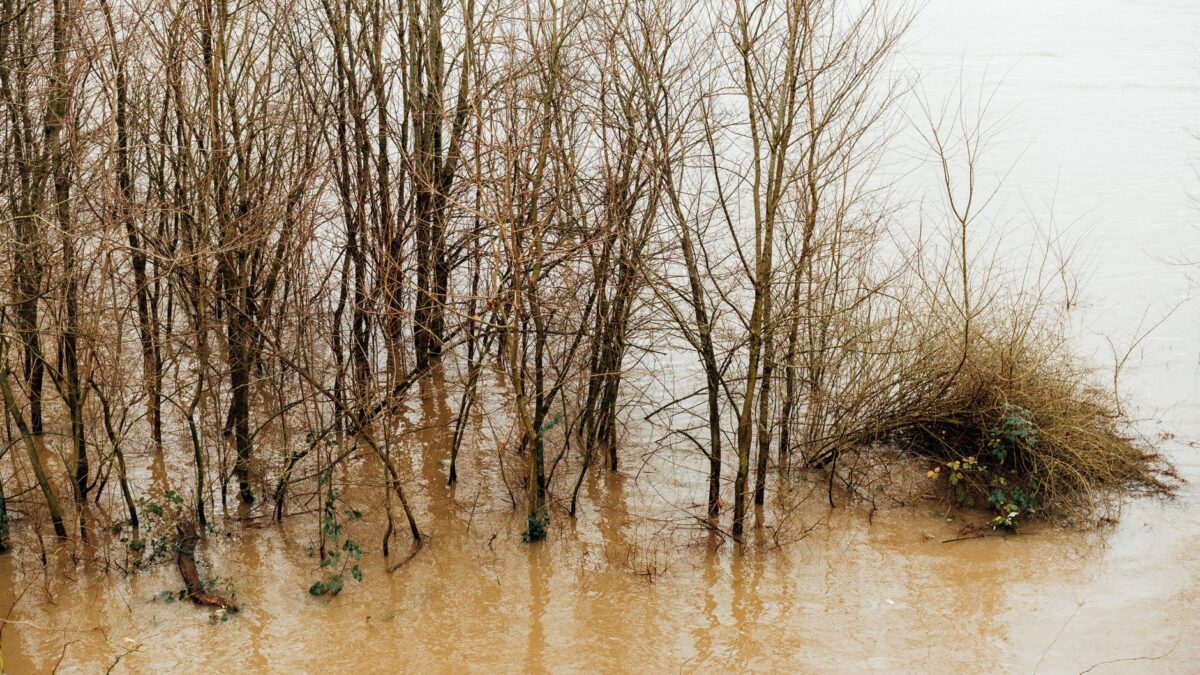
In muddy or stained water, bass usually move shallower and tighter to cover, because light doesn’t reach far into dirty water. Target visible cover such as wood, rock, docks and grass edges, use lures that give off vibration and noise (Colorado-blade spinnerbaits, bladed jigs, rattling crankbaits, jigs and bulky soft plastics), choose dark or bright colors that make a strong silhouette, and slow down so fish have time to find the bait.
Stained vs muddy water
Anglers usually sort water clarity into three rough groups:
- Clear: you can see a lure several feet down.
- Stained: tea- or green-tinted water where a light-colored lure disappears within a foot or a few feet.
- Muddy: brown, cloudy water where a lure vanishes within inches.
A simple test is to lower a white lure into the water and watch where it disappears. Murkiness, or turbidity, comes from suspended clay, silt, algae and other particles; the USGS notes that rainstorms wash soil into rivers and lakes and high flows stir up sediment, and that high particle levels reduce how far light penetrates.
Stained water is often excellent for bass fishing. Truly muddy water is harder, especially right after a storm, but fish still have to eat.
How bass hunt in dirty water
Bass use more than eyesight to find food. Like most fish, they have a lateral line, a row of sensory organs along each side that detects vibration and water movement. In low visibility, that sense matters more, which is why lures that thump, rattle or push water get more attention. At close range, they still use sight, so a lure with a clear silhouette helps them make the final strike.
Because light fades quickly in murky water, bass often hold shallower than they would in clear water, relating closely to cover where prey has to come near them.
Where to look
- Shallow, visible cover: laydowns, stumps, bushes, dock posts, rock and grass edges.
- The cleanest water available. After heavy rain, look for areas that clear first, like coves without inflows or the main lake away from muddy creek mouths.
- Edges between muddy and clearer water. Where a muddy inflow meets clearer lake water, bass often hold along the line.
- Newly flooded cover. When water rises into bushes and grass, bass often move up into it to feed.
- Current breaks in rivers and near inflows, where fish can rest out of the flow.
Best lures for muddy and stained water
| Lure | Why it works | How to fish it |
|---|---|---|
| Spinnerbait with Colorado or Indiana blades | Rounder blades give off a stronger thump | Slow-roll it close to cover |
| Bladed jig | Hard vibration, bulky profile | Steady retrieve along grass edges and wood |
| Squarebill crankbait with rattles | Sound plus deflection off cover | Bump it into wood, rock and dock posts |
| Lipless crankbait | Loud rattles, covers water fast | Over flats and along grass in stained water |
| Jig with a bulky trailer | Big profile that moves water | Pitch to targets; let it fall, hop it slowly |
| Texas-rigged creature bait or big worm | Appendages push water | Flip into cover; slow hops |
| Buzzbait | Noise and surface disturbance | Slow retrieve near shallow cover |
Our guides to spinnerbaits vs bladed jigs and how to fish a crankbait go deeper on choosing and working these lures.
Colors that work in dirty water
Two simple approaches cover most situations:
- Dark colors such as black, black and blue, or dark red create the strongest silhouette, especially on cloudy days and in muddy water.
- Bright colors such as chartreuse, white and chartreuse-white stand out in stained water and are popular on spinnerbaits and crankbaits.
Subtle natural shades that work in clear water can vanish in muddy conditions. See our guide to choosing lure colors for a fuller system, but in dirty water, vibration and profile usually matter more than the exact shade.
How to fish dirty water
- Get close and be accurate. Bass won’t travel far to a bait they can’t see. Put your lure right next to or into the cover.
- Slow down. Give fish time to locate the bait. Slow-roll spinnerbaits, crawl jigs and pause often.
- Make repeat casts. Hit the best pieces of cover from more than one angle.
- Use bigger profiles. A bulky jig, a wide-bodied crankbait or a larger soft plastic is easier for bass to find.
- Use heavier line. Bass are less likely to notice line in dirty water, and stronger line helps pull fish out of cover.
Pitching a jig or Texas rig to shallow targets is a strong muddy-water tactic; see our guide to flipping and pitching.
Fresh mud vs naturally stained lakes
Lakes that are naturally stained year-round often fish well every day, because bass are used to the conditions. Fresh mud after a heavy rain is different: it often comes with a drop in water temperature and rising water, and fishing can be tough for a day or two. When that happens, look for the clearest water you can find, or fish the edges where muddy and clearer water meet, until the lake starts to settle.
Safety in high, muddy water
Muddy water often follows heavy rain and rising levels. Watch for floating logs and debris, stronger current near inflows and below dams, submerged hazards you can’t see, and flooded ramps or closed access areas. Wear a life jacket, slow down in unfamiliar water, and never wade into fast, muddy current.
Bottom line
In muddy or stained water, bass are usually shallower and tight to cover. Use lures that thump, rattle and push water, pick dark or bright colors with a strong silhouette, and make slow, accurate presentations to visible targets. After a big rain, look for the clearest water nearby and give the lake a day or two to settle.
FAQ
Can bass see in muddy water?
Only at short range. Bass rely heavily on their lateral line to sense vibration and movement in dirty water, then use sight for the final strike. That is why noisy, high-vibration lures work well.
What is the best lure color for muddy water?
Black, black and blue, and other dark colors create a strong silhouette. Chartreuse and white are also popular, especially in stained water. Vibration matters more than the exact color.
Do bass bite after a heavy rain?
They can, especially around new inflows and flooded cover, but a large surge of cold, muddy water can slow fishing for a day or two. Look for clearer water and the edges of muddy areas.
Are bass shallow or deep in muddy water?
Usually shallower than in clear water, because light doesn’t penetrate deep. Focus on shallow cover and the first few feet of water.