How to Find Fish Under the Ice: Maps, Drilling Patterns and Structure
Find fish under the ice by studying a lake map, drilling a line of holes across structure and moving until sonar marks fish. See patterns and depths by species.
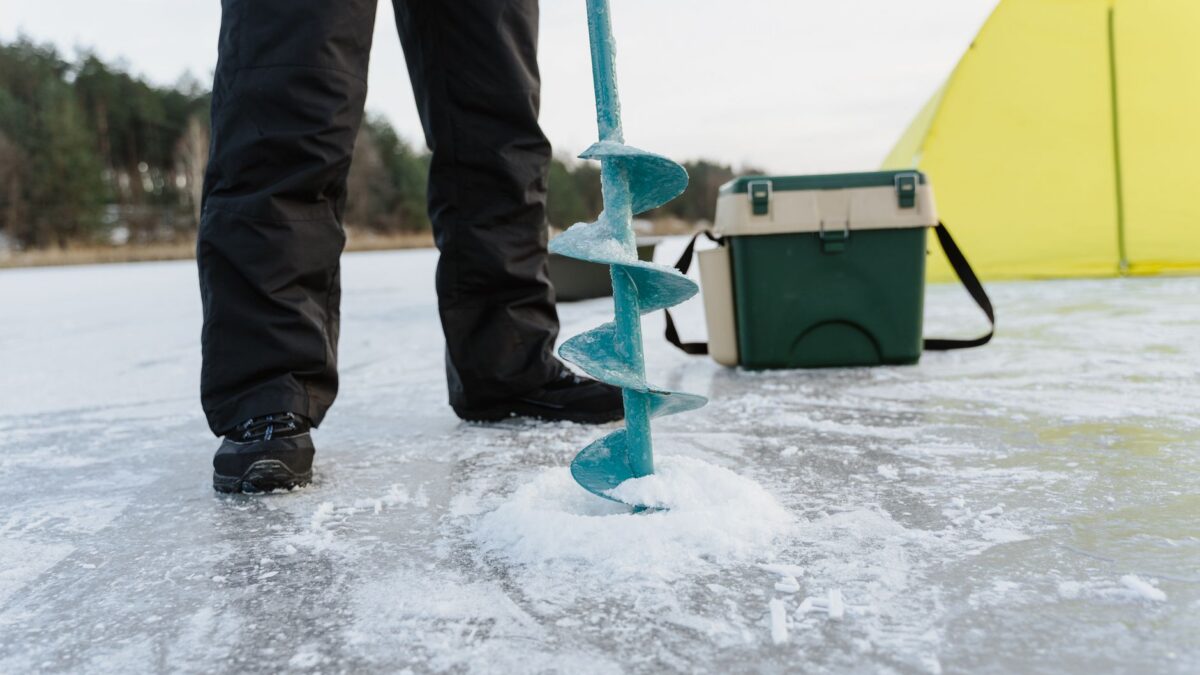
To find fish under the ice, study a lake map before you go, pick structure where depth changes (points, humps, inside turns, weed edges and drop-offs), drill a line or grid of holes across that structure, and check each hole with a flasher or sonar. If a hole shows no fish within a few minutes, move to the next one. Anglers who catch the most fish through the ice usually drill the most holes.
Fish in winter gather around a smaller number of spots than in summer, and they move less. That makes them easy to catch once you locate them and easy to miss when you sit on an empty hole all day. Safety comes first: check current ice conditions with your state agency, such as the Minnesota DNR, and carry ice picks, a spud bar and a rope.
How do you use a lake map to plan an ice fishing trip?
A lake map shows where depth changes, and depth changes are where fish hold in winter. Look for contour lines that bunch together (a steep break), lines that bend sharply (points and inside turns), closed circles in open water (humps and sunken islands) and narrow shallow areas between two deeper basins (saddles).
Mark three to five spots before you leave home and save them as waypoints on your phone or GPS. A handheld GPS or a phone mapping app lets you walk straight to a contour you picked at the kitchen table. Our guide to lake maps on fish finders and mapping apps compares the main chart options. Plan spots at different depths, so you have a fallback if the first area is empty.
What kind of structure holds fish in winter?
The best winter spots combine a depth change with something fish can relate to, such as weeds, rock or wood. Common choices by species:
- Bluegill and other panfish: green weed beds and weed edges in shallow to moderate depth, often moving to the edge of deeper basins later in winter.
- Crappie: suspended over deeper basins and near the base of breaks, especially around dusk.
- Walleye: points, humps, rock and gravel transitions and the sharp edges of breaks, most active at low light.
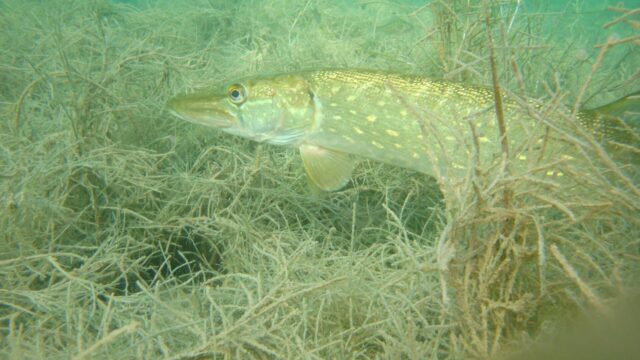
- Northern pike: shallow weedy bays and weed edges, where tip-ups work well.
- Largemouth bass: slow and close to the bottom near remaining green weeds, docks and wood in moderate depth.
- Yellow perch: soft bottom flats near the base of breaks, often roaming in schools.
Green weeds matter more in winter than in summer because they still hold oxygen and baitfish. Brown, dying weeds hold far fewer fish. For species detail, see our guides on ice fishing for walleye on structure and finding suspended crappie schools.
What drilling pattern works best?
A line of holes across a depth change is the most useful pattern. Start shallow, on top of the structure, and drill a hole every few yards down the slope into deeper water, so you test several depths in one walk. Once a depth produces fish, drill more holes along that same contour.
Other patterns help in different situations:
- Grid: holes spaced evenly over a flat, a hump top or a basin, to search for roaming schools of panfish or perch.
- Circle: holes around a small hump or rock pile, to test every side.
- Edge run: holes along a weed edge, a few steps apart, where the weeds give way to open water.
Drill all the holes you plan to use at once, then fish them quietly. An auger is loud under the ice, and drilling in the middle of a bite can push fish away. Pour or brush the slush aside so you can see each hole and refill it as needed.
How long should you fish a hole before moving?
Give each hole a few minutes, often 5 to 15, and move on if your electronics show nothing. If fish show up on sonar but will not bite, change the lure size or color before you leave. A hole that held fish an hour ago is worth a second look later, because schools move through the same areas during the day.
A practical routine is to rotate through your holes, spending a short time at each, and to come back to the ones where you marked fish. When a bite starts, the fish tend to be within a few feet of each other, so drill one or two holes beside the productive one.
How do electronics help you find fish through the ice?
A flasher or a fish finder with an ice transducer shows the bottom, weeds, fish and your lure in real time. It tells you within seconds whether a hole is worth fishing. Fish usually appear as marks or lines that move toward the lure, which also shows you whether they are reacting to your jigging.
Use it to read the bottom as well. A hard bottom shows a thick, bright return, and a soft bottom a thinner one. Weeds show as a band rising off the bottom. With a mapping unit or phone app open beside it, you can see exactly where you stand on the contour. For more on choosing a unit, see how to choose a fish finder.
When are fish easiest to find under the ice?
Early ice and late ice are often the most productive periods, with a slower stretch in midwinter when oxygen drops in some lakes and fish move less. Dawn and dusk are prime times for walleye and crappie, while bluegill and perch often bite through the middle of the day. Snow cover dims the light under the ice and can move fish shallower on some lakes.
Quick answers
How deep should I fish under the ice?
It depends on species and lake. Panfish and pike often hold in shallow to moderate weedy water, while walleye and crappie use deeper breaks and basins. Drill a line from shallow to deep to find the depth that day.
How far apart should ice holes be?
A few yards apart is enough on a steep break, since depth changes quickly. On large flats, wider spacing covers more water while you search.
Can I find fish without electronics?
Yes, but it takes longer. Use a lake map, a weighted line or depth finder to check depth, and spend less time in each hole until you get a bite.