How to Choose an Ice Auger: Hand, Gas, Electric or Drill-Driven
The right auger depends on how many holes you drill, how thick your ice gets and how far you walk. Here is how the four main types compare.
For most anglers who drill more than a handful of holes, a battery-powered (lithium) auger in the 8-inch size is the most practical all-round choice: quiet, no fumes and little maintenance. A hand auger is the budget pick for early ice and short trips; a drill-driven auger is the lightest powered option if you already own a strong cordless drill; and gas or propane augers still suit anglers who drill many holes through very thick ice. Pick a 6-inch blade for panfish only, 8-inch for most fishing, and 10-inch if you target big pike or lake trout.
The four types of ice auger compared
| Type | Best for | Pros | Cons |
|---|---|---|---|
| Hand (manual) | Early ice, panfish, few holes, tight budgets | Light, cheap, silent, nothing to break or charge | Tiring in thick ice and with bigger blades |
| Drill-driven | Mobile anglers who own a high-torque drill | Light, compact, relatively low cost | Needs the right drill; kickback risk; batteries suffer in cold |
| Battery (lithium electric) | Most anglers, shelters, frequent hole-hopping | Quiet, instant start, no fumes or fuel mixing, reverse on many models | Higher price; runtime falls in severe cold and thick ice |
| Gas or propane | Very thick ice, many holes, large diameters | Lots of power, refuel in seconds | Heaviest and loudest; exhaust; engine maintenance; cold starts |
Hand augers
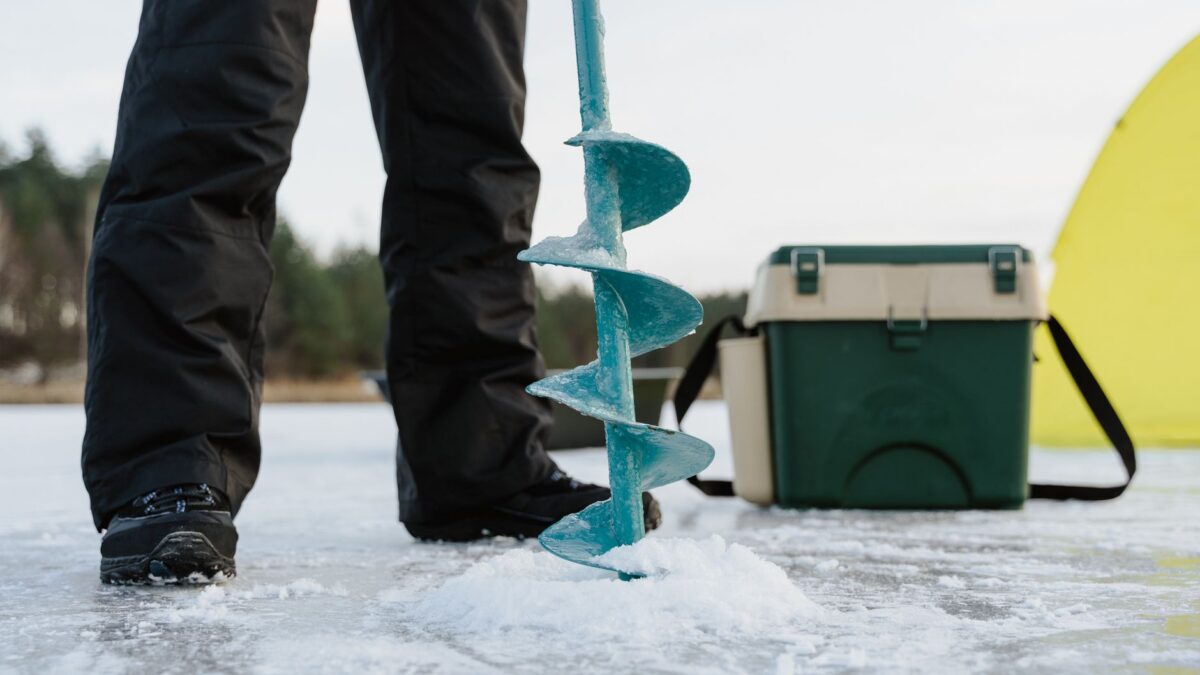
A hand auger is a crank handle on top of a spiral flight with two blades at the bottom. Smaller diameters cut surprisingly fast in fresh ice when the blades are sharp. They make sense if you mostly fish early ice, target panfish, walk long distances, or only drill a few holes a day. As ice thickens past a foot or so, and as you move up in diameter, the work adds up quickly.
Drill-driven augers
Several auger makers sell lightweight flights designed to be driven by a cordless drill. The appeal is weight and price: you carry a light flight plus a drill you may already own. The trade-offs are real, though:
- Drill requirements. These augers need a high-torque cordless drill, usually with a half-inch chuck and a side handle. Check the auger maker’s minimum drill specifications before buying; an underpowered drill will stall or overheat.
- Kickback. If the blade catches, the drill can twist hard. Use both hands with the side handle, run the drill’s clutch setting the maker recommends, and consider a stabilizing bracket if one is offered.
- Batteries. Lithium tool batteries lose capacity in the cold. Carry a spare and keep it warm in an inside pocket.
Battery-powered augers
Dedicated lithium augers have become the default choice for many ice anglers. Major brands sell them on battery platforms such as 24-volt and 40-volt systems, with blades in the common 6-, 8- and 10-inch sizes. They start instantly, run quietly enough to use near other anglers, and produce no exhaust, so you can open holes inside a shelter. Many offer a reverse function that helps clear slush.
Holes-per-charge claims depend on ice thickness, temperature, blade size and blade sharpness, so treat them as best-case numbers. A second battery is cheap insurance for long days or thick late-season ice.
Gas and propane augers
Combustion augers deliver a lot of power for large diameters and thick ice, and you can refuel instead of waiting on a charge. They are also the heaviest and loudest option. Two-stroke gas engines need fuel mixed with oil, and any engine needs some maintenance and can be hard to start in deep cold. Propane models avoid fuel mixing. Every combustion auger produces carbon monoxide, so never run one inside a closed shelter. See our ice shelter guide for more on CO safety.
Choosing the blade diameter
Bigger holes take more effort, more battery and a heavier auger. Choose the smallest size that lands the fish you target:
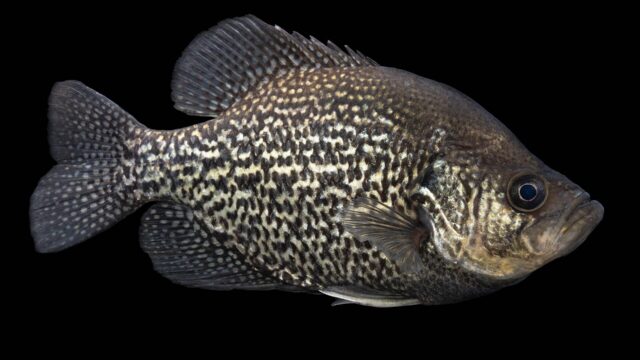
- 6 inches: panfish such as bluegill, perch and small crappie. Fast and light.
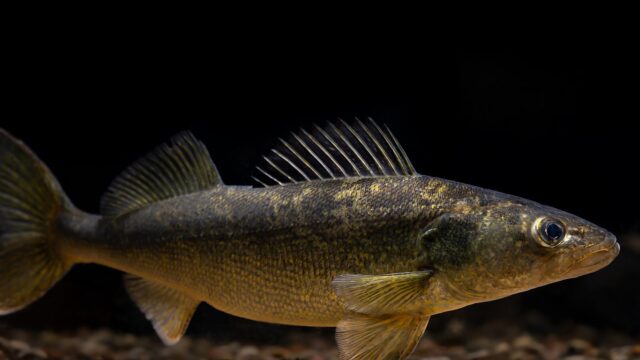
- 8 inches: the most popular all-round size, comfortable for walleye, bass, trout and most pike.
- 10 inches: big pike, lake trout and other large fish, with more room to land them.
Larger holes are also a hazard for feet and small children. If you cut very large holes (for spearing, for example), check your state’s rules on marking or covering them.
Blades and length
Auger blades come in different styles. Some are designed to slice clean ice very quickly; others, often called chipper-style blades, chip rather than shave, which some anglers prefer for re-opening old holes or ice with dirt and sand in it. Whatever the style, sharpness matters more than anything: a dull or nicked blade turns any auger into a struggle. Keep the blade guard on whenever the auger is not in the hole, and check that replacement blades are easy to find for the model you buy.
Also check the flight length. Early ice is easy, but late-season ice in the far north can get thick enough to need an extension. Most makers sell extensions for their augers.
What to check before you buy
- How many holes you drill per trip. Two or three holes: a hand auger can do it. Hole-hopping for panfish all day: go powered.
- Your typical ice thickness. Southern edge of the ice belt and early ice: lighter options. Northern lakes in late winter: more power or an extension.
- Weight and how far you walk. Carry the auger, plus batteries or fuel, in a store before you buy if you can.
- Blade diameter. Match it to your target species, not to the biggest fish you might ever see.
- Cold-weather details. Battery warranty and cold performance, glove-friendly controls and a reverse function.
- Parts and support. Replacement blades, batteries and service from the manufacturer.
An auger is also a safety tool: it’s how you measure ice thickness as you go. Our ice thickness guide explains the Minnesota DNR minimums, and the ice fishing gear checklist covers everything else to bring.
Bottom line
Buy the type that matches how you fish: a hand auger for early ice and short trips, a drill-driven auger if you already own a high-torque drill, a lithium auger for the best balance of convenience and power, and gas or propane for very thick ice and big holes. An 8-inch blade fits most anglers; go 6-inch for panfish-only or 10-inch for trophy pike and lake trout.
FAQ
What size ice auger should I get?
An 8-inch auger handles most species and is the common all-round choice. A 6-inch is lighter and faster for panfish, and a 10-inch suits big pike and lake trout.
Can I use a regular cordless drill for an ice auger?
Only a high-torque drill that meets the auger maker’s specifications, usually with a half-inch chuck and a side handle. Lighter drills may stall, overheat or twist out of your hands.
Are electric ice augers powerful enough?
Modern lithium augers handle typical ice thickness for most anglers. Runtime drops in severe cold and very thick ice, so carry a spare battery for long days.
Can I run a gas auger inside an ice shelter?
No. Gas and propane engines produce carbon monoxide. Drill holes outside or use a battery-powered auger inside a shelter.