Ice Fishing Shelters: Flip-Over vs Hub, Insulated vs Not, and Heater Safety
A shelter turns a cold, windy day into a comfortable one. Here is how flip-overs and hubs compare, when insulation is worth it, and how to heat one safely.
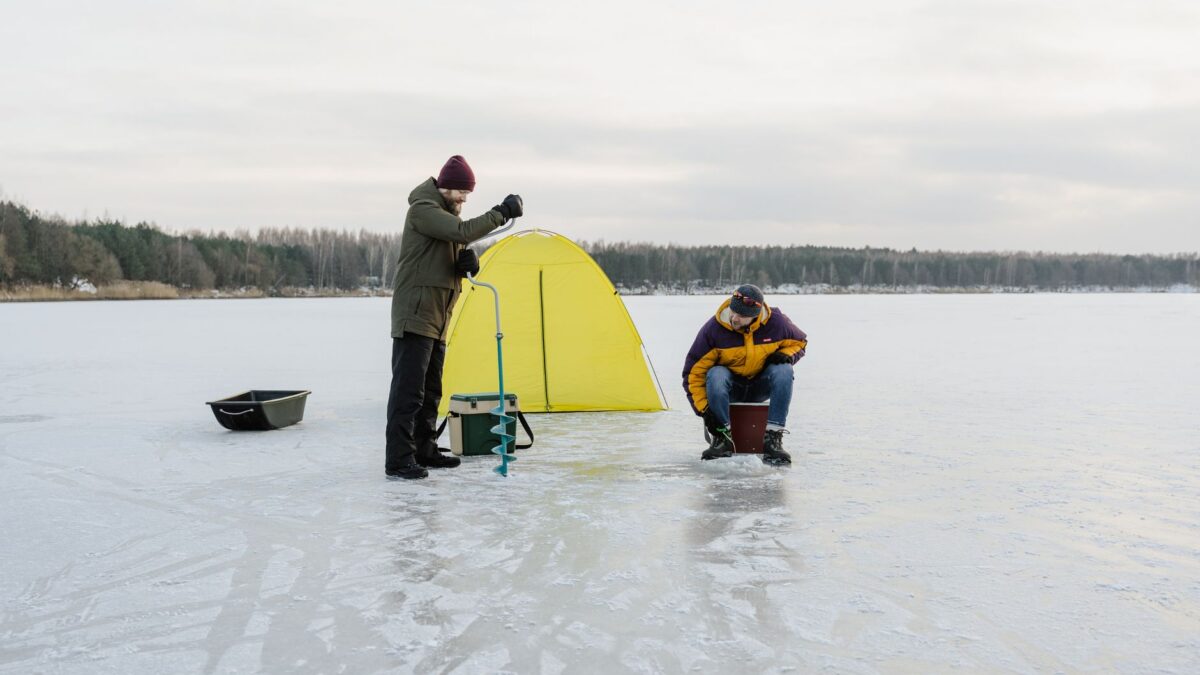
Choose a flip-over shelter if you move often and want a built-in seat and sled you can tow; choose a hub shelter if you want the most room for the weight and mostly fish one area. Insulated (thermal) fabric costs more and weighs more but stays warmer and builds up less frost. Whatever you buy, heat it only with a heater rated for indoor use, keep it ventilated and run a carbon monoxide (CO) detector. CO is colorless and odorless, and it builds up fast in a closed shelter.
Flip-over vs hub shelters
| Flip-over | Hub (pop-up) | |
|---|---|---|
| Design | Fabric on a frame attached to a plastic sled base; flips over you | Collapsible fabric “cube” with spring-loaded hubs on each side |
| Setup | Very fast; you can be fishing within a minute or two of drilling | A few minutes; must be anchored |
| Mobility | Excellent for hole-hopping; gear rides in the sled | Light to carry, but slower to move once set up |
| Space | Usually 1–3 anglers; tight in larger groups | More floor space for the weight; easy to fit 2–6 anglers |
| Weight | Heavier, but you pull it rather than carry it | Lighter for its size; carried in a bag or on a sled |
| Wind | Low profile and the sled base adds stability | Tall walls catch wind; anchors are essential |
| Best for | Mobile anglers chasing walleye and panfish | Families, groups and longer sits on one spot |
Beyond portable shelters, some anglers use permanent houses or wheeled fish houses towed onto the ice. These are heavy: the Minnesota DNR recommends at least 20 inches of new, clear ice for a heavy-duty truck with a wheelhouse shelter. See our ice thickness guide before taking any shelter out.
Insulated vs uninsulated fabric
Uninsulated shelters use a single layer of coated fabric. They are lighter, pack smaller and cost less. They block wind well, but lose heat quickly and tend to collect frost and condensation on the inside walls, which can drip when the sun or a heater warms them.
Insulated (thermal) shelters add an insulating layer. They hold heat much better, so you can run a heater on a lower setting, and they collect less frost. The trade-offs are higher price, more weight and a bulkier package.
If you fish mostly on milder days or in short sessions, uninsulated is fine. If you fish long days in deep cold or with kids, insulation is usually worth it.
Sizing a shelter
- Count anglers and holes. Each angler needs room for a seat, one or two holes and a flasher. A shelter that is “rated” for a number of people can feel cramped with gear inside.
- Check interior height. Being able to stand up matters on long days.
- Consider transport. Measure your vehicle and sled. Hubs fold flat but are long; flip-overs need sled space.
- Look at doors and windows. Two doors and windows that close tightly help with ventilation and with getting in and out.
Setup and anchoring
- Pick your spot and drill your holes first.
- Put the shelter up with its back or narrow side to the wind.
- Anchor every corner with the ice anchors (screw anchors) and tie-downs that came with the shelter. A hub shelter can blow across the ice in a gust.
- Bank snow around the base to seal drafts, if there is snow.
- Open at least one vent before you light any heater.
Heaters and carbon monoxide safety
Heat makes shelters comfortable, and it’s also where most of the danger comes from. The Minnesota DNR warns that propane heaters use oxygen from the air and release carbon monoxide, and that without proper ventilation, CO can build up inside an ice shelter without you knowing.
- Use a heater made for indoor use. Look for portable propane heaters labeled for indoor use with a low-oxygen shutoff (often called an oxygen depletion sensor) and a tip-over shutoff.
- Ventilate. Keep vents or a window open, even when it feels cold.
- Run a battery-powered CO alarm in every heated shelter, and test it before each trip. Cold can affect batteries, so keep spares.
- Never bring in other fuel-burning gear. No grills, camp stoves, generators or gas augers inside the shelter.
- Keep the heater clear of fabric walls, clothing, rods and anything flammable, and on a stable, level base.
- Never sleep in a heated shelter without a working CO alarm and ventilation.
The CDC lists CO symptoms as headache, dizziness, weakness, upset stomach, vomiting, chest pain and confusion, which are easy to mistake for the flu or for just being cold. If anyone in the shelter gets these symptoms, shut off the heater, get everyone into fresh air and call 911.
Shelter regulations
Rules for shelters vary widely by state and sometimes by lake. Depending on where you fish, you may need a shelter license or registration, your name or ID number displayed on the outside, reflective material, and a removal date by which shelters must be off the ice. Rules often differ for portable shelters you take home every day and shelters left out overnight. Check your state wildlife agency’s current regulations before you go.
Do you need a shelter at all?
Not on your first trip. Many anglers start with warm, layered clothing and a bucket, then add a shelter once they fish regularly. A shelter does help a lot with wind, makes it easier to see down the hole and read a flasher, and keeps kids comfortable. It belongs near the top of the upgrade list in our ice fishing gear checklist, right after the safety items.
Bottom line
Go flip-over for mobility and quick setups, hub for space and groups. Pay for insulation if you fish long, cold days. Anchor every shelter, and treat heat with respect: indoor-rated heater, open vents and a working CO alarm, every time.
FAQ
Is a flip-over or hub shelter better for beginners?
A hub is often the easier first shelter because it offers more room for the money and weight. A flip-over makes more sense once you move often to find fish.
Do insulated ice shelters need a heater?
Not always. On sunny, calm days an insulated shelter can feel comfortable with little or no heat. In deep cold, a small heater on low is usually enough.
Is it safe to use a propane heater in an ice shelter?
It can be, if the heater is rated for indoor use, the shelter is ventilated and a working CO alarm is running. Never use grills, camp stoves or generators inside.
How do I keep a hub shelter from blowing away?
Anchor every corner with ice anchors and tie-downs before you start fishing, set it up with the narrow side to the wind and never leave it unanchored, even briefly.